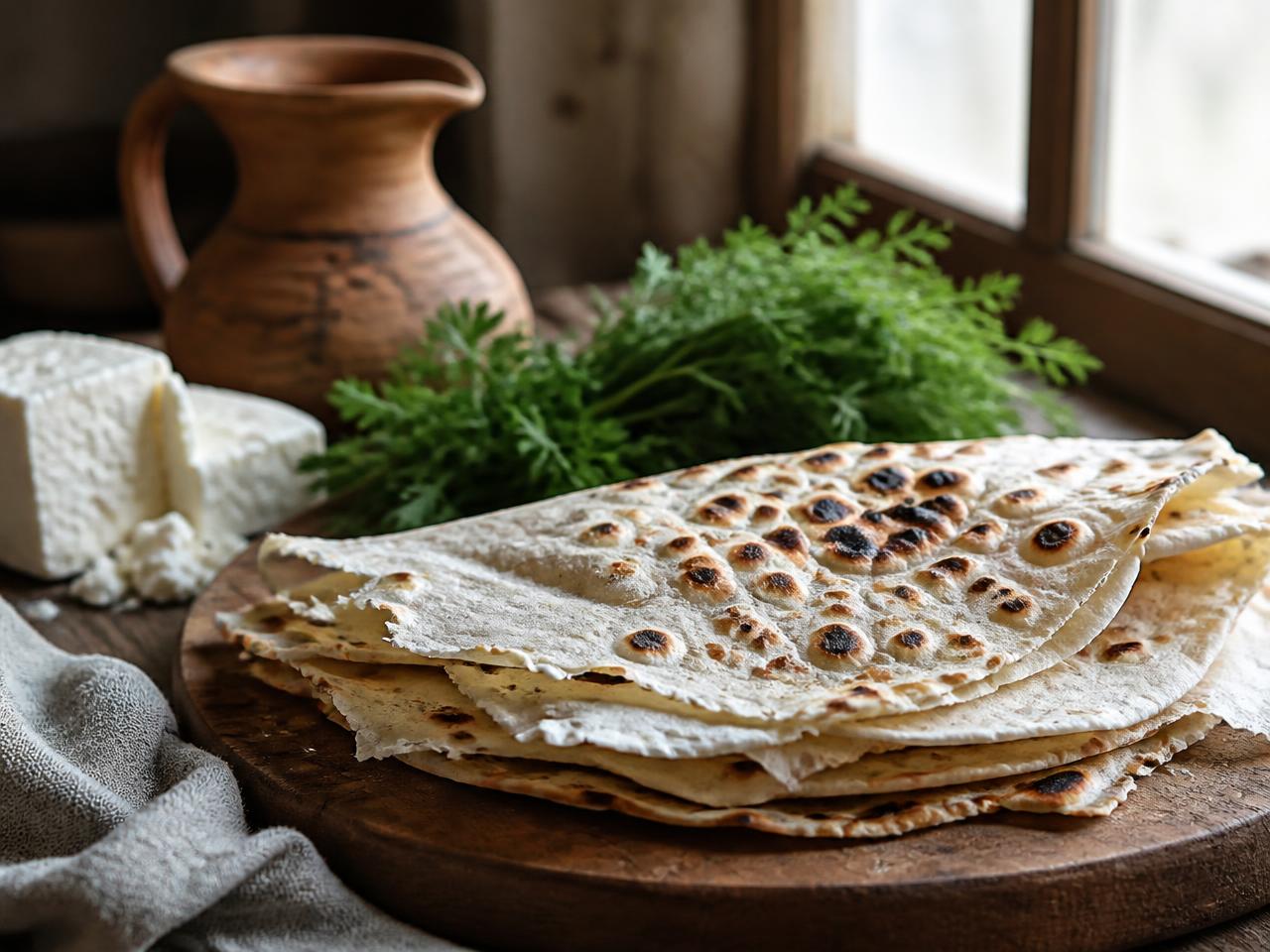
Lavash
Paper-thin unleavened flatbread, blistered and scored in the tradition of the hearth.
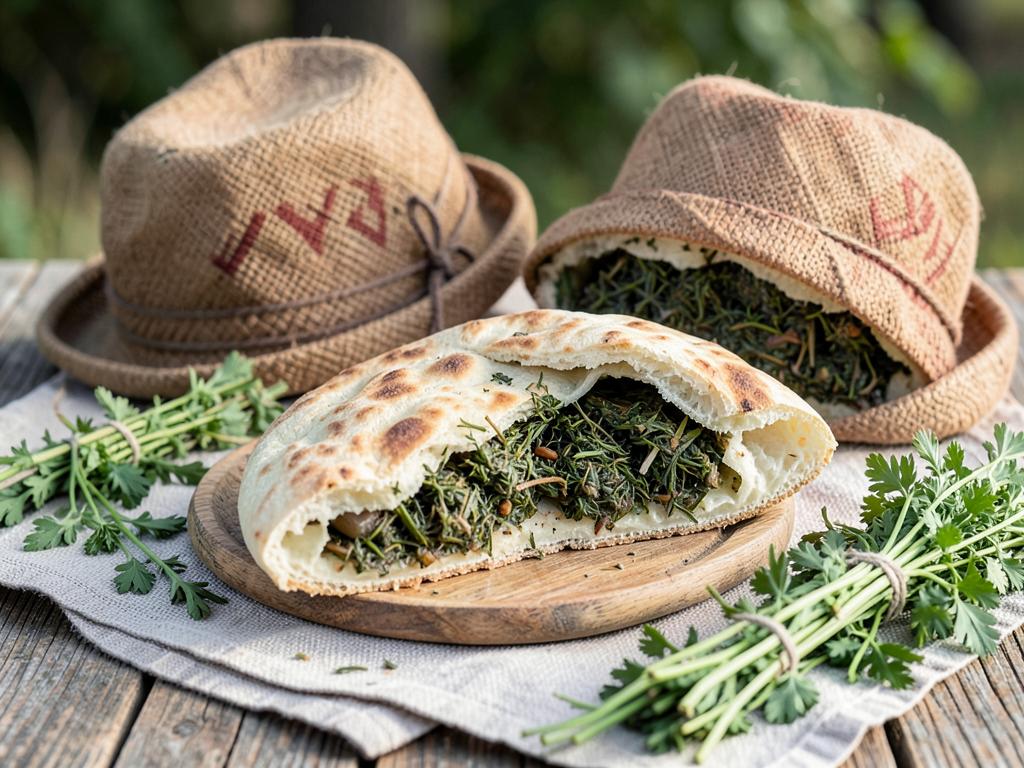
Step-by-step →Artsakh flatbread packed with up to twenty wild greens, baked dry on a hot pan.
Bring flour, water and salt together into a soft dough and rest it, covered, for half an hour.
Use as many kinds as you can find — spinach, chard, sorrel, dill, coriander, beet tops, nettle, purslane. Chop them small and salt them.
Wait ten minutes, then press the greens hard in your hands. Wet filling steams the bread open.
Roll a thin round, heap a mountain of greens on it, gather the edges to the centre and flatten gently into a disc.
Cook on a dry pan over medium heat, four to five minutes a side, until spotted brown. Brush with oil and stack under a cloth.
A handful of soaked bulgur in the filling stretches the greens.
Bake at 220 °C for 12 minutes for a drier, more bread-like result.
Spinach, chard, sorrel, dill, coriander, spring onion and beet tops make a very good city version.
Yes, as traditionally made — dough, greens, oil and salt only.
Zhingyalov hats is the signature bread of Artsakh, tied to early spring when the hillsides push out wild greens and every household counts how many varieties made it into the filling. Twenty is a boast; seven is respectable.
It is fasting food, field food and festival food, and since 2020 it has become something more: a dish that people cook to keep a place and its spring hillsides present at the table.
Paper-thin unleavened flatbread, blistered and scored in the tradition of the hearth.
Step-by-step →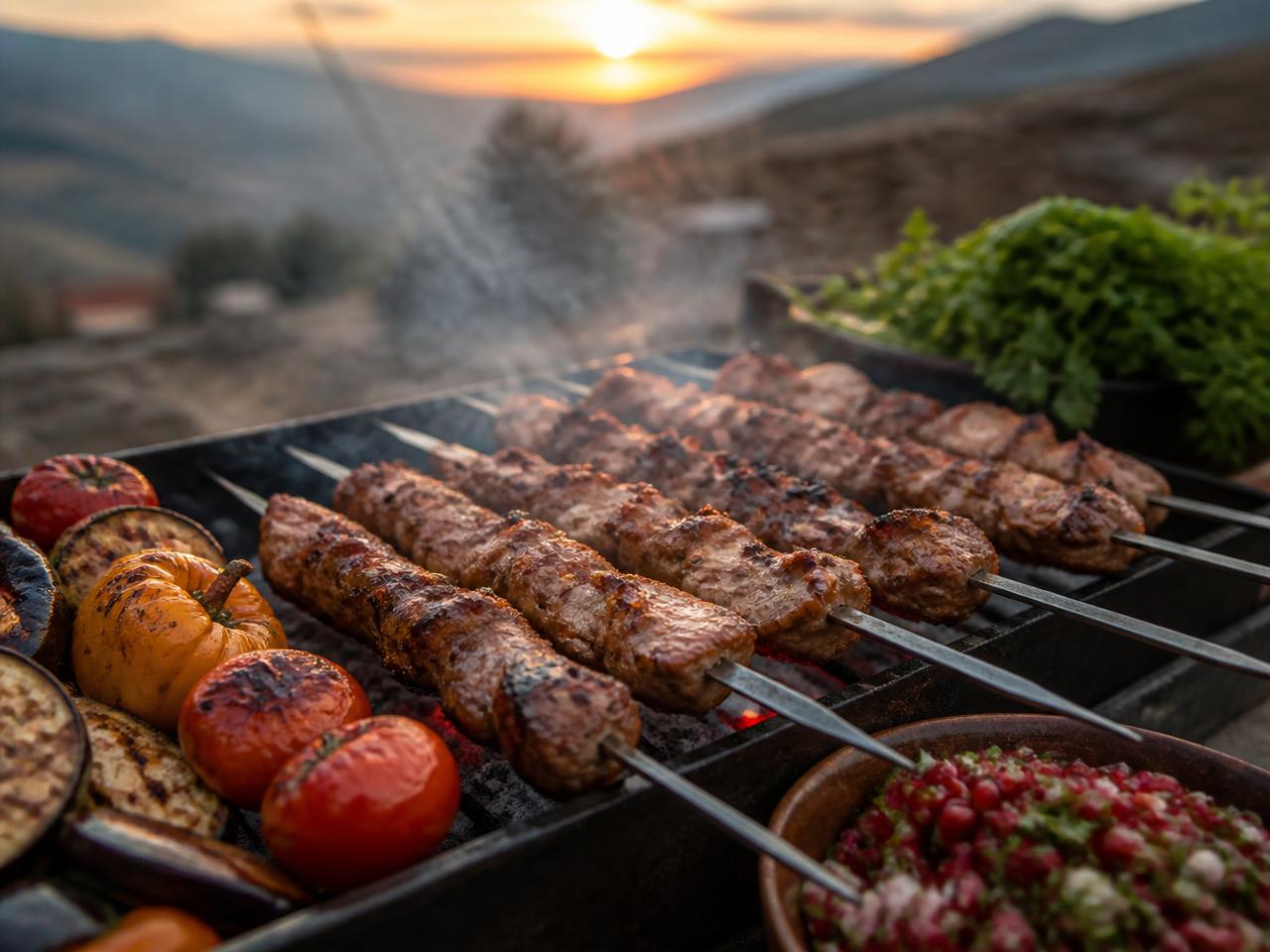
Charcoal lamb glazed in pomegranate molasses, the Sunday centerpiece of the Caucasus.
Step-by-step →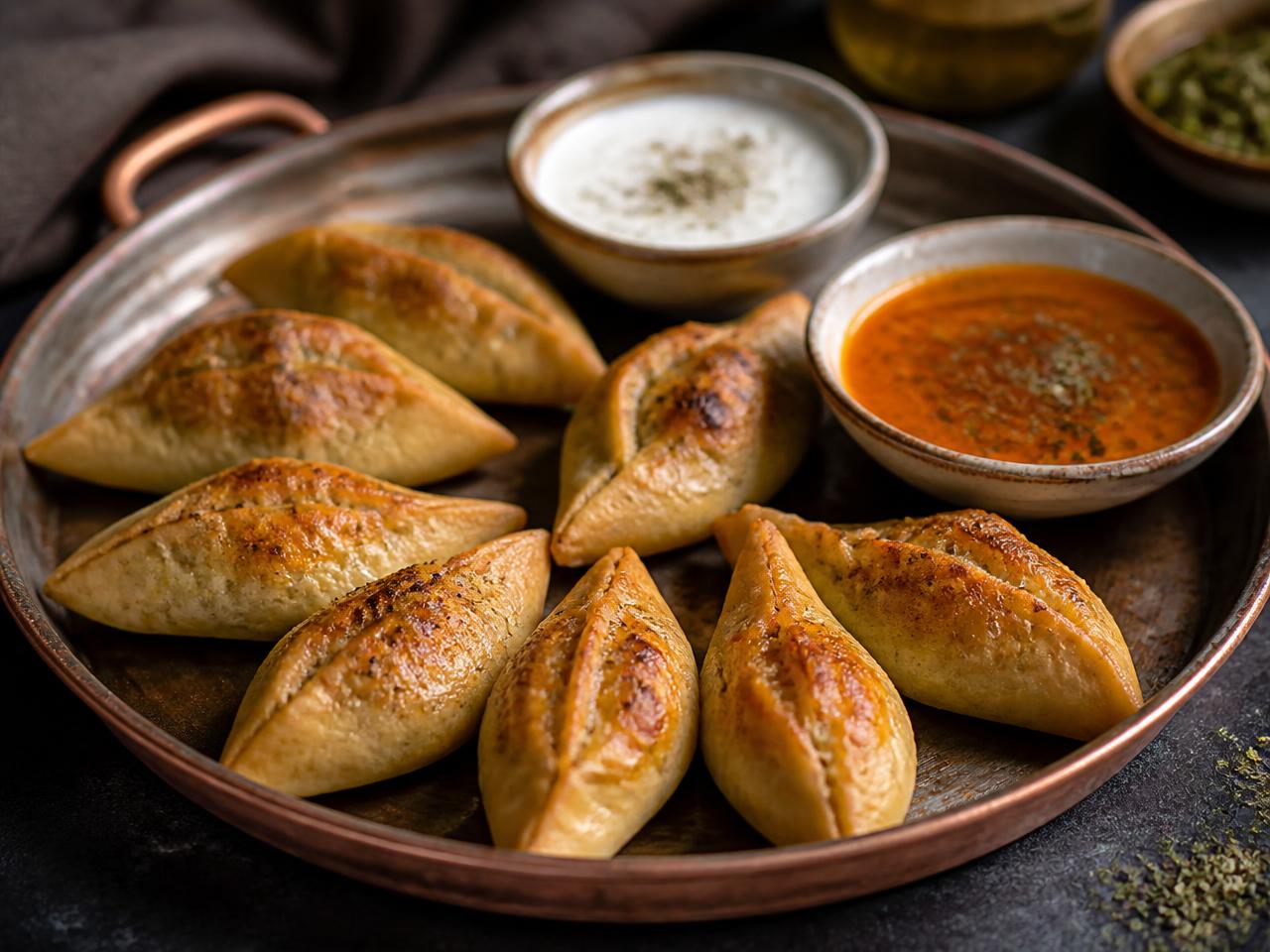
Hand-pleated beef dumplings, fried crisp and buried under a crown of black walnut.
Step-by-step →