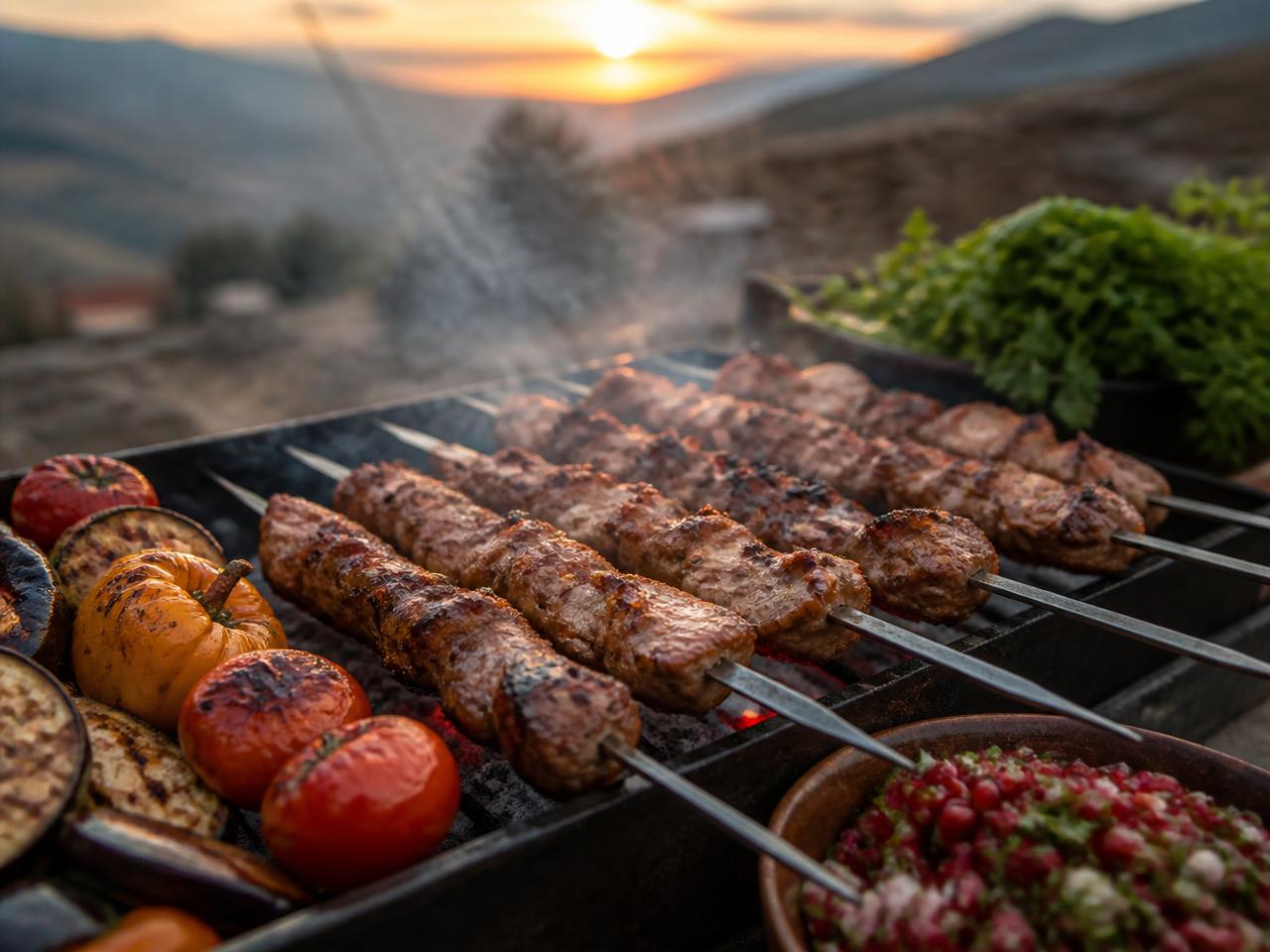
Khorovats
Charcoal lamb glazed in pomegranate molasses, the Sunday centerpiece of the Caucasus.
Step-by-step →Paper-thin unleavened flatbread, blistered and scored in the tradition of the hearth.
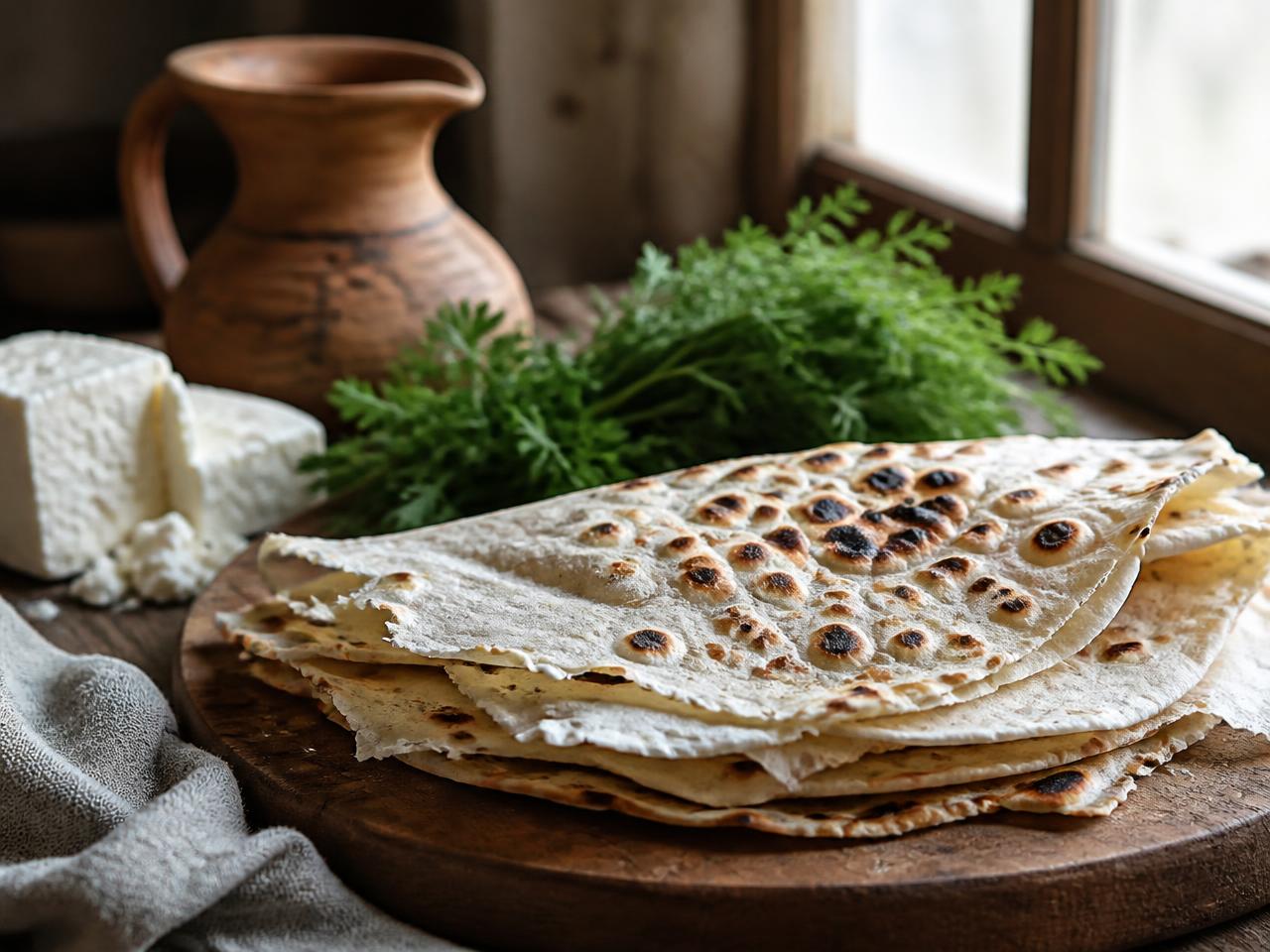
Mix flour and salt, pour in the warm water and knead for ten minutes until the dough is smooth, elastic and slightly tacky. Cover and rest for thirty minutes.
Cut the dough into six pieces. Roll each one out as thin as you dare — thin enough to read a letter through. Traditionally it is stretched over a cushion and slapped onto the wall of a tonir oven.
Lay a sheet onto a dry, screaming-hot cast-iron pan. It will bubble in seconds; flip once the blisters take colour, about thirty seconds each side.
Pile the baked sheets under a cloth so the steam keeps them pliable. Dried sheets keep for months and revive with a sprinkle of water.
Add 1 tsp yeast and 1 tbsp oil, roll thicker and score with your fingers for a soft, pulled loaf.
Press chopped tarragon, dill or nigella seeds into the sheet before the final roll.
Yes — 250 °C on an upturned baking tray or pizza stone, 60–90 seconds per sheet.
It was baked too long, or cooled uncovered. Stack sheets under a towel straight off the heat.
Lavash is the bread of the Armenian highlands, baked against the curved clay wall of a tonir — a pit oven sunk into the floor of the house. Baking day was collective work: women knelt in a row, one rolling, one stretching, one reaching into the heat.
In 2014 the tradition of making and sharing lavash was inscribed on UNESCO's list of Intangible Cultural Heritage of Humanity. The bread carries ritual weight too: at weddings it is laid on the shoulders of the couple as a wish for plenty.
Charcoal lamb glazed in pomegranate molasses, the Sunday centerpiece of the Caucasus.
Step-by-step →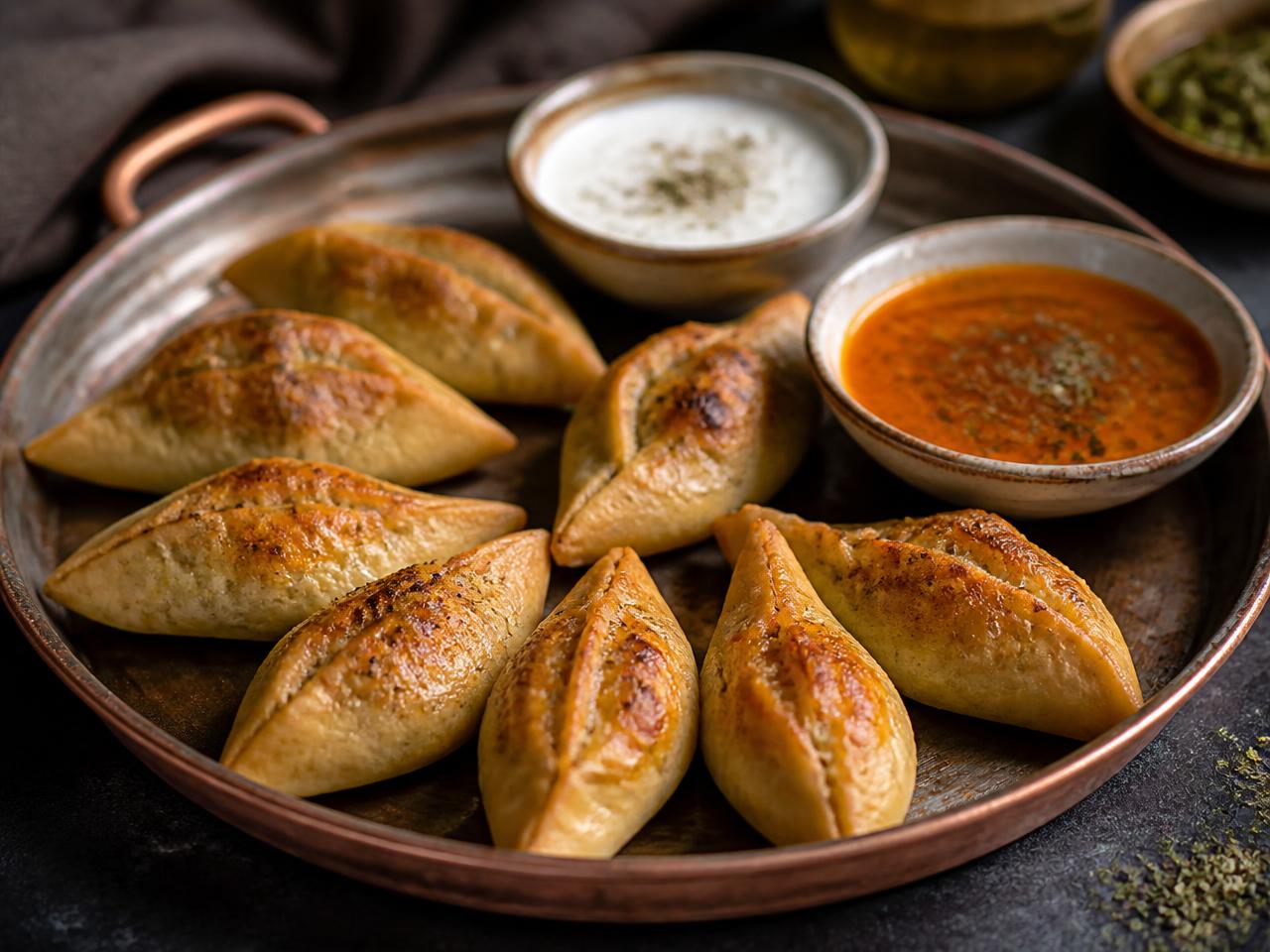
Hand-pleated beef dumplings, fried crisp and buried under a crown of black walnut.
Step-by-step →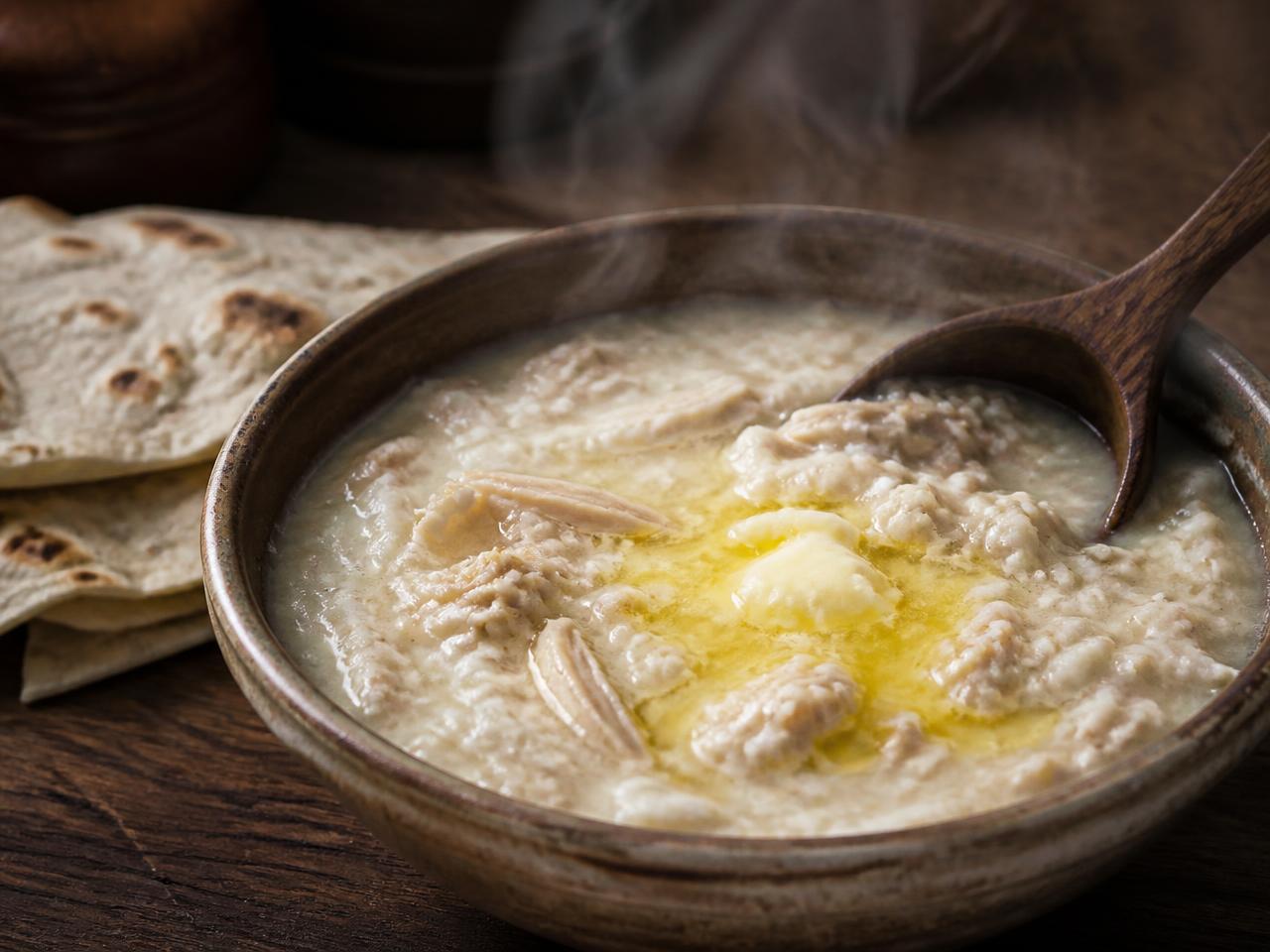
Cracked wheat beaten with chicken or lamb into a slow, thick porridge of pure patience.
Step-by-step →