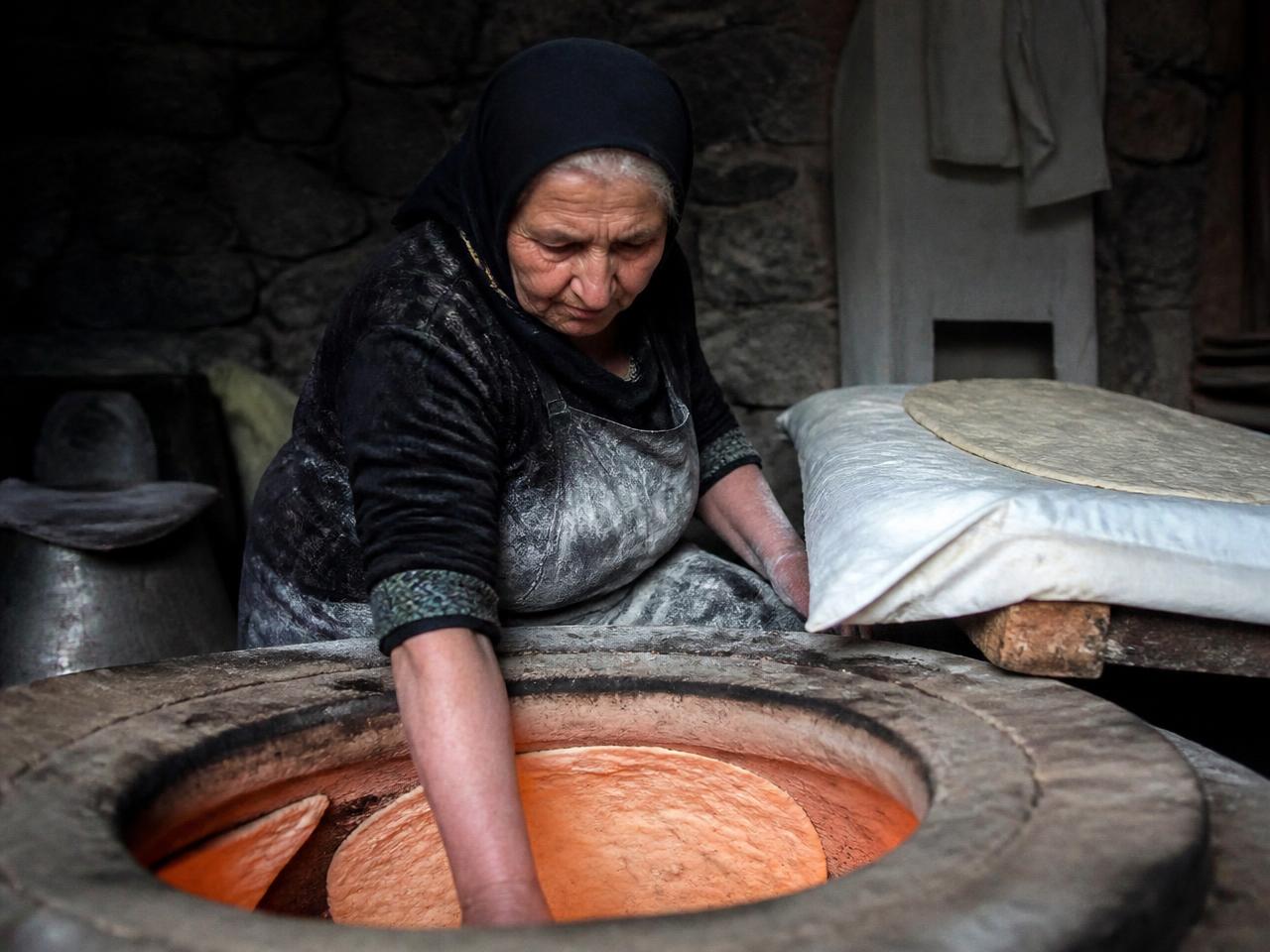
Armenian woman preparing bread in a traditional stone courtyard
A living inheritance

ARMENIAN
HISTORY &
CULTURE

Armenia’s story stretches across ancient kingdoms, monasteries, manuscript rooms, market towns and family tables. It is a culture carried not only by monuments, but by language, song, craft, memory and food.

Historical overview

AT THE
CROSSROADS

The Armenian Highlands lie between Anatolia, Iran and the Caucasus. Trade, migration and empire repeatedly changed political borders, while language, church, schools and family networks helped preserve a shared identity.

  1. 9th–6th centuries BCE

    Urartu and the highlands

    The kingdom of Urartu flourished around Lake Van and built fortified cities, irrigation systems and skilled metalwork. Its landscape forms part of the deep historical setting from which Armenian civilization emerged.

    Timeline item 1
  2. 6th century BCE–1st century CE

    An Armenian kingdom takes shape

    Armenian-speaking communities and royal dynasties developed at the meeting point of Anatolia, Persia and the Caucasus. Under Tigranes the Great in the first century BCE, the Armenian kingdom briefly became a major regional power.

    Timeline item 2
  3. Traditionally dated 301 CE

    A Christian kingdom

    Armenian tradition holds that King Tiridates III adopted Christianity as the state religion through Saint Gregory the Illuminator. The Armenian Apostolic Church became a central institution of identity and learning.

    Timeline item 3
  4. 405 CE

    The Armenian alphabet

    Scholar and monk Mesrop Mashtots created the Armenian alphabet. Translation of scripture and the writing of history helped begin a literary golden age and gave Armenian culture a durable written home.

    Timeline item 4
  5. 9th–11th centuries

    The Bagratid era

    A renewed Armenian kingdom supported trade, churches, monasteries and cities. Ani, later called the city of a thousand and one churches, became a celebrated political and commercial centre.

    Timeline item 5
  6. 11th–14th centuries

    Cilician Armenia

    An Armenian state developed on the Mediterranean coast of Cilicia. Its ports connected Armenian merchants and rulers with Byzantium, the Crusader states and European trading networks.

    Timeline item 6
  7. 16th–19th centuries

    Between empires

    Historic Armenian lands were divided mainly between Ottoman and Persian rule, while the eastern regions later entered the Russian Empire. Churches, schools, merchants and printing networks sustained communal life across borders.

    Timeline item 7
  8. 1915–1923

    Genocide and displacement

    The Armenian Genocide in the Ottoman Empire destroyed communities and caused mass death and displacement. Survivors rebuilt lives across the Middle East, Europe, the Americas and beyond, greatly expanding the Armenian diaspora.

    Timeline item 8
  9. 1918–present

    Republic, Soviet period and independence

    The First Republic was established in 1918 and incorporated into the Soviet Union in 1920. Armenia declared independence in 1991; today it is a republic whose culture is shaped by both the homeland and a worldwide diaspora.

    Timeline item 9
Culture in images

Armenia’s heritage is visible in its stone, manuscripts, music and crafts— traditions preserved by people who continue to practise them today.

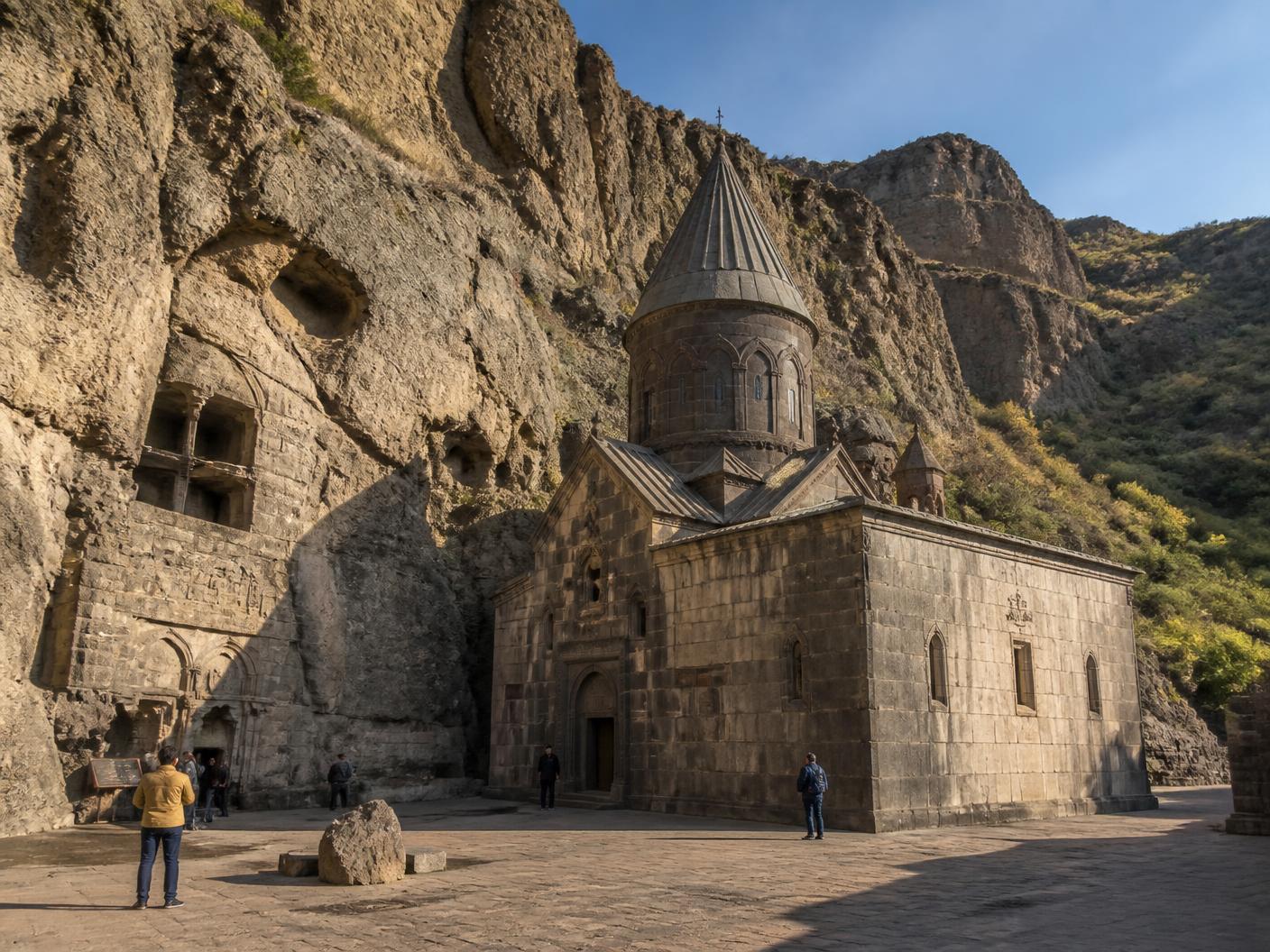
Geghard Monastery surrounded by the rocky Armenian landscape
Geghard MonasterySacred architecture
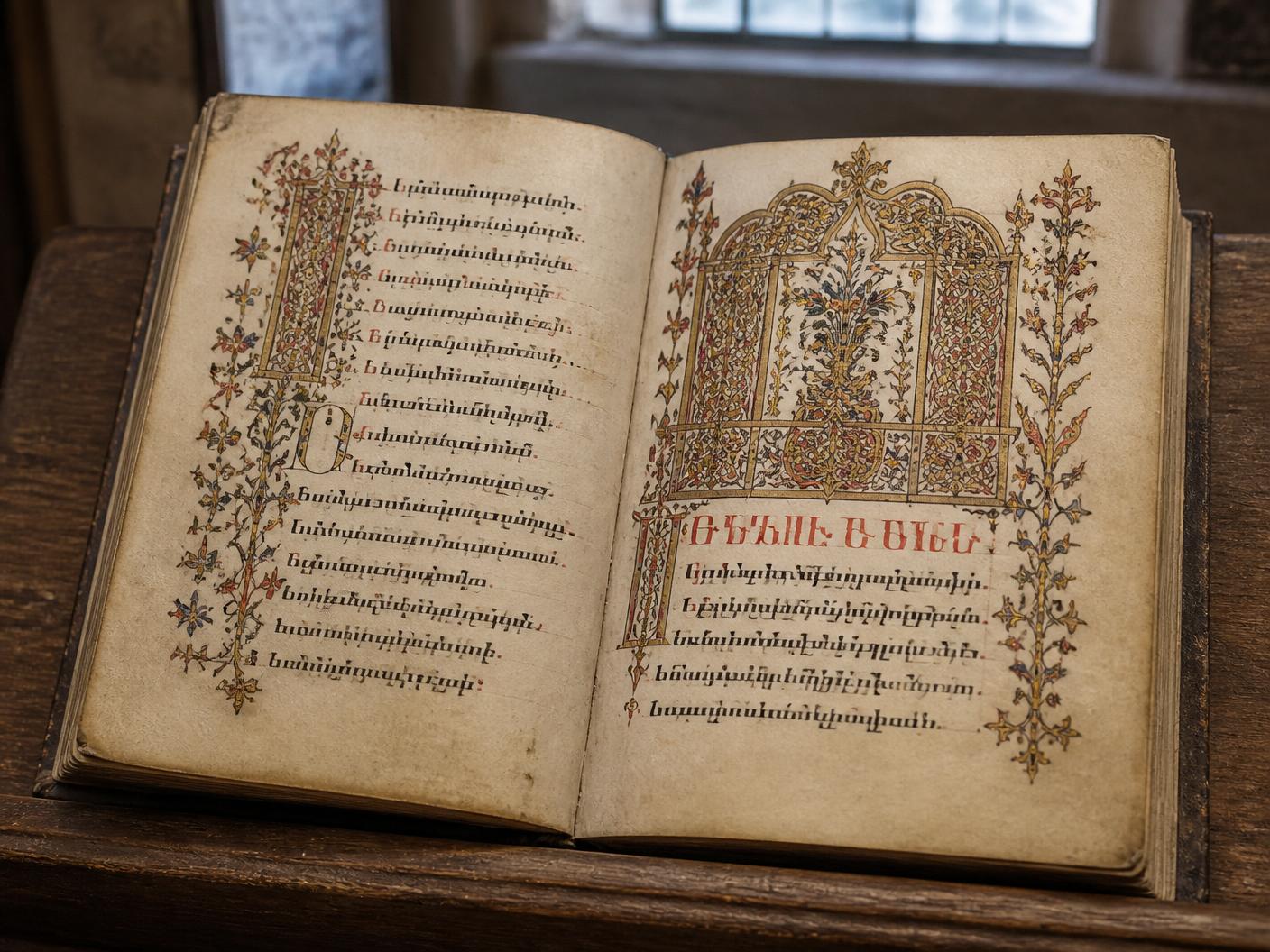
Open illuminated Armenian manuscript with ornate lettering
The manuscript traditionLanguage & memory
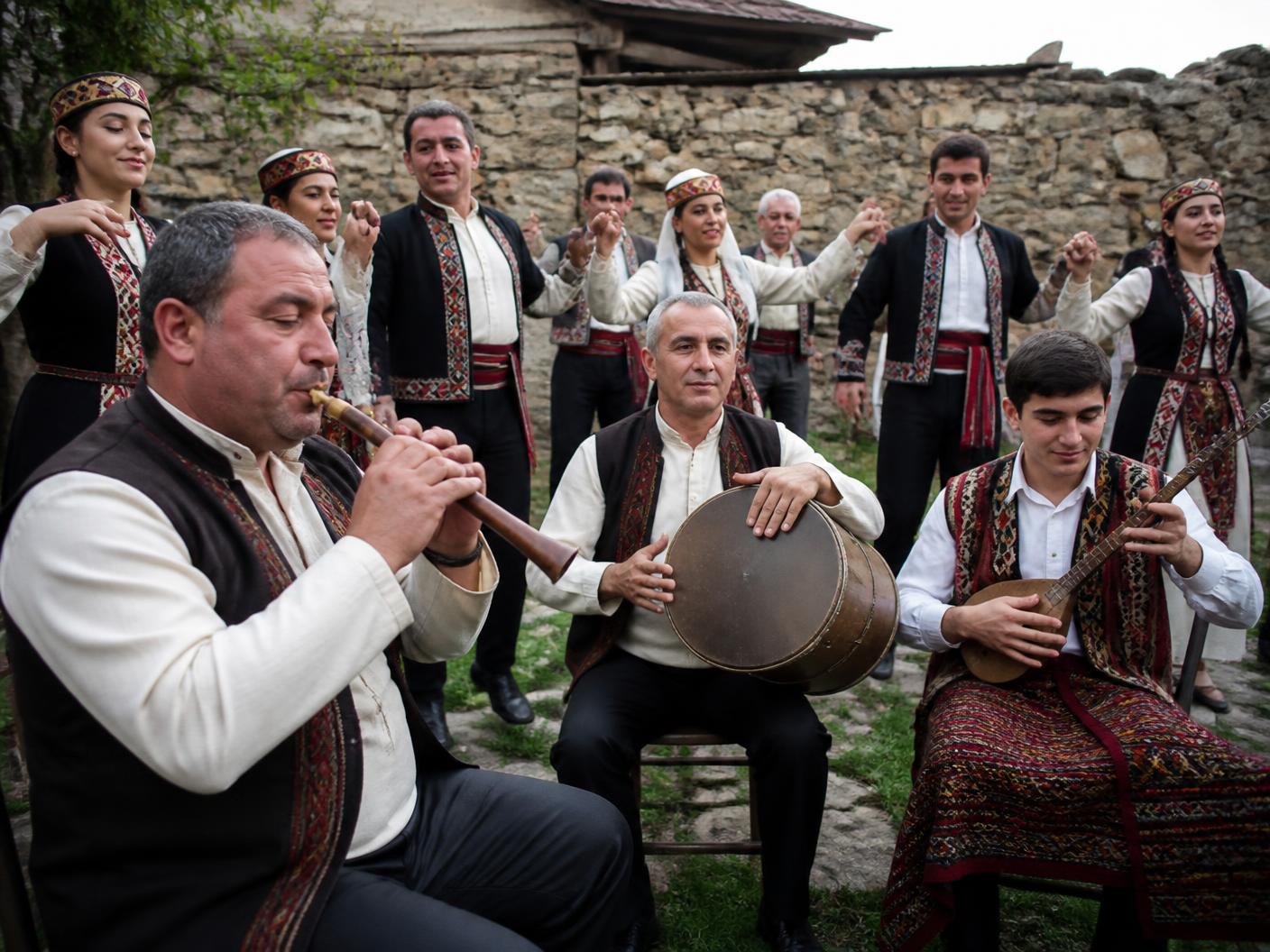
Armenian musicians and folk dancers performing together
Duduk and KochariMusic & movement
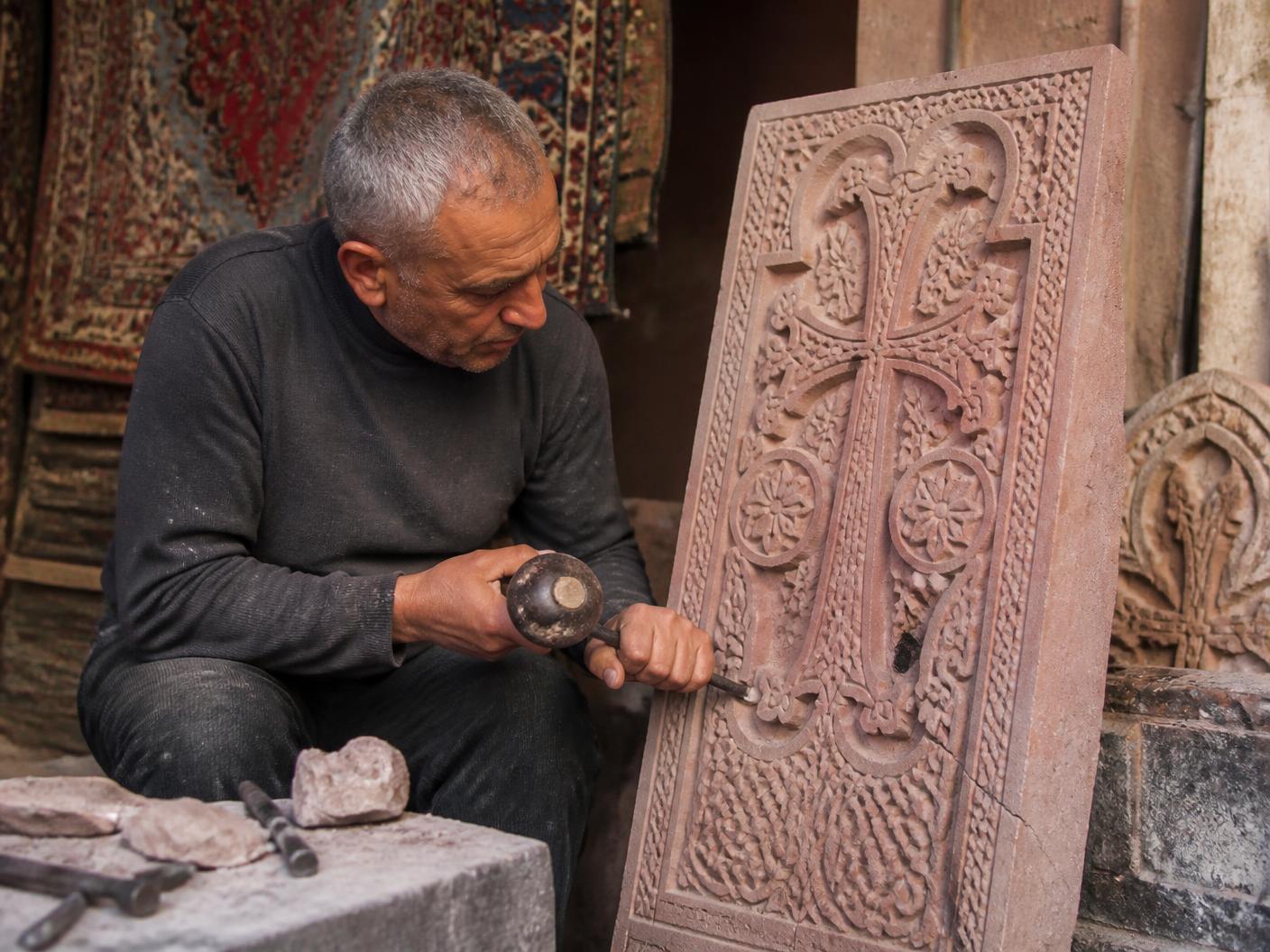
Armenian stone carver creating an intricate khachkar
Carving a khachkarLiving craft
Cultural foundations

WHAT ENDURES

01

Language & literature

Armenian is an independent branch of the Indo-European language family. Its distinctive alphabet originally had 36 letters, with two added later. Classical Armenian, or Grabar, preserves early translations, theology and historical writing; Eastern and Western Armenian are the principal modern literary forms. Manuscripts were copied and illuminated in monasteries, where text, ornament and vivid mineral color turned books into works of art.
02

Faith & architecture

Stone churches and monasteries are among Armenia’s most recognizable landmarks. Builders adapted domes, cross-shaped plans and carved façades to a mountainous, earthquake-prone environment. Khachkars—upright carved memorial stones centred on a cross—combine faith, memory and intricate botanical patterns. Sites such as Geghard, Haghpat, Sanahin and the cathedral and churches of Echmiatsin are on UNESCO’s World Heritage List.

03

Music & dance

Armenian music moves between sacred chant, village song and urban composition. The duduk, a double-reed instrument traditionally made from apricot wood, is known for its warm and deeply expressive sound. Circle and line dances bring communities together at weddings and festivals; Kochari, performed with linked steps and strong rhythmic movement, remains one of the best-known traditions.

04

Craft, carpet & stone

Armenian makers have long worked with wool, clay, silver, wood and volcanic tuff. Carpet patterns can carry protective symbols, plants, animals and geometric forms, while regional dyes and weaving methods produce distinct styles. Lacework, embroidery, ceramics and metalwork often pass through families. Stone carving appears everywhere—from church walls and fountains to khachkars and modern memorials.

05

Festivals & the calendar

The calendar combines Christian observance with older seasonal customs. Vardavar is famous for joyful water splashing and is now associated with the Transfiguration. Trndez centres on fire, blessing and community. Easter tables feature eggs, greens and rice dishes; Christmas is celebrated by the Armenian Apostolic Church on 6 January. Weddings, harvests and village feast days remain important occasions for music and shared food.

06

Hospitality & family

Hospitality is expressed through the table. Guests are offered coffee, fruit, sweets and a generous meal, and refusing every offer can feel less polite than accepting a little. Large gatherings connect generations: elders tell stories, children learn songs and recipes, and long toasts honour family, friendship and remembrance. The idea of sharing is often more important than formal presentation.

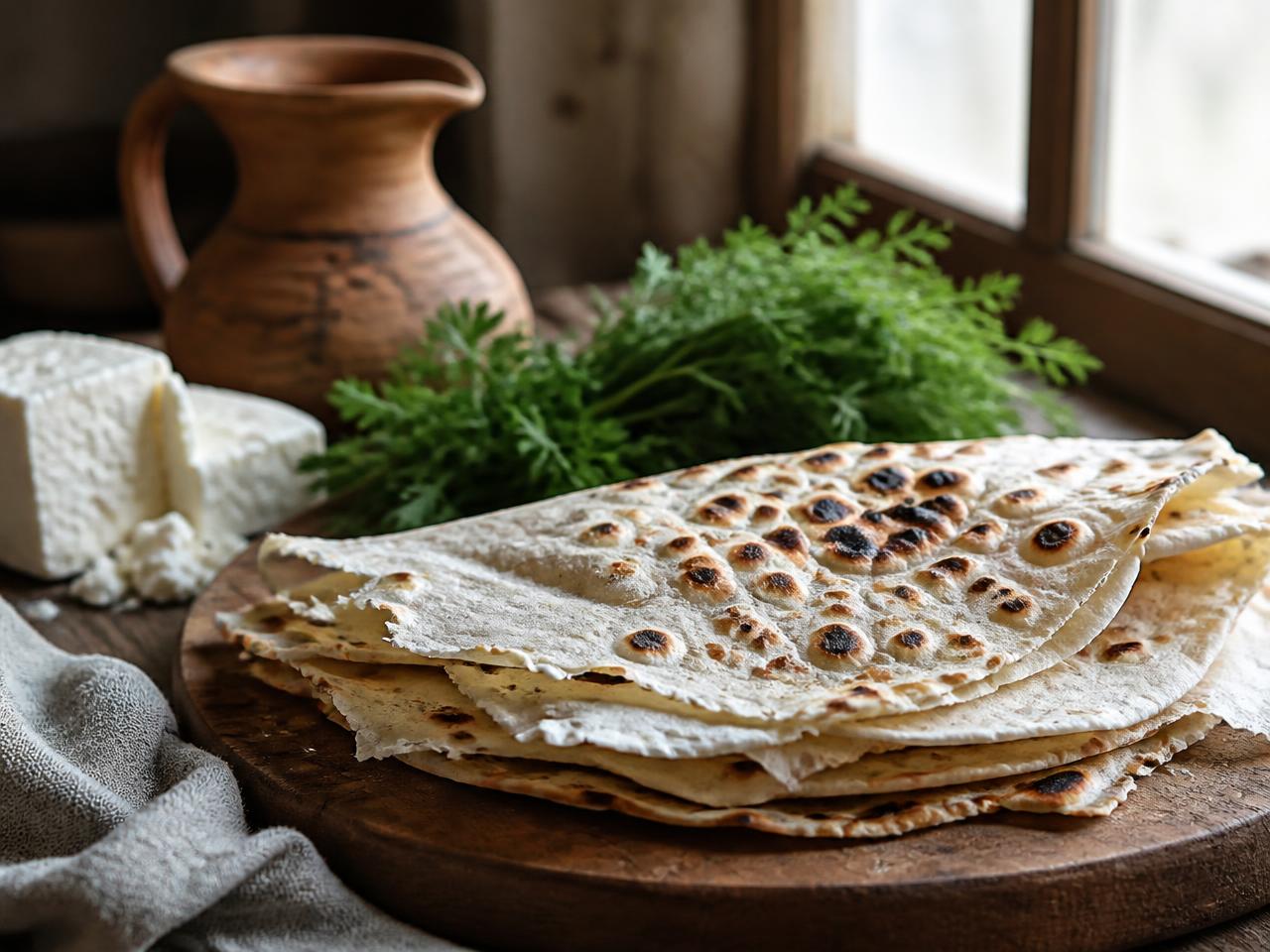
Fresh Armenian lavash bread served with herbs
Food as memory

THE TABLE IS AN
ARCHIVE

Armenian cooking reflects geography and movement. Wheat, herbs, pulses, orchard fruit and preserved foods suited mountain seasons; grilling and the tonir shaped bread and meat traditions. Regional and diasporic kitchens added new names, spices and methods without losing the importance of sharing.

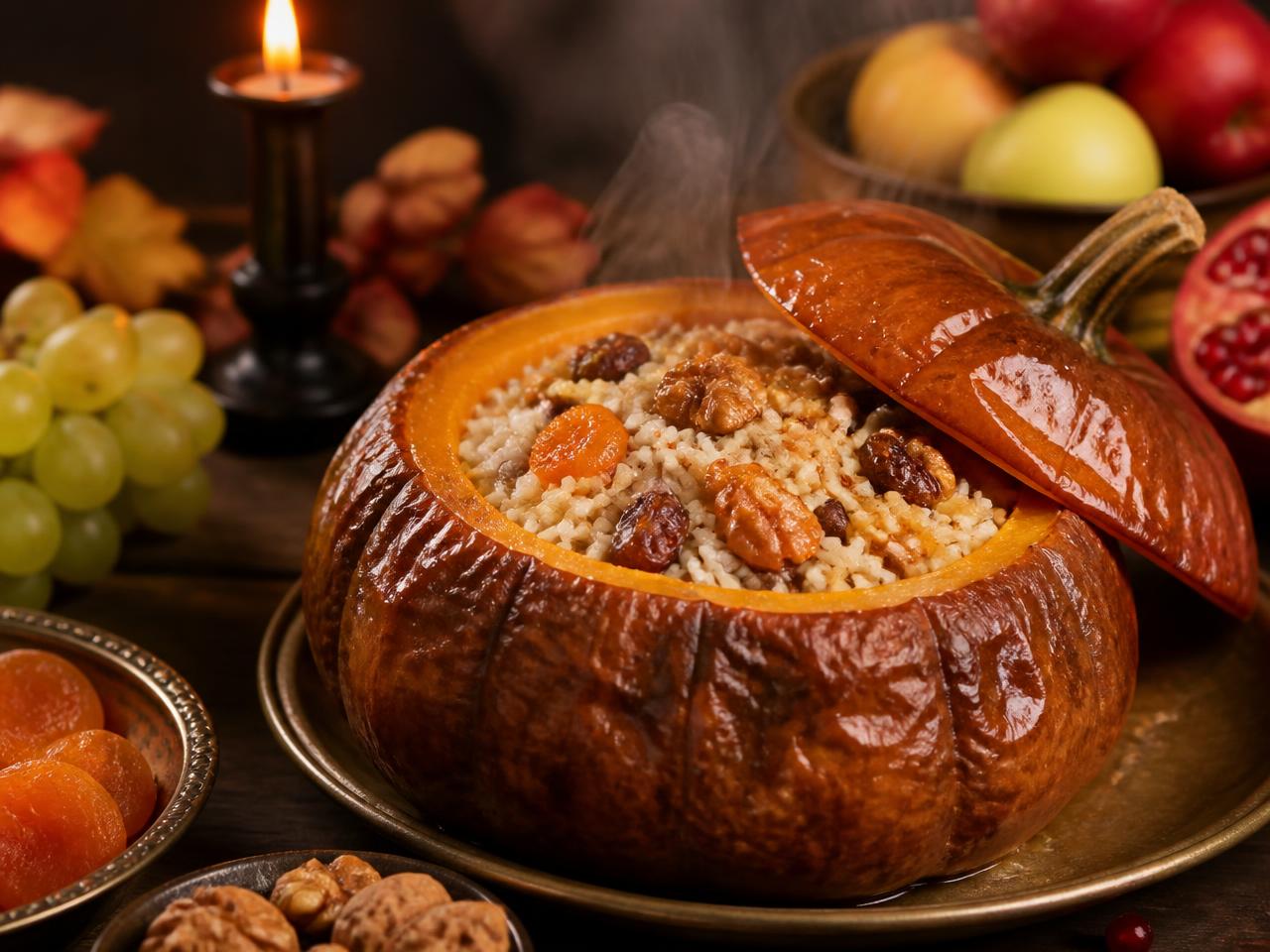
Lavash-making brings several people around one oven. Harissa rewards long, patient stirring. Ghapama turns a pumpkin into a festive centrepiece, while gata changes shape and filling from one region to another. A recipe therefore records place, celebration and family memory as much as ingredients.

Explore all 30 dishes →
Armenia around the world

ONE CULTURE,
MANY HOMES

Armenian communities have existed beyond the highlands for centuries, built through commerce, education, pilgrimage and displacement. After the genocide, survivors formed and enlarged communities in cities including Beirut, Aleppo, Paris, Marseille, Los Angeles, Buenos Aires and Moscow.

Churches, schools, newspapers, cultural associations and kitchens helped each generation maintain connections. Diaspora culture is not a copy frozen in time: it continually combines inherited customs with local languages, ingredients and artistic forms while remaining connected to Armenia.

Festive Armenian ghapama filled pumpkin on a shared table
Culture in the present

INHERITED, PRACTISED, RENEWED

Armenian culture survives because people use it: they speak and teach the language, restore buildings, carve stone, play old instruments in new music, gather for festivals and remake family dishes. Tradition is strongest when it remains a living conversation between past and present.