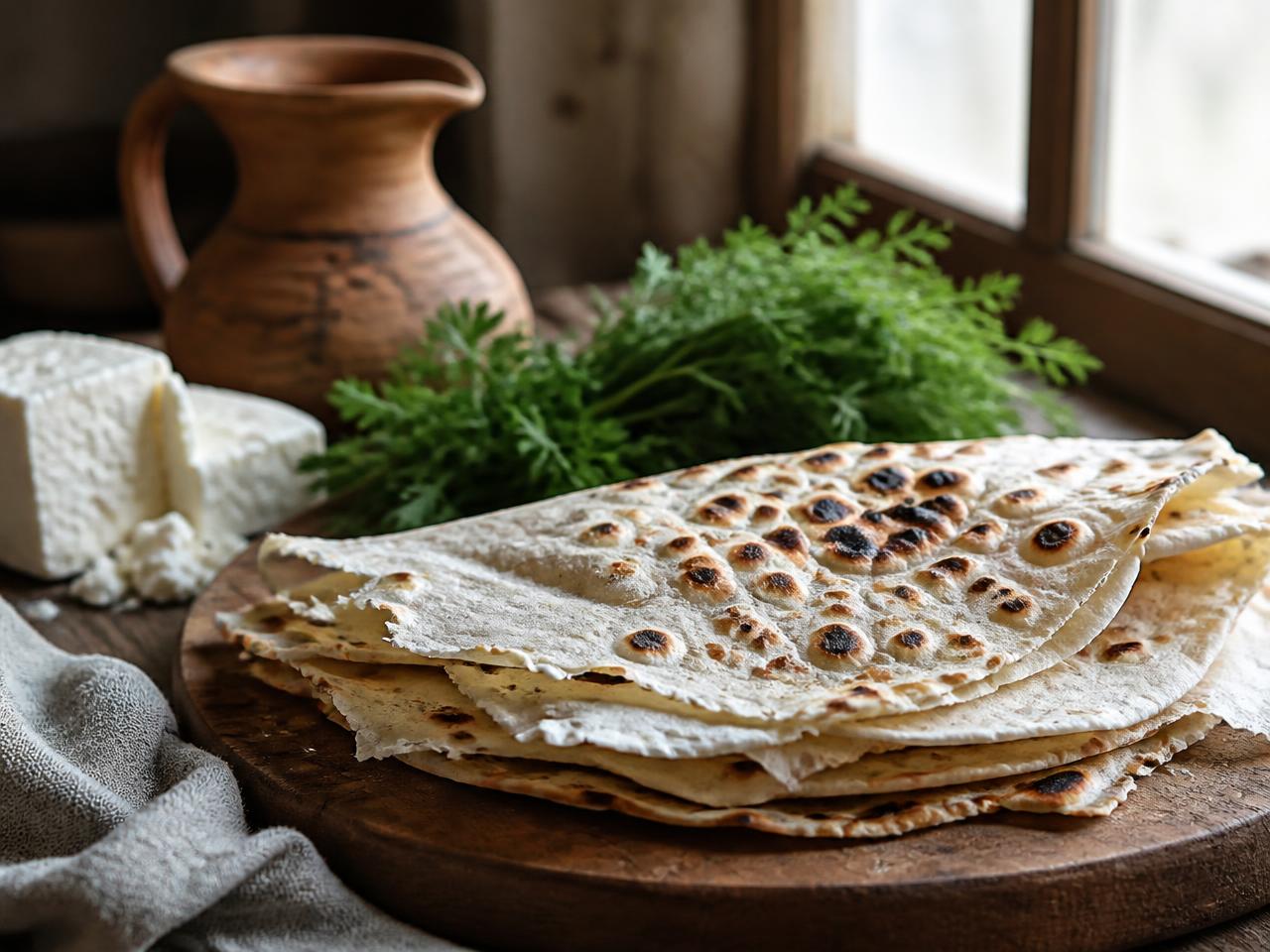
Lavash
Paper-thin unleavened flatbread, blistered and scored in the tradition of the hearth.
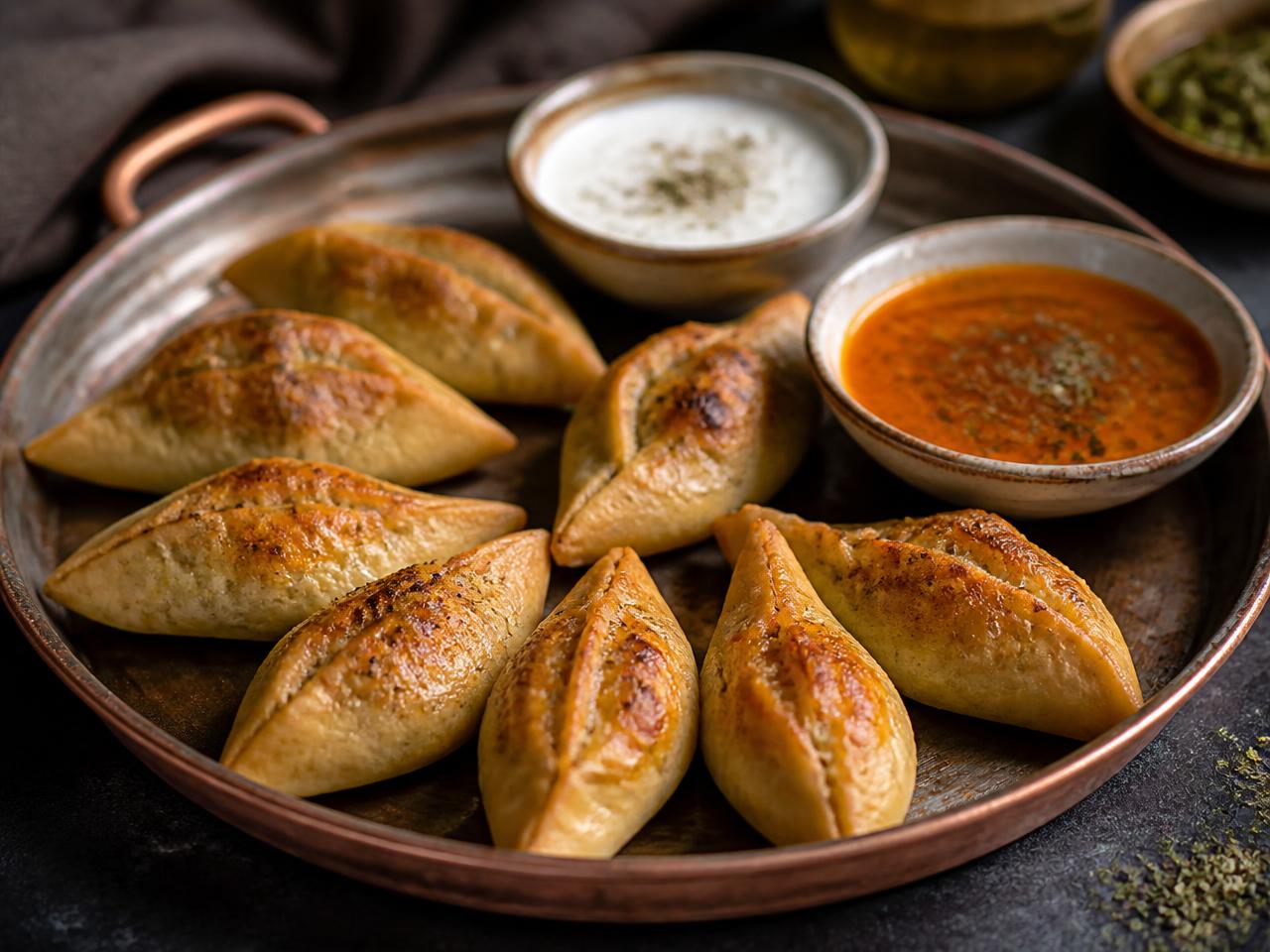
Step-by-step →Hand-pleated beef dumplings, fried crisp and buried under a crown of black walnut.
Work flour, egg, water and a pinch of salt into a stiff dough. Wrap and rest thirty minutes — this dough must be strong enough to roll paper-thin without tearing.
Mix the mince with grated onion, cumin, paprika, salt and pepper. Keep it cold so it holds its shape while you fill.
Roll the dough out thin, cut into 4 cm squares, drop a small spoon of filling in each and pinch two opposite sides up, leaving the ends open like little boats.
Pack the boats side by side in a buttered tray and bake at 200°C for 20 minutes, until the exposed dough turns deep gold.
Pour hot broth over the tray and return it to the oven for five minutes so the bases soften while the edges stay crisp. Serve with garlic yoghurt and crushed walnuts.
Packed side by side in a round tray so the boats fuse into a honeycomb.
The Cilician way — simmered rather than baked, then dressed in butter and yogurt.
Either, or half and half. Aim for around 20 % fat so the filling does not dry in the oven.
No, but a shallow copper or steel tray browns the bases better than glass.
Armenian manti are smaller and drier than their Central Asian cousins, and the baked-then-broth-soaked method belongs to the kitchens of Cilicia and Aintab, where families lined trays with hundreds of identical boats for feast days.
After 1915, refugee households carried the shape westward to Aleppo, Beirut and Los Angeles, where making manti became a diaspora ritual: several generations at one table, folding, gossiping, competing over whose boats are the neatest.
Paper-thin unleavened flatbread, blistered and scored in the tradition of the hearth.
Step-by-step →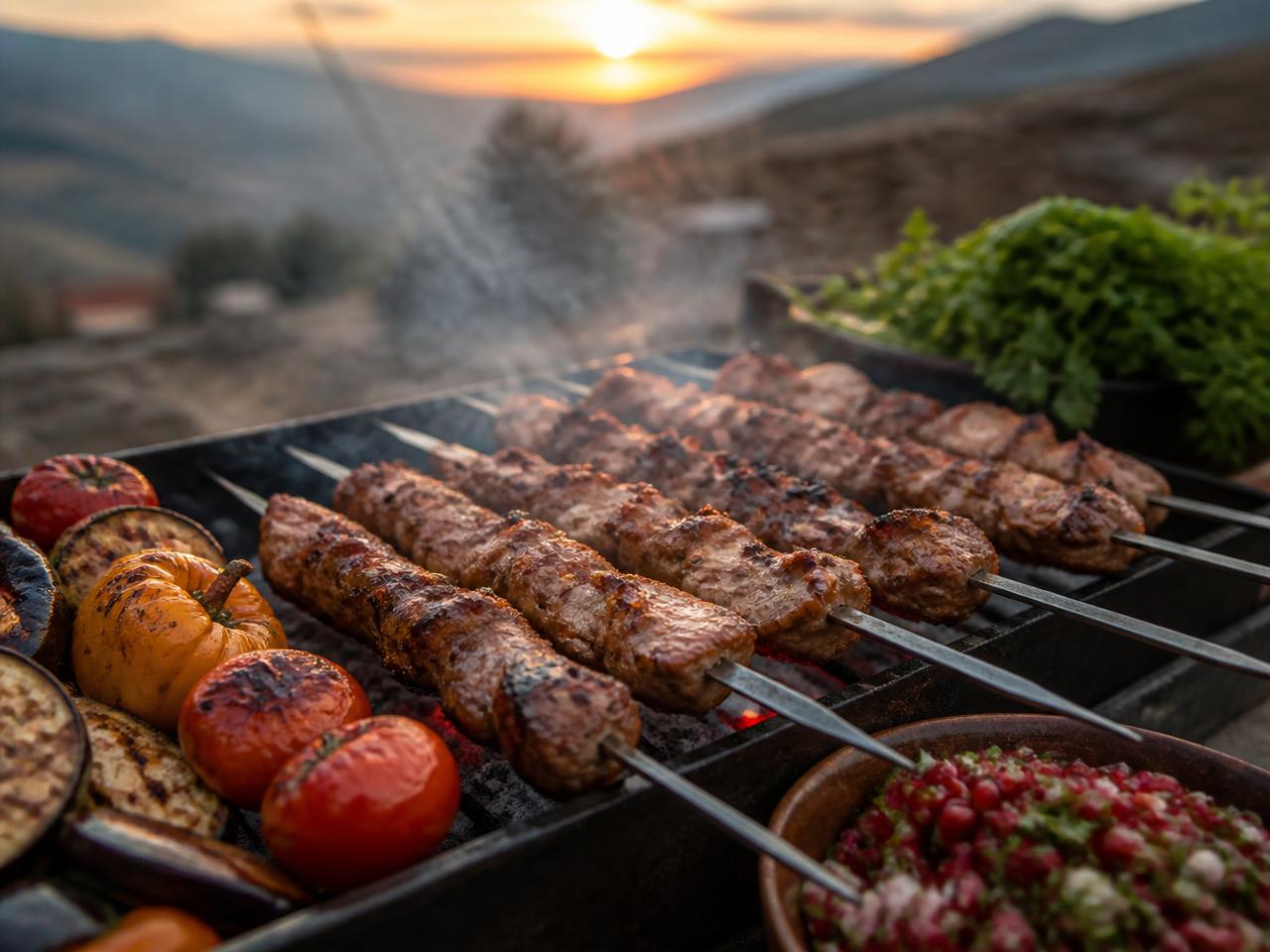
Charcoal lamb glazed in pomegranate molasses, the Sunday centerpiece of the Caucasus.
Step-by-step →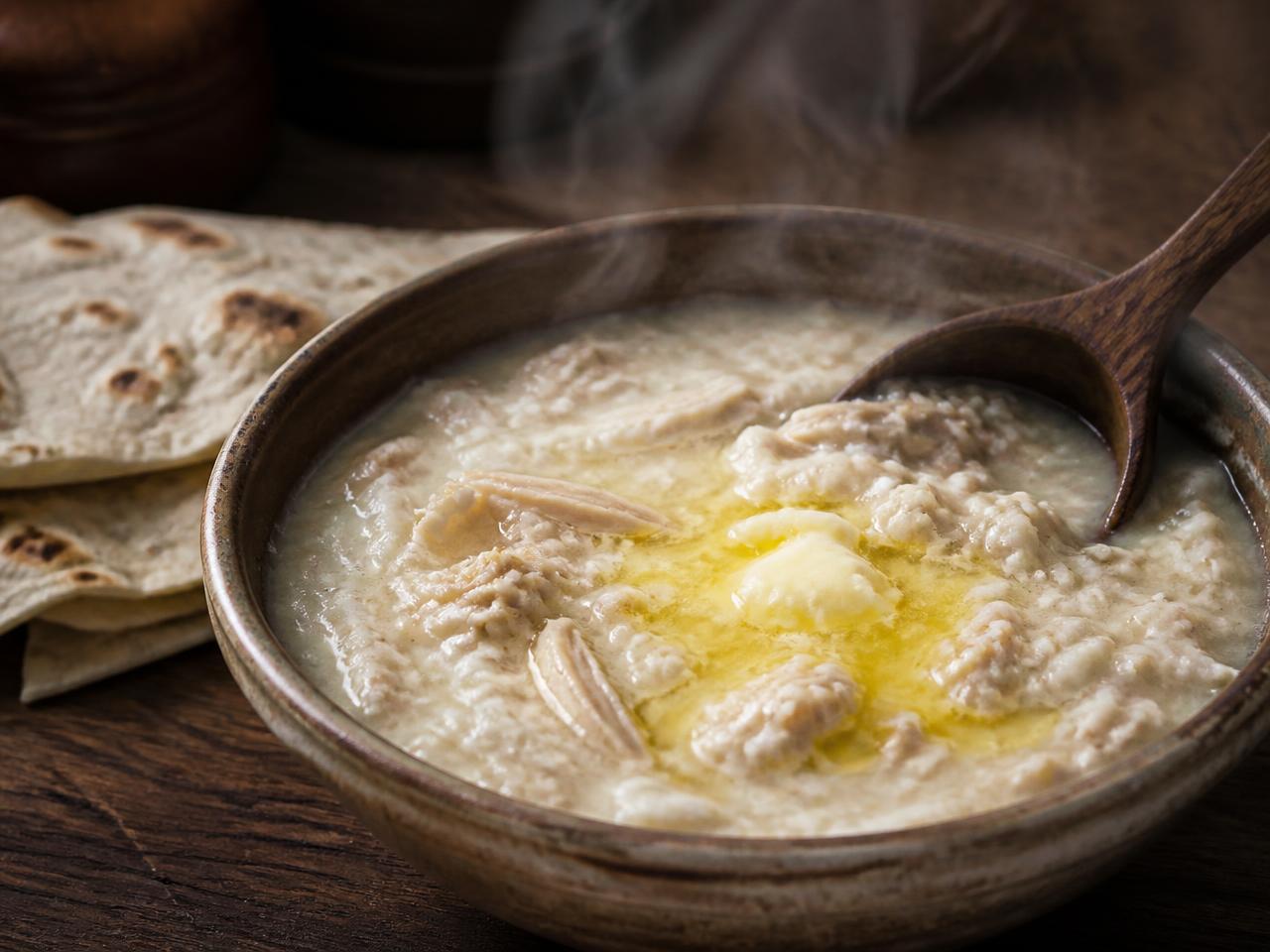
Cracked wheat beaten with chicken or lamb into a slow, thick porridge of pure patience.
Step-by-step →