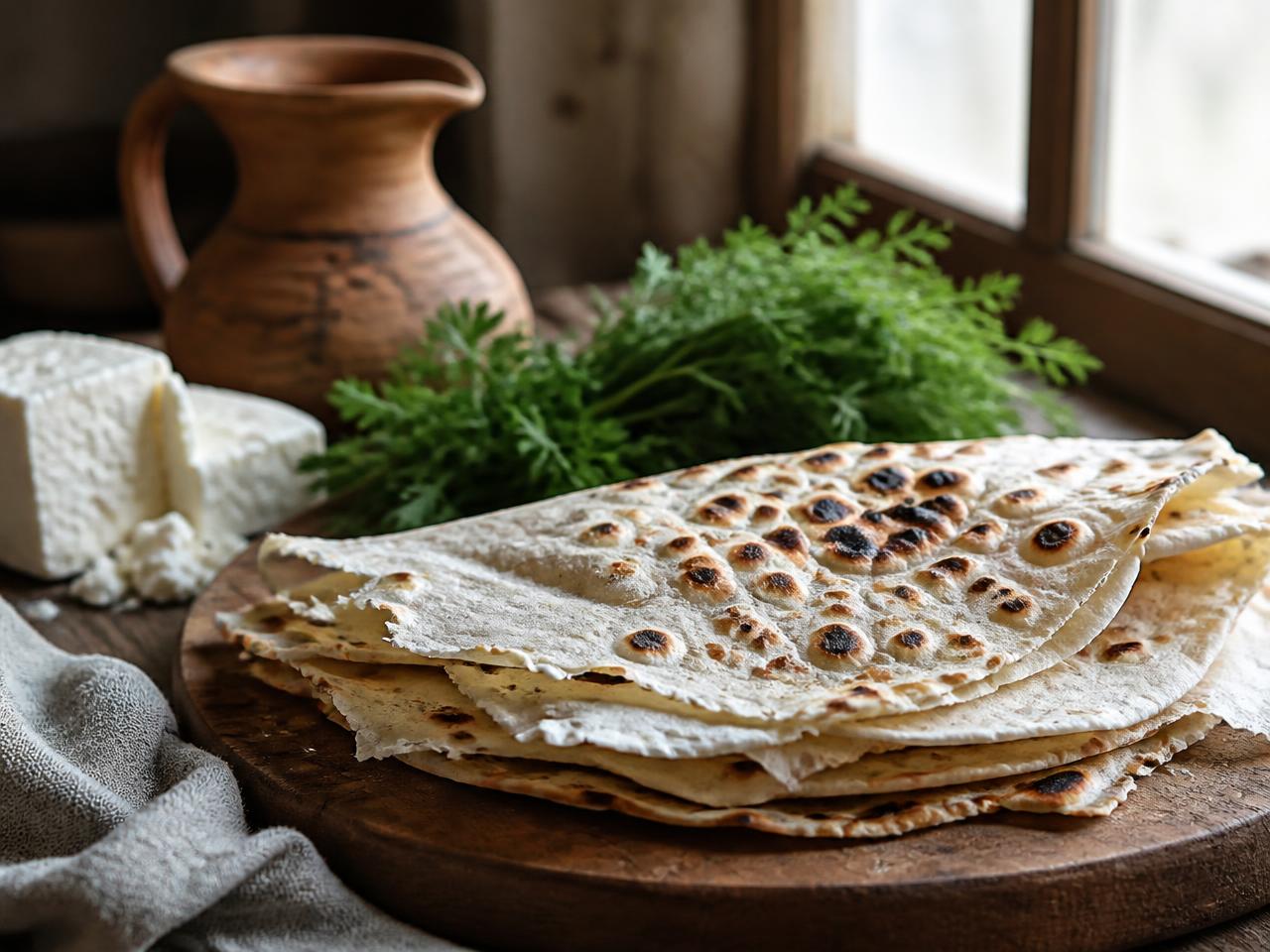
Lavash
Paper-thin unleavened flatbread, blistered and scored in the tradition of the hearth.
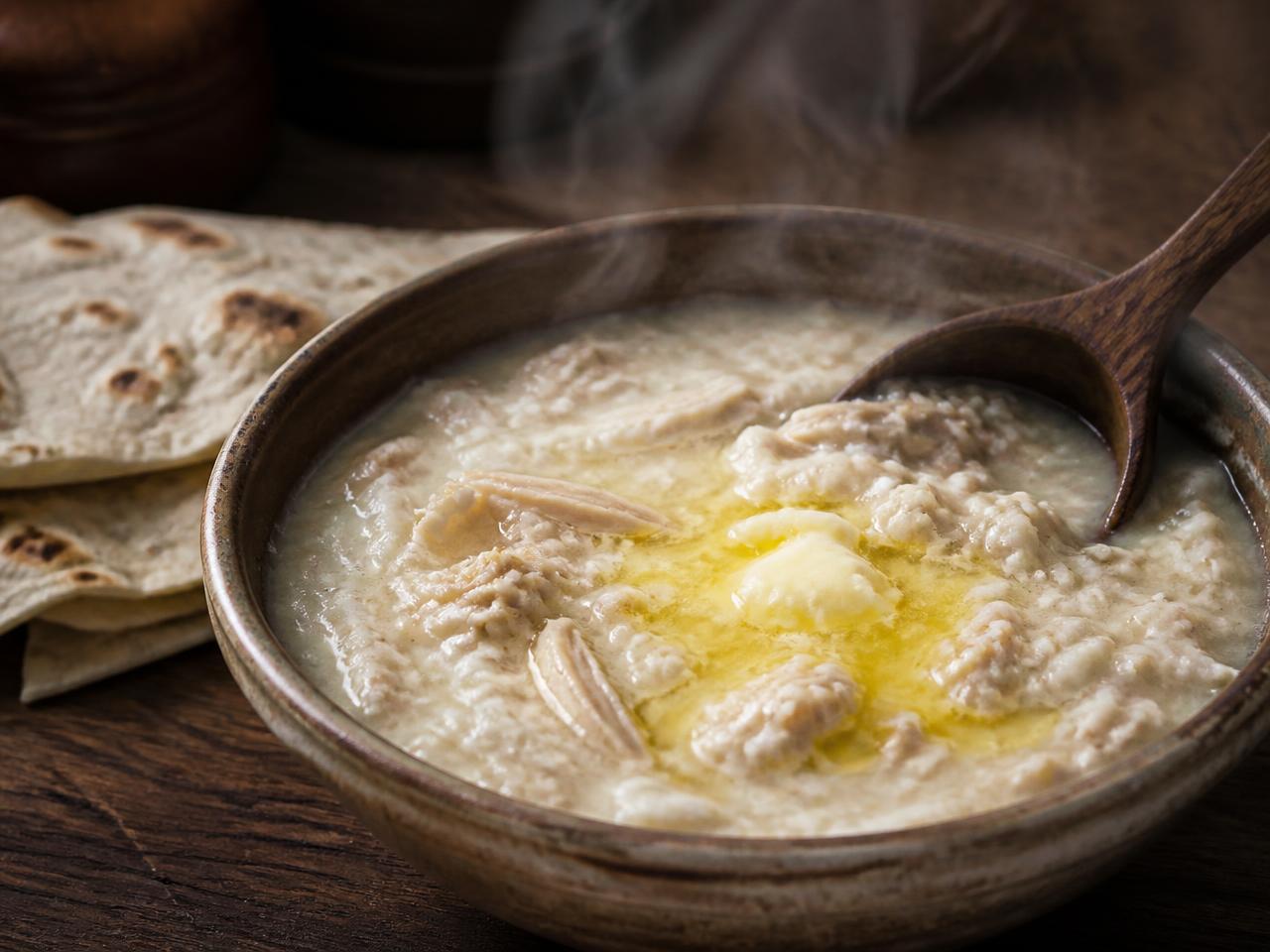
Step-by-step →Cracked wheat beaten with chicken or lamb into a slow, thick porridge of pure patience.
Rinse the shelled wheat until the water runs clear, then cover it in cold water and leave it until morning.
Cover the meat in water and simmer gently for two hours, skimming. Lift it out, pull the flesh from the bones and keep the broth.
Add the drained wheat to the broth and simmer on the lowest heat for two to three hours. It will drink almost everything and thicken as it goes.
Return the meat and beat the pot with a wooden paddle, pressing against the sides, until grain and meat stop being separate things and the mass pulls like soft dough.
Season with salt, ladle into bowls and pour over butter browned with cumin. Eat with torn lavash and nothing else.
Richer and older than the chicken version; use shoulder on the bone.
Made without meat, finished with oil instead of butter, for fasting days.
Yes for the first 40 minutes, but finish uncovered and beat by hand — that is where the texture comes from.
No. Armenian harissa is a wheat-and-meat porridge and unrelated to the North African chili paste.
Harissa is the oldest and plainest dish in the Armenian repertoire, and the most loaded. It was cooked communally in enormous cauldrons at village churches on feast days, one person always stirring so it could not catch.
It is bound to the memory of Musa Dagh, where in 1915 villagers under siege pooled their last wheat and animals into one pot. Today harissa is still cooked in vast quantities for commemorations — a dish that means survival, shared out by the ladle.
Paper-thin unleavened flatbread, blistered and scored in the tradition of the hearth.
Step-by-step →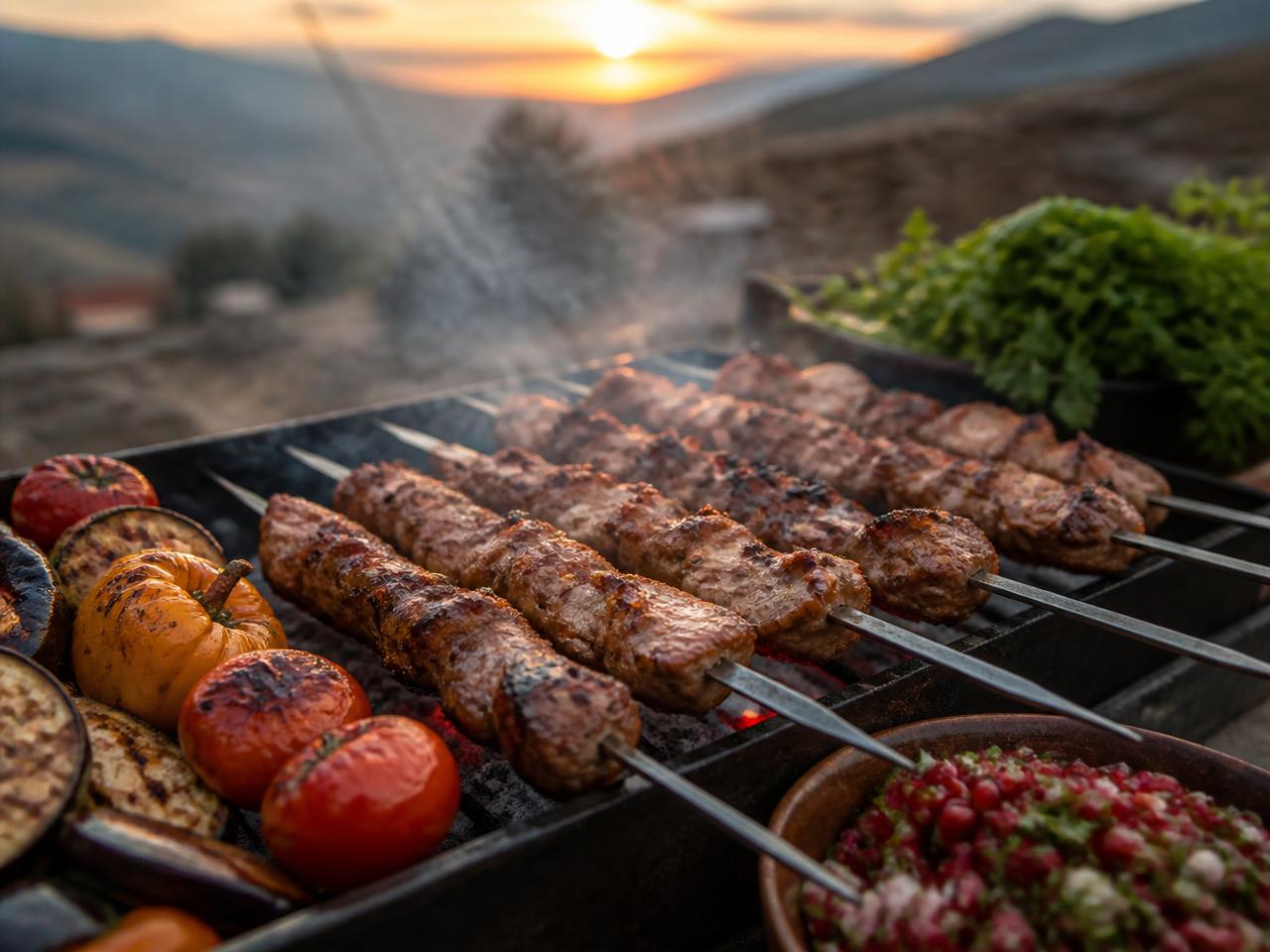
Charcoal lamb glazed in pomegranate molasses, the Sunday centerpiece of the Caucasus.
Step-by-step →
Hand-pleated beef dumplings, fried crisp and buried under a crown of black walnut.
Step-by-step →