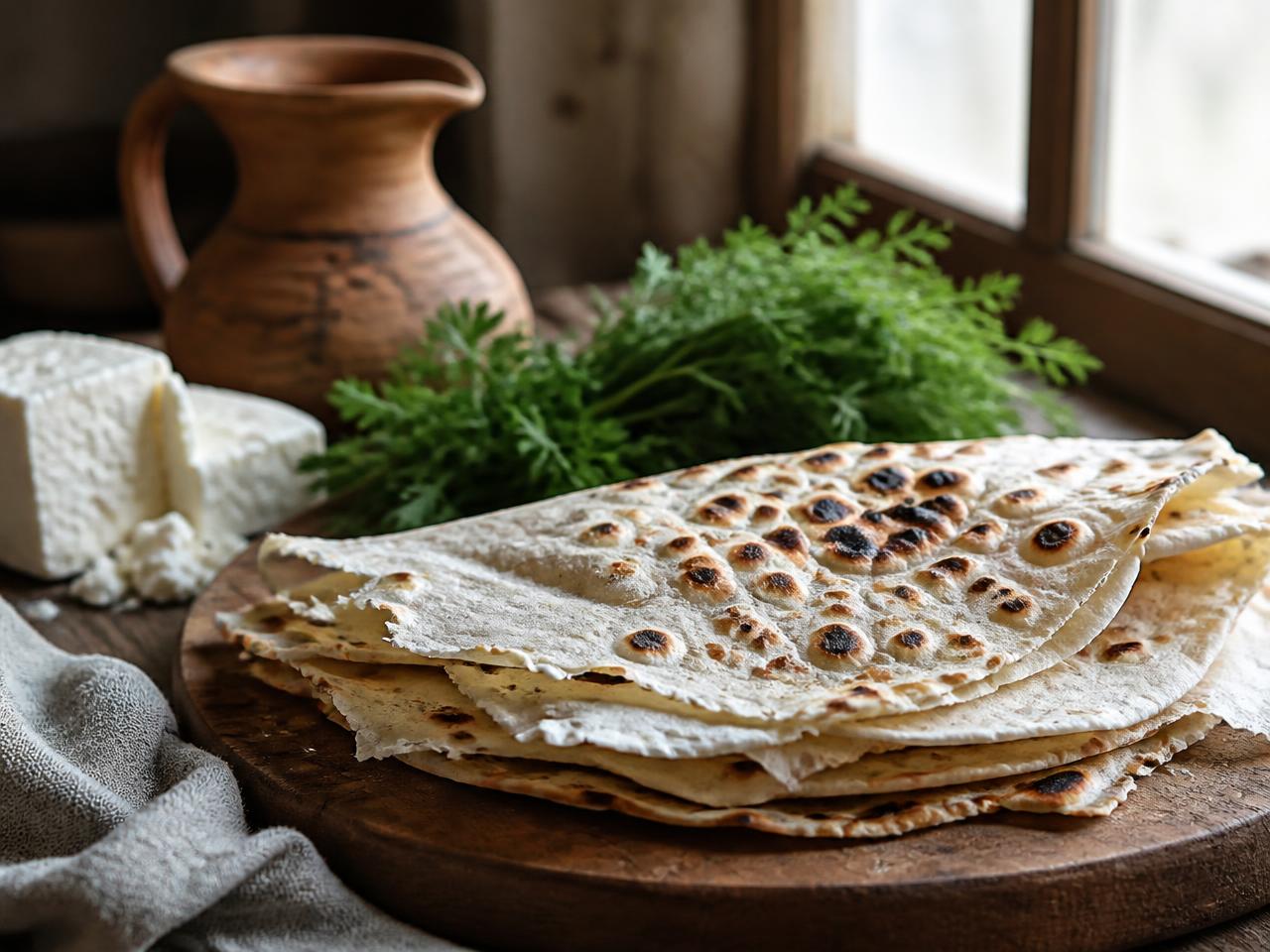
Lavash
Paper-thin unleavened flatbread, blistered and scored in the tradition of the hearth.
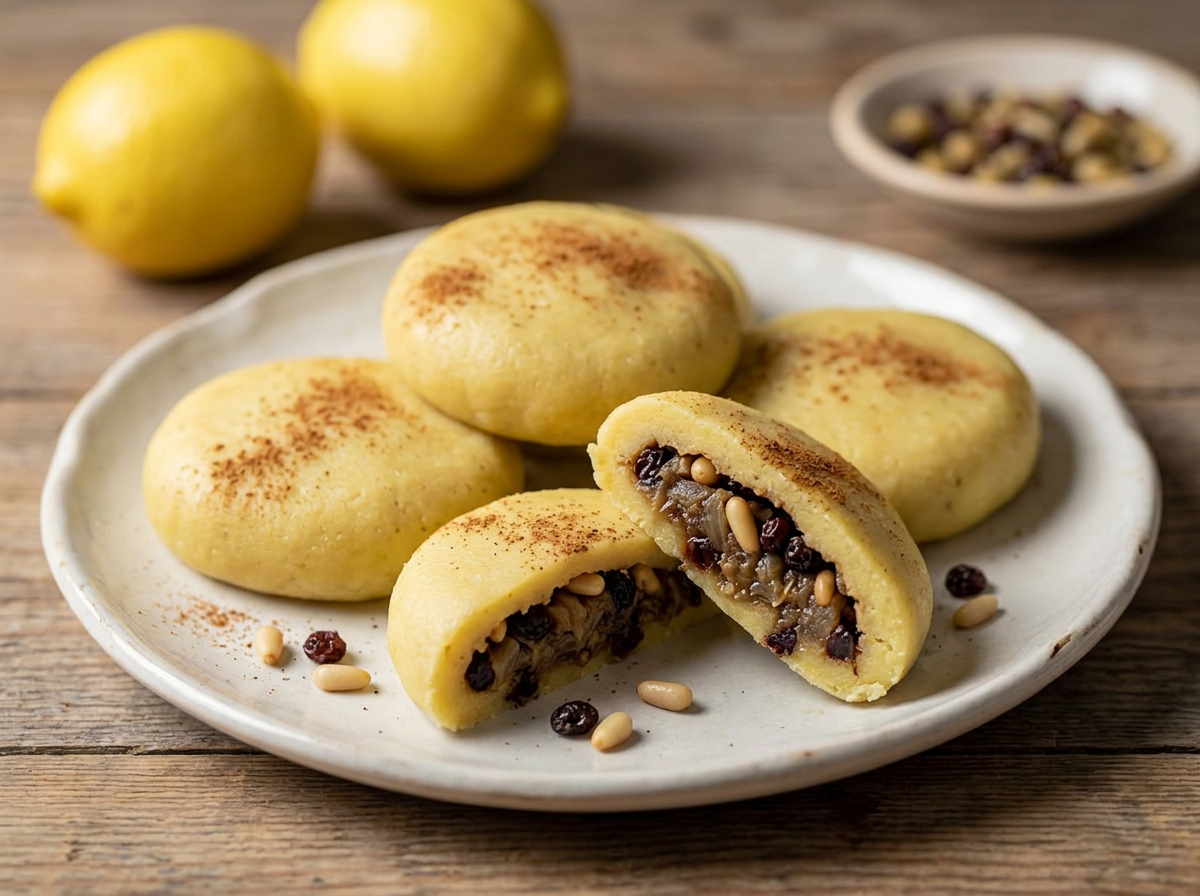
Step-by-step →A chickpea and potato sheet rolled around sweet onion, tahini and currants — Lenten food dressed for a banquet.
Steam or fry the onions very slowly with a pinch of salt for forty minutes until sweet, pale and collapsed. Cool completely.
Mix the onions with tahini, currants, pine nuts, spices, sugar and lemon into a thick paste.
Mash chickpeas and potato smooth with salt, then spread the mixture into a rectangle on a damp cloth.
Spoon the filling along the centre, use the cloth to roll it into a sealed log, chill four hours and slice with lemon and oil.
Shaped into small balls with filling hidden inside each one.
Extra tahini brushed over the outside before chilling.
The casing is too dry or too warm. Add a spoon of chickpea water and chill it.
Yes, entirely.
Topik is a Bolsahay dish — Armenian Constantinople — and the classic fasting starter in a cuisine where Lent lasted seven weeks and still had to impress guests.
Its filling is essentially a lesson in patience with onions; old cookbooks insist that any browning at all is a fault, because the sweetness must come from time, not colour.
Paper-thin unleavened flatbread, blistered and scored in the tradition of the hearth.
Step-by-step →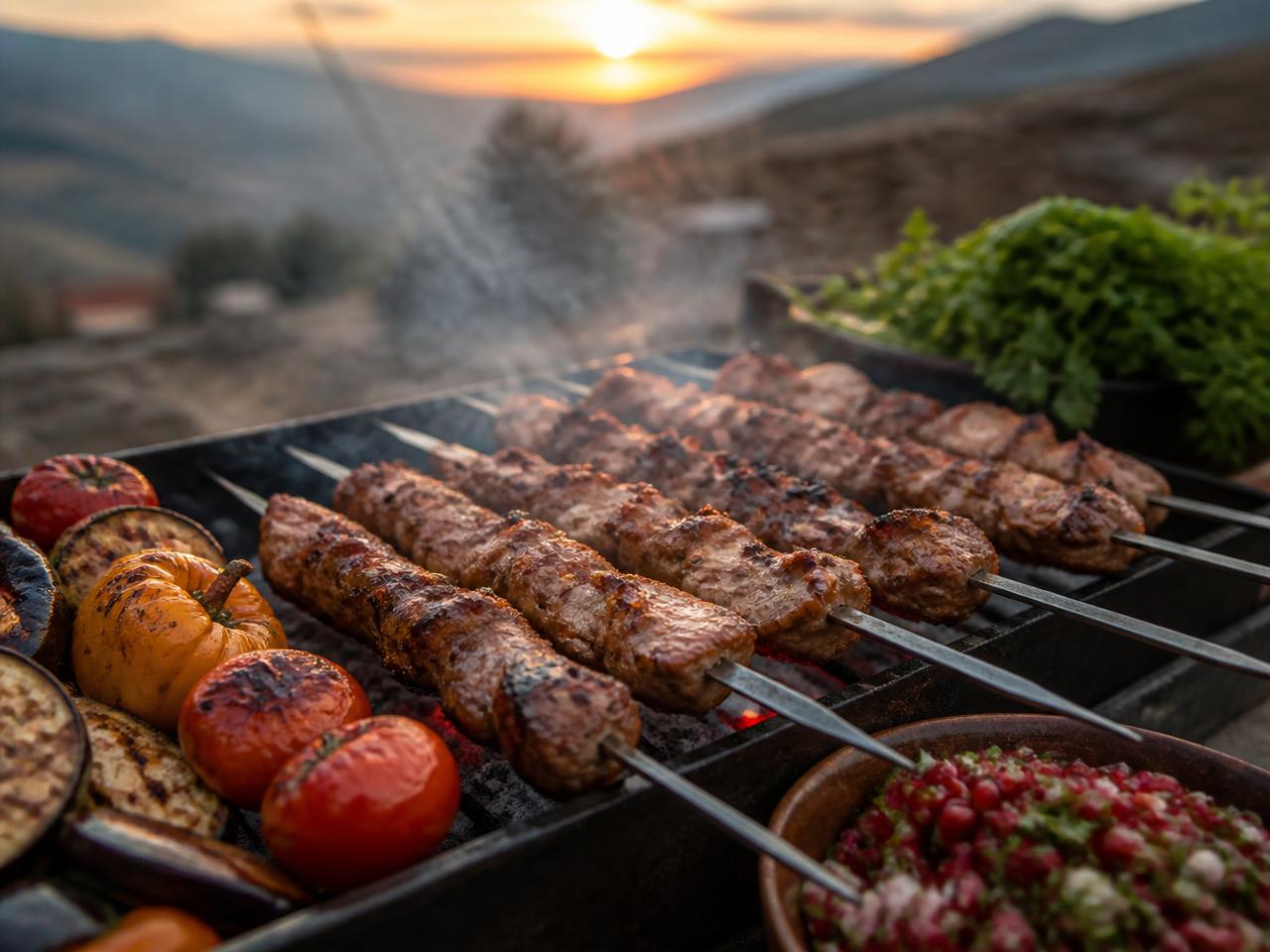
Charcoal lamb glazed in pomegranate molasses, the Sunday centerpiece of the Caucasus.
Step-by-step →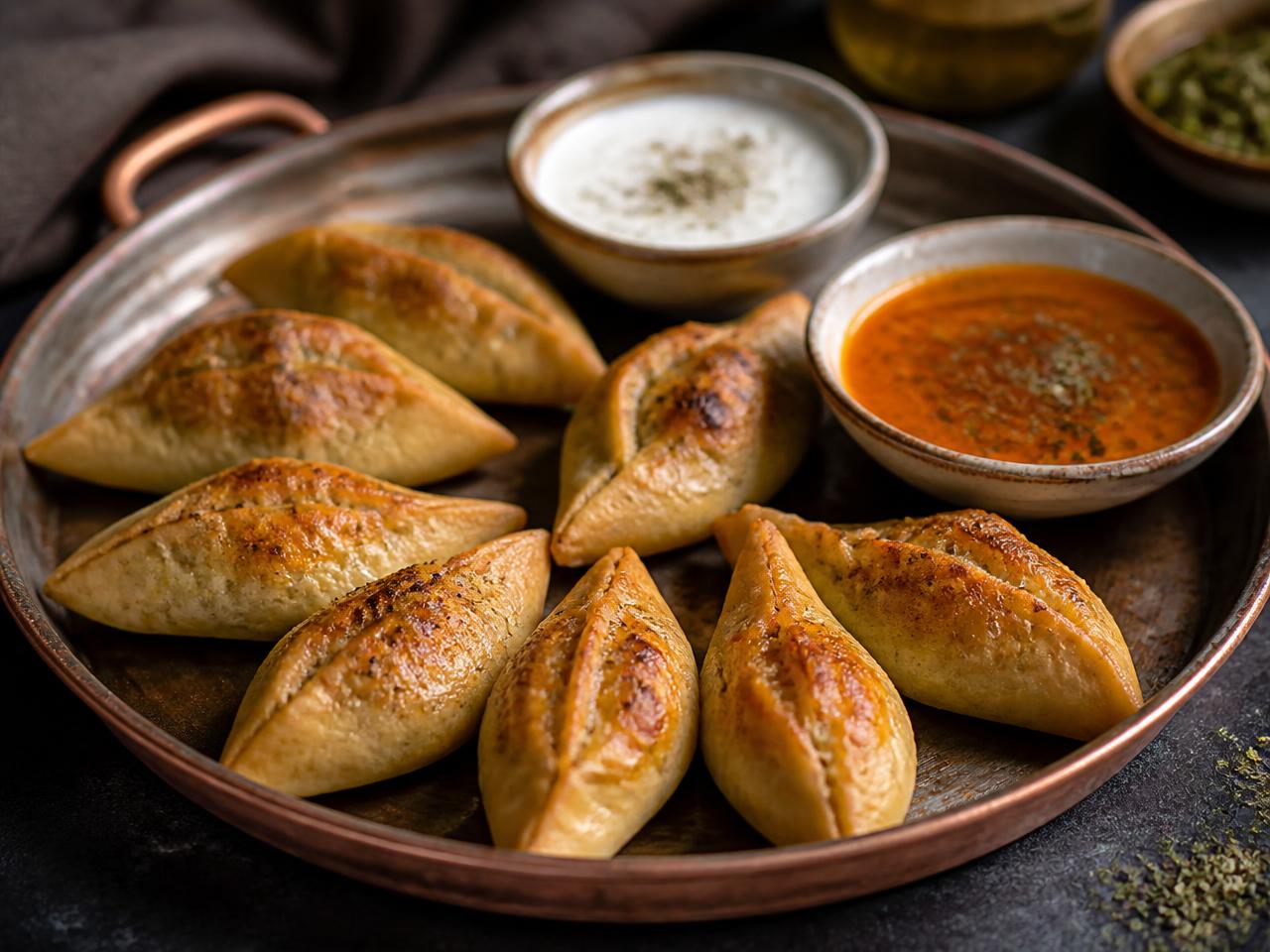
Hand-pleated beef dumplings, fried crisp and buried under a crown of black walnut.
Step-by-step →