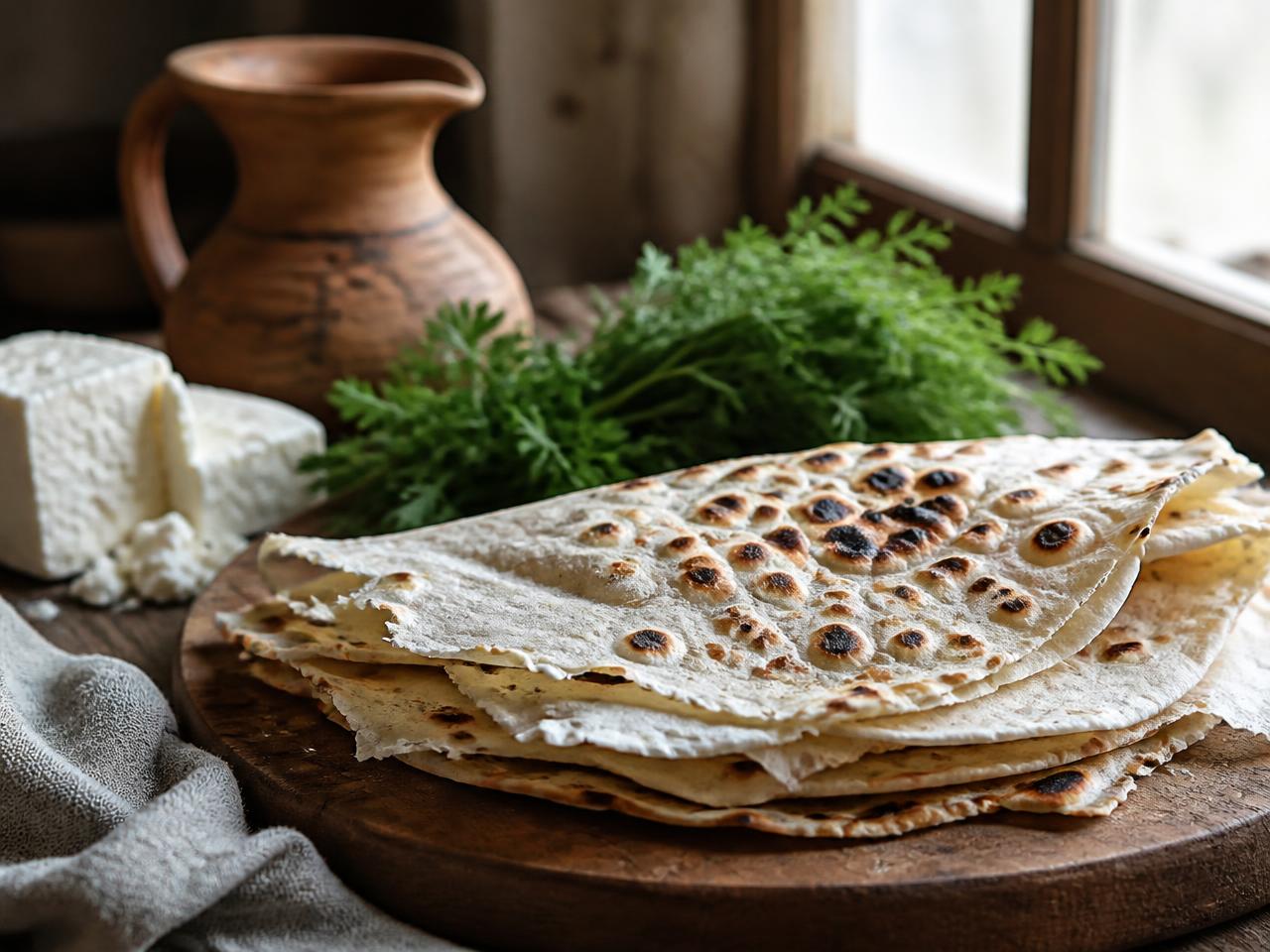
Lavash
Paper-thin unleavened flatbread, blistered and scored in the tradition of the hearth.
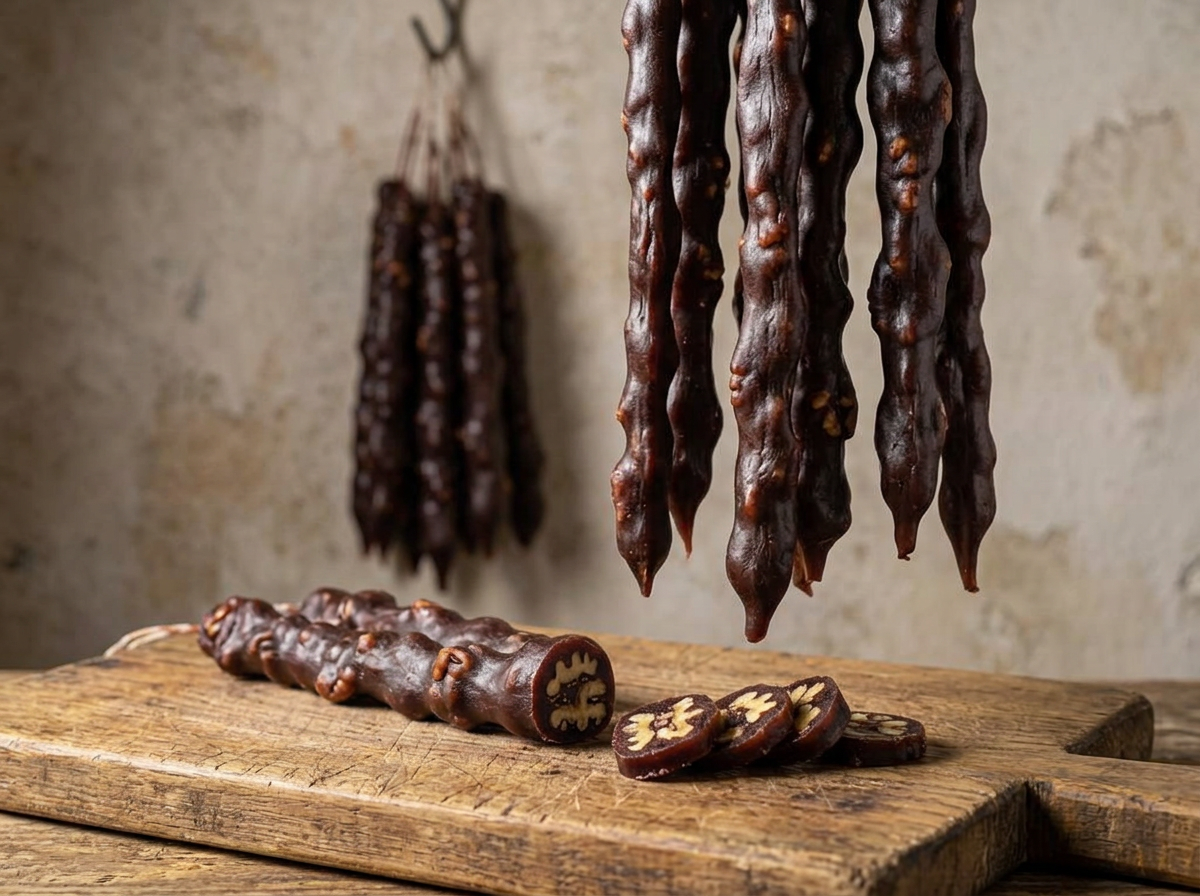
Step-by-step →Walnuts threaded on string and dipped again and again in thickened grape must until they set into dark ropes.
Boil the grape juice down by a third, skimming as it goes, and sweeten only if the grapes were sharp.
Whisk flour into a little cold juice, then stir it in and cook, stirring constantly, until the mixture coats a spoon thickly.
String the walnuts, then dip each string into the warm must and hang it to dry. Repeat five to eight times, once the previous coat is dry.
Hang in a dry, airy place about a week until the surface is firm and matte. Slice at an angle to show the nuts.
The same must poured into sheets and rolled around walnuts as grape leather.
Made with mulberry juice in Syunik — paler and even sweeter.
Yes, unsweetened dark juice; you may need slightly more flour.
Humidity. Move it somewhere drier and give it a few more days.
Sujukh — also called sharots — turns the last of the grape harvest into a sweet that keeps for months, and belongs to the same autumn work as wine-making in the Areni valleys.
At weddings and New Year it was hung across the room like decoration, and children were given a whole string as a prize rather than a portion on a plate.
Paper-thin unleavened flatbread, blistered and scored in the tradition of the hearth.
Step-by-step →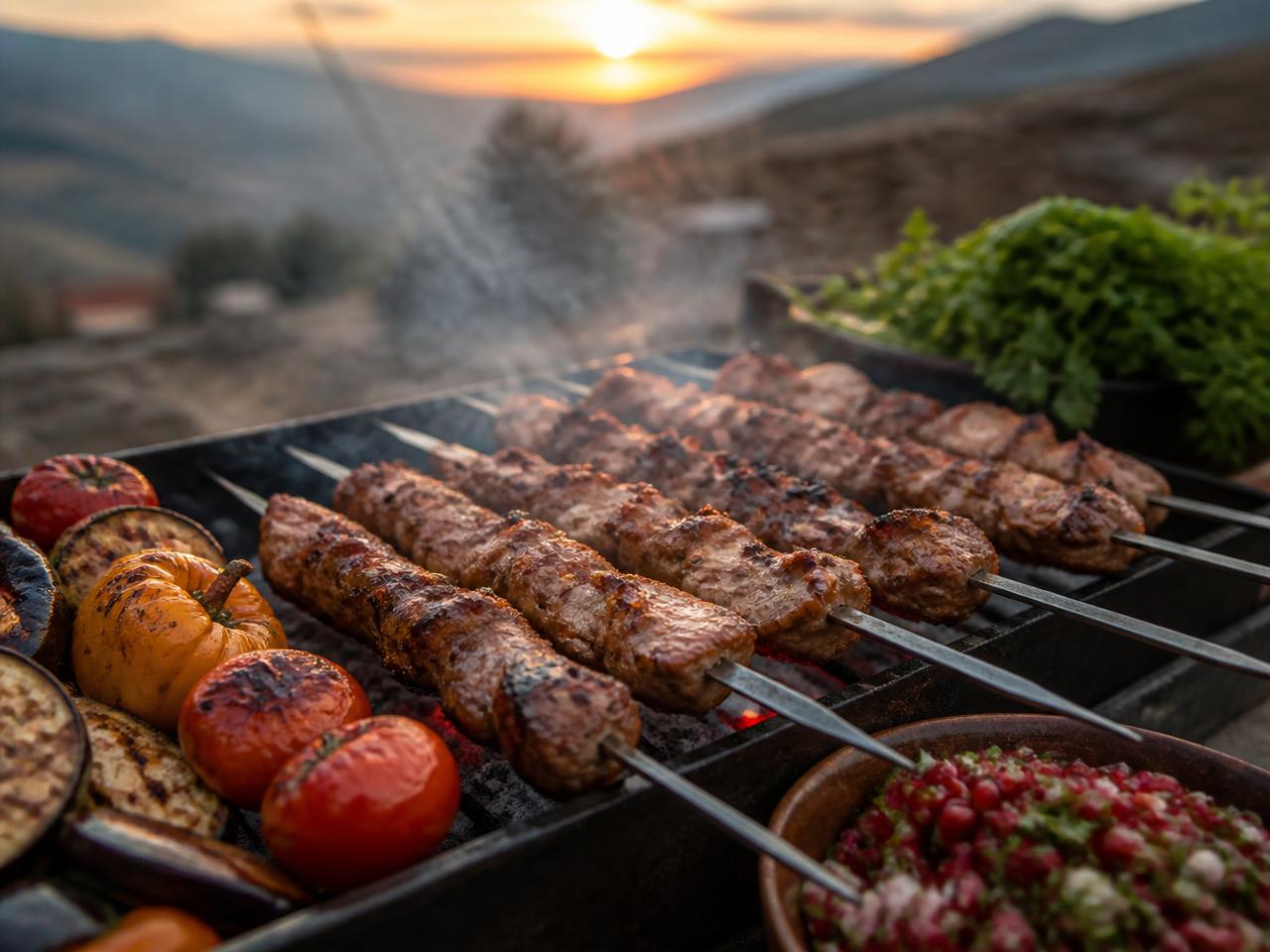
Charcoal lamb glazed in pomegranate molasses, the Sunday centerpiece of the Caucasus.
Step-by-step →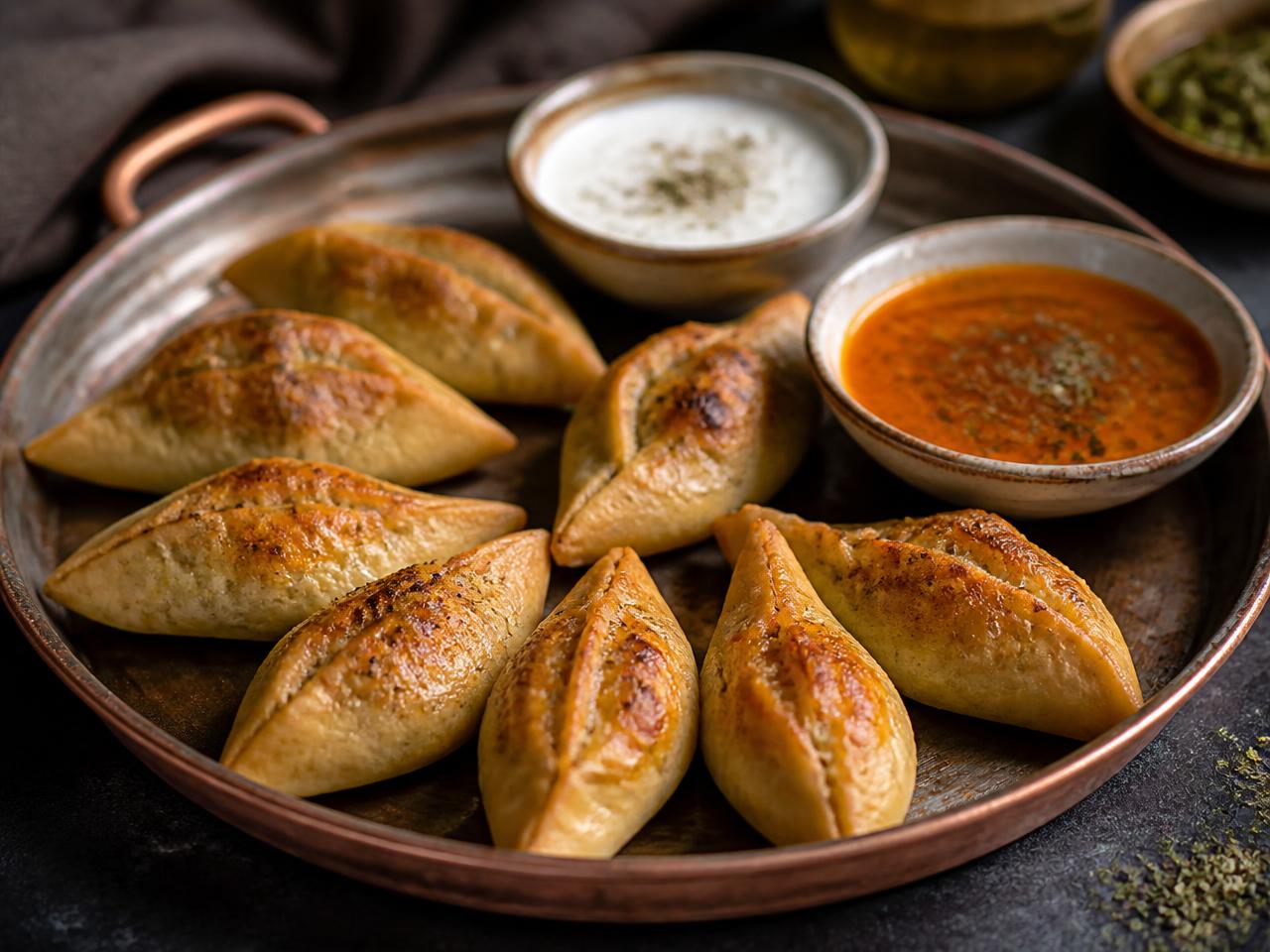
Hand-pleated beef dumplings, fried crisp and buried under a crown of black walnut.
Step-by-step →