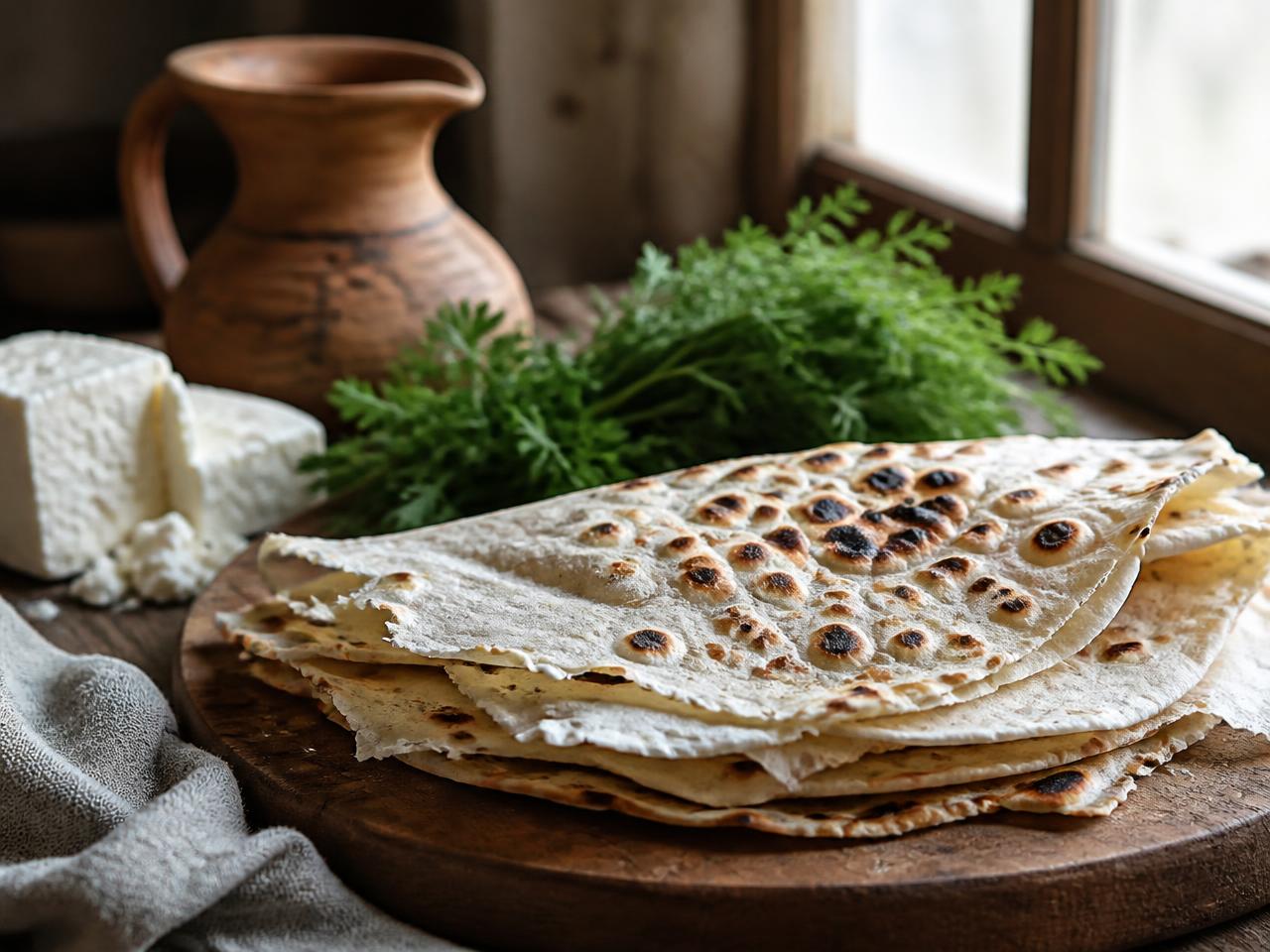
Lavash
Paper-thin unleavened flatbread, blistered and scored in the tradition of the hearth.
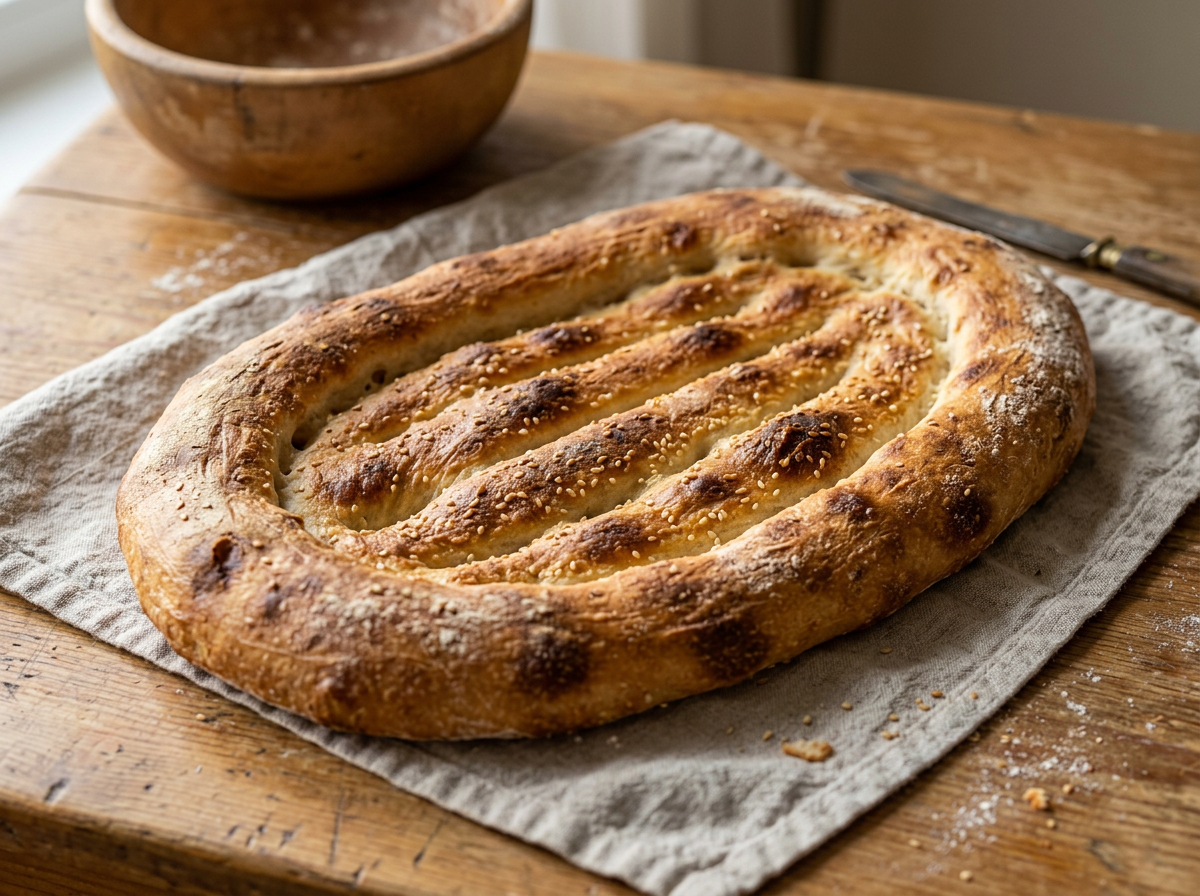
Step-by-step →Soft golden loaf whose name means "drawn with fingers" — the grooves are pulled by hand before baking.
Whisk yeast, sugar and half the water with 150 g flour and leave it twenty minutes until foaming.
Add the rest of the flour, water, salt and oil. Knead ten minutes to a soft, slightly sticky dough and let it double, about ninety minutes.
Shape two flat ovals on trays. Cook the flour glaze into a thin paste, brush it over, then press deep grooves with your fingers — one long line down the middle, ribs along each side.
Rest twenty minutes, then bake at 230 °C for 20–25 minutes until deep gold. Cool on a rack so the base stays dry.
Sesame or nigella pressed into the glaze before baking.
Replace a quarter of the flour with wholemeal for a denser village loaf.
The glaze was too thin, or the loaf was underbaked. Aim for deep gold.
Yes, eight minutes on medium is enough.
Matnakash is the everyday bread of Soviet-era and modern Yerevan bakeries, sold warm by weight and torn rather than sliced. Its grooves are practical as well as decorative: they control the rise and give the crust its shine.
Where lavash belongs to the tonir and the village, matnakash belongs to the city — the bread of apartment kitchens, corner bakeries and the paper bag carried home under an arm.
Paper-thin unleavened flatbread, blistered and scored in the tradition of the hearth.
Step-by-step →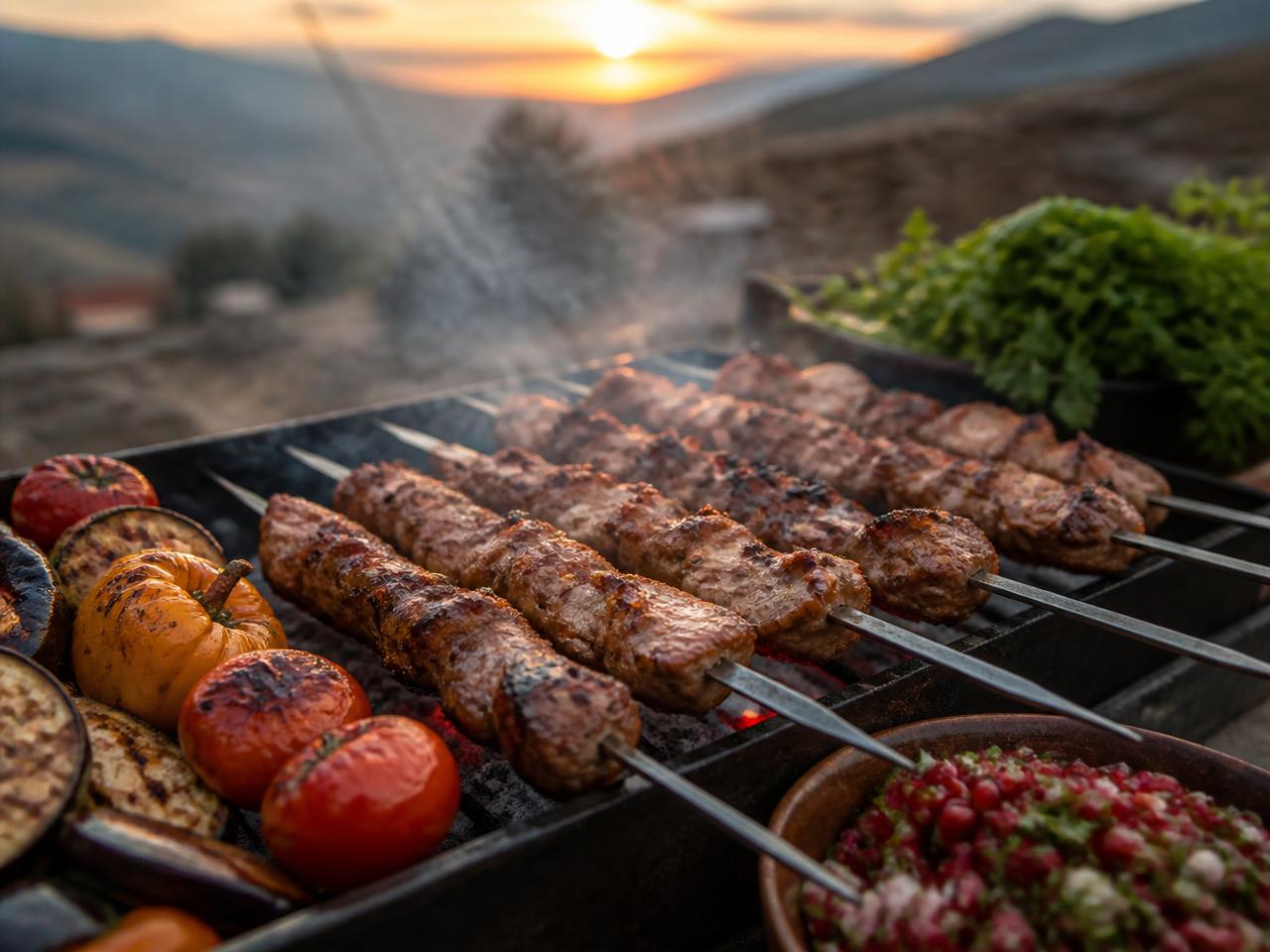
Charcoal lamb glazed in pomegranate molasses, the Sunday centerpiece of the Caucasus.
Step-by-step →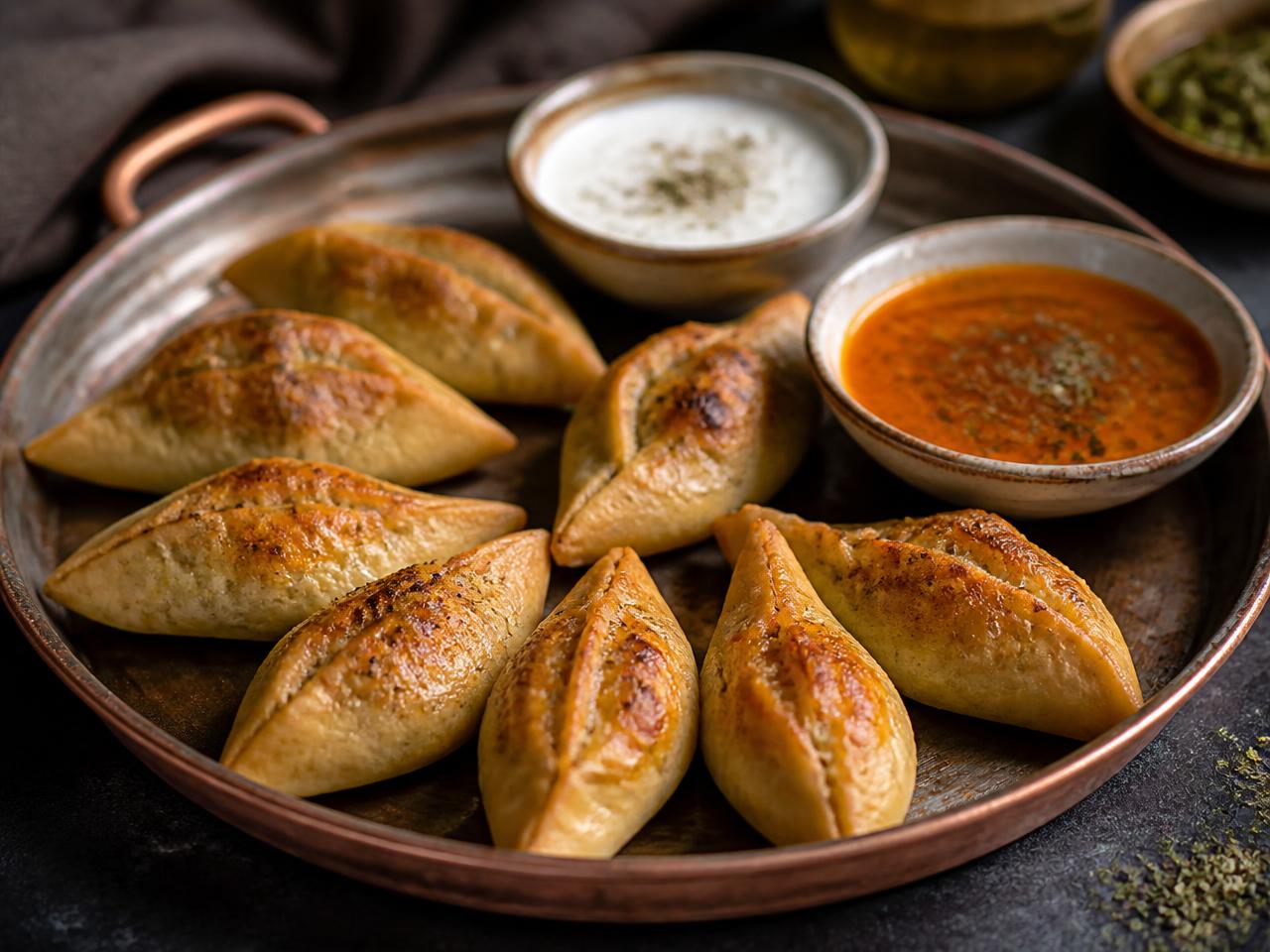
Hand-pleated beef dumplings, fried crisp and buried under a crown of black walnut.
Step-by-step →