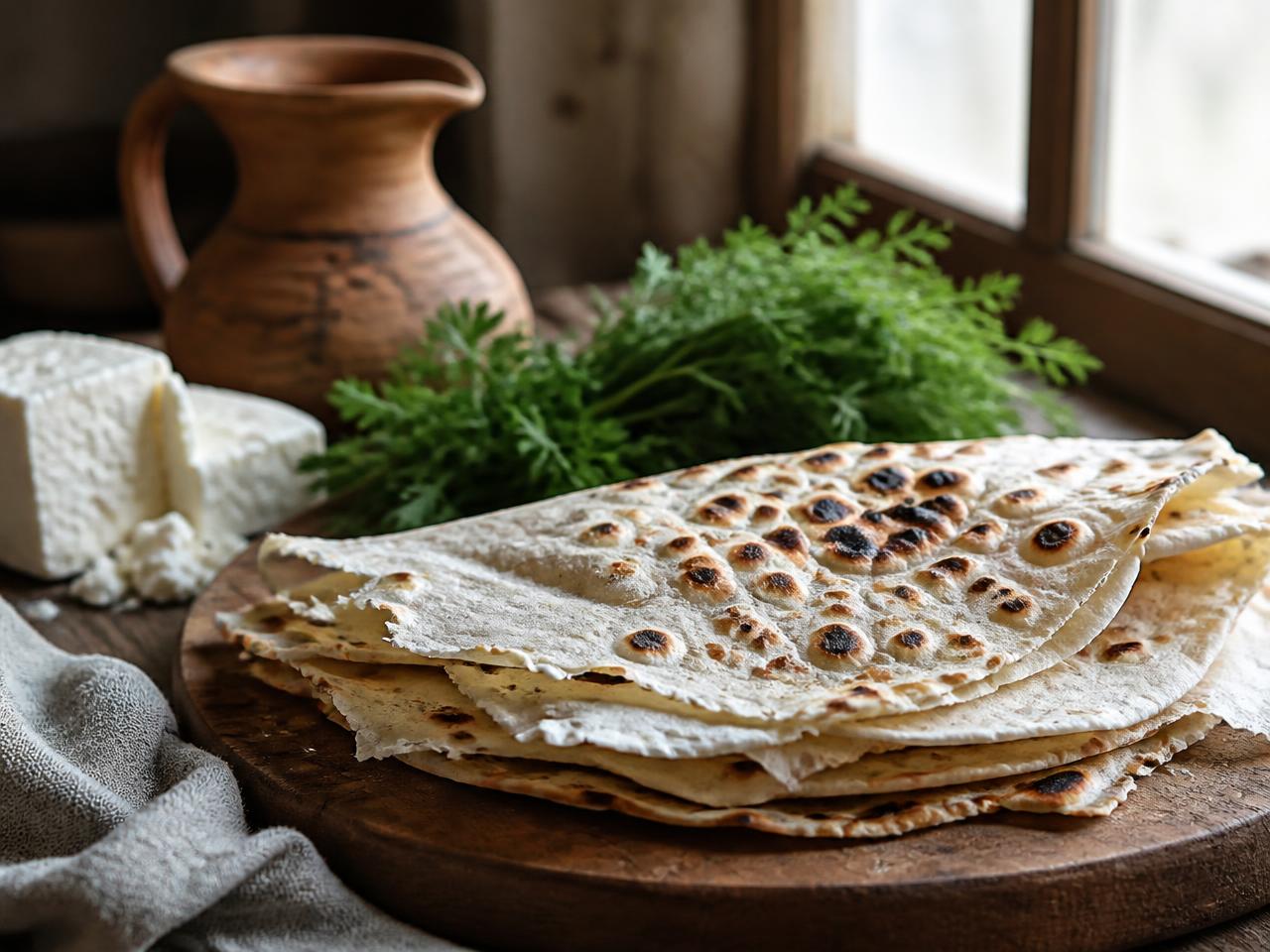
Lavash
Paper-thin unleavened flatbread, blistered and scored in the tradition of the hearth.
Step-by-step →Lamb and vegetables steamed in their own juices with almost no water — the quietest great dish in the repertoire.
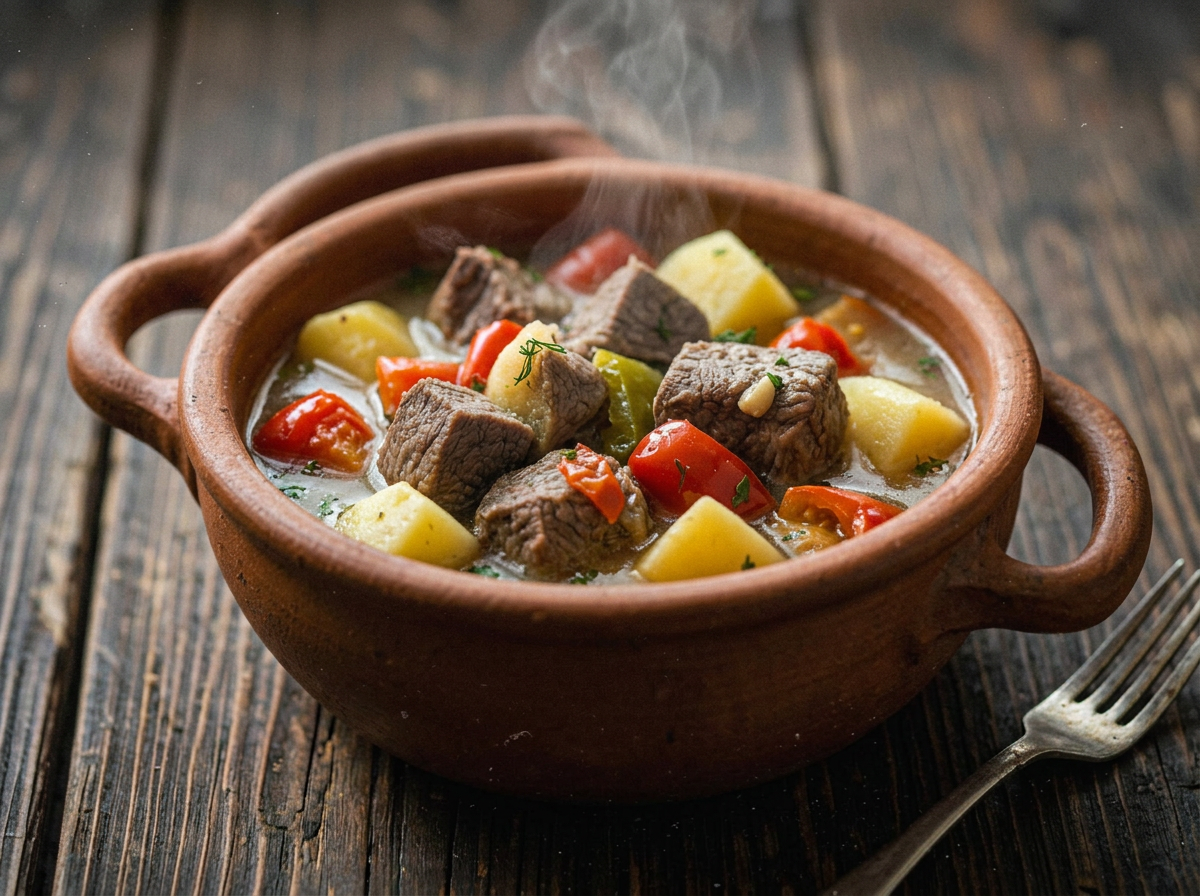
Line a heavy pot with sliced onion, then lamb, then tomato, pepper and potato in layers, salting each one lightly as you go.
Pour in a splash of beer, wine or water — no more than a glass. The vegetables release enough juice to cook everything.
Cover tightly and cook on the lowest heat for two hours without stirring. Resist the urge to lift the lid.
Add crushed garlic and a fistful of chopped coriander and basil, cover again for five minutes and serve straight from the pot.
Slower and leaner; allow an extra hour.
A glass of dark beer instead of water gives a slightly bitter depth.
Somewhere between: there should be broth, but the vegetables are the plate.
Yes, covered, at 160 °C for about three hours.
Khashlama shares its root with khash — both come from the verb meaning to boil — and it belongs to the shepherd's kitchen, where a single pot over a slow fire had to feed everyone without attention.
It is the dish of village summers and mountain picnics, cooked outdoors in a cast pot while the meat and the garden vegetables of that exact week decide the flavour.
Paper-thin unleavened flatbread, blistered and scored in the tradition of the hearth.
Step-by-step →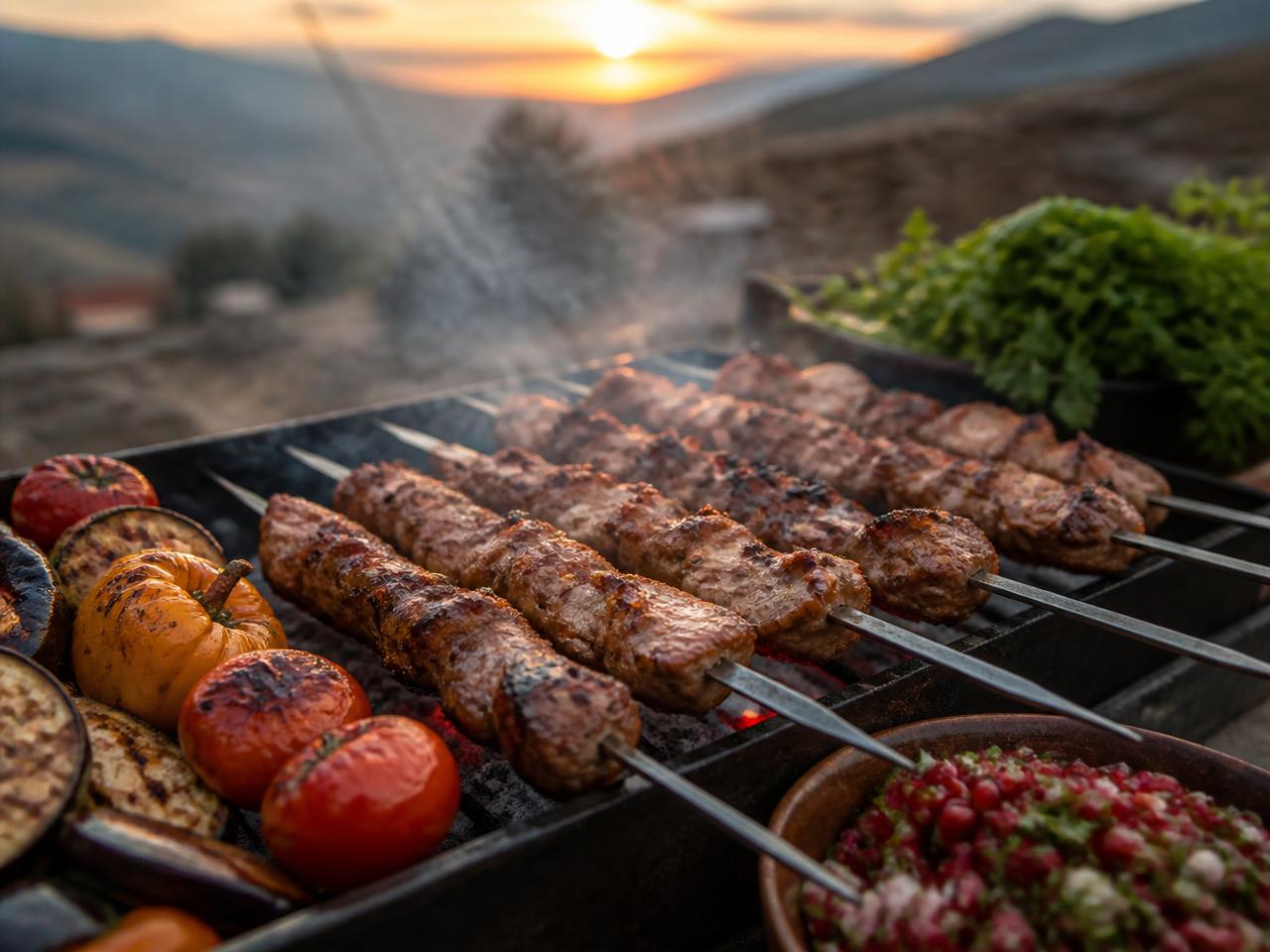
Charcoal lamb glazed in pomegranate molasses, the Sunday centerpiece of the Caucasus.
Step-by-step →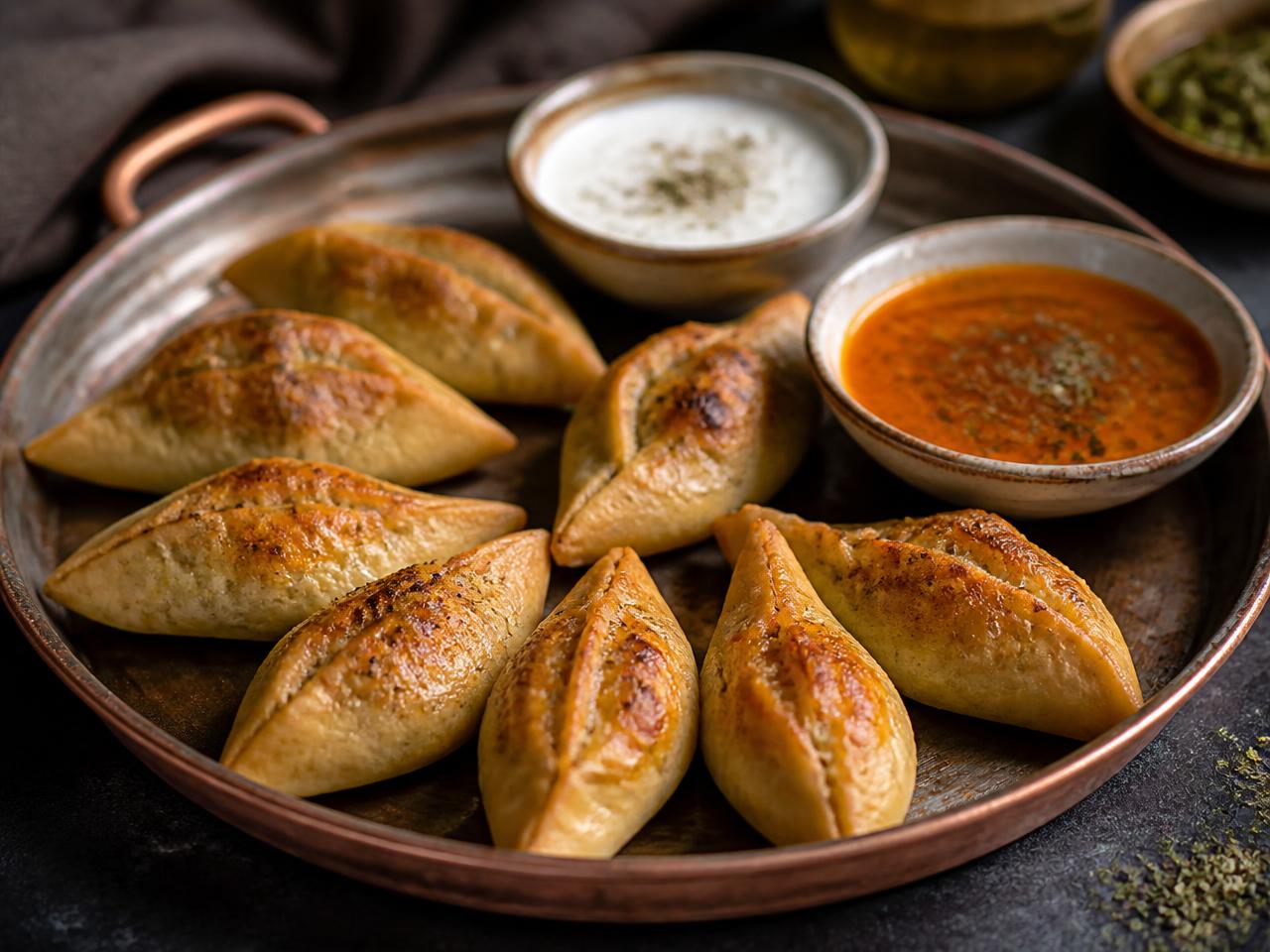
Hand-pleated beef dumplings, fried crisp and buried under a crown of black walnut.
Step-by-step →