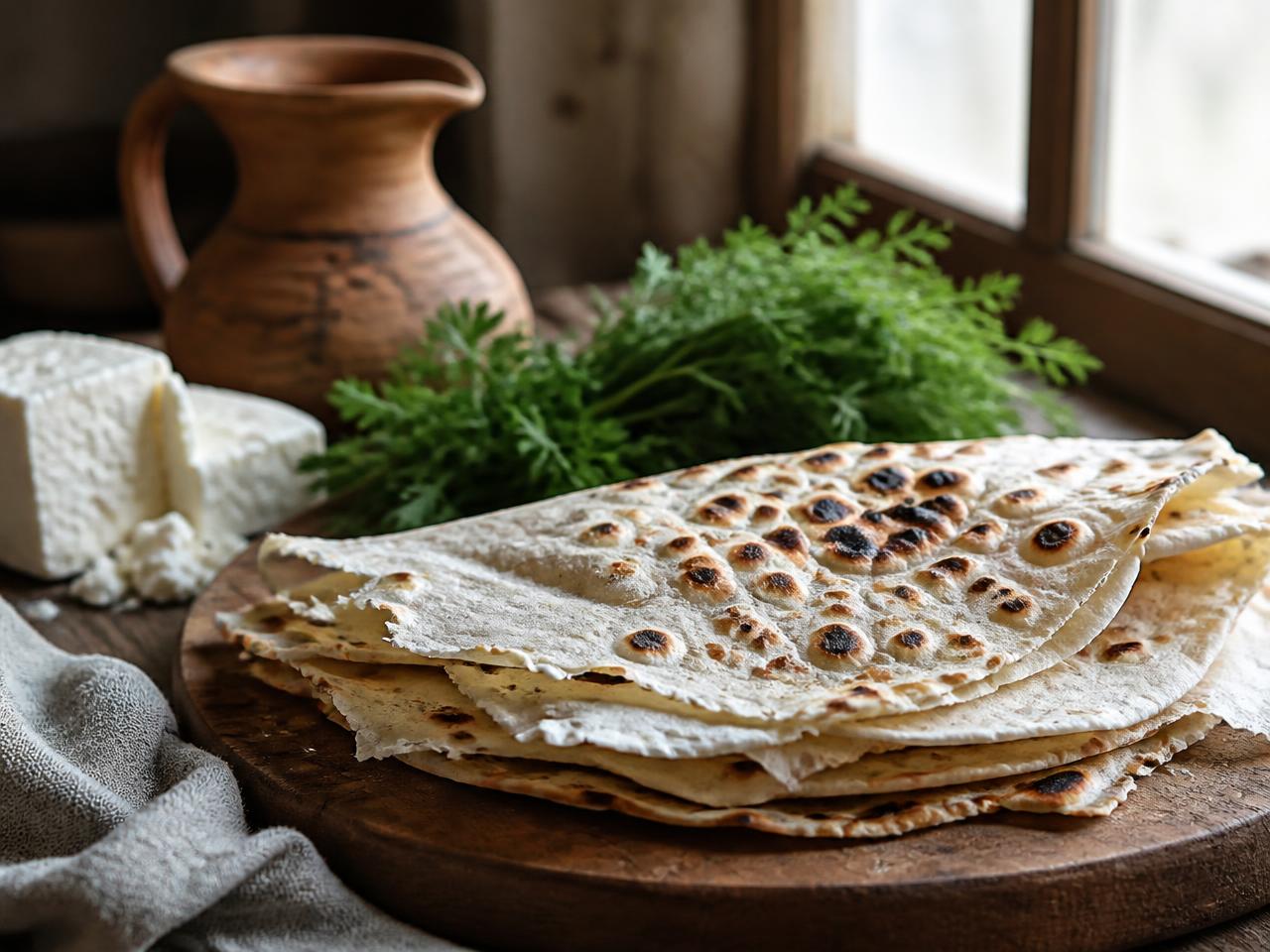
Lavash
Paper-thin unleavened flatbread, blistered and scored in the tradition of the hearth.
Step-by-step →Lamb cooked in its own rendered fat and sealed under it — the highland answer to refrigeration.
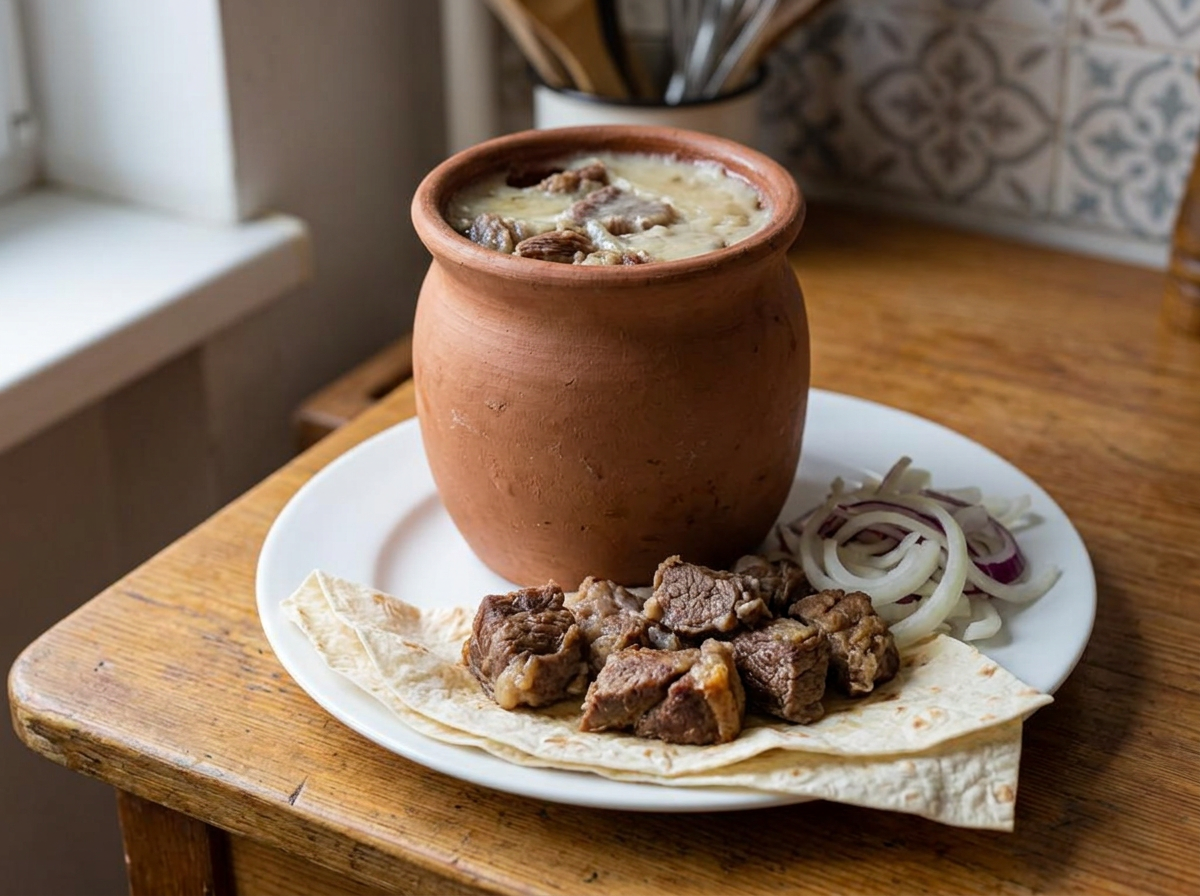
Dice the fat and melt it slowly in a heavy pot until clear and the cracklings are golden. Lift out the solids.
Add the salted meat in cubes and cook very gently, submerged in the fat, for three hours until it falls apart.
Spoon the meat into sterilised clay or glass jars and pour the strained hot fat over until fully covered.
Store cold. Scoop out a portion, fry with onion, or drop it into soups, eggs and pilaf as a fat and a flavour at once.
Leaner, needs extra fat added to cover it.
Some households add cumin and pepper for a stronger aroma.
Kept cold and fully sealed under fat, yes. Discard anything sour-smelling or mouldy.
Technically identical in method, different in seasoning and use.
Ghavurma is preservation as engineering: fat excludes air, salt excludes spoilage, and a summer's meat becomes a winter's larder without ice or cellar.
Its name travelled across the region with the technique, and in Armenian villages a jar of ghavurma was once a measure of a household's security going into the cold months.
Paper-thin unleavened flatbread, blistered and scored in the tradition of the hearth.
Step-by-step →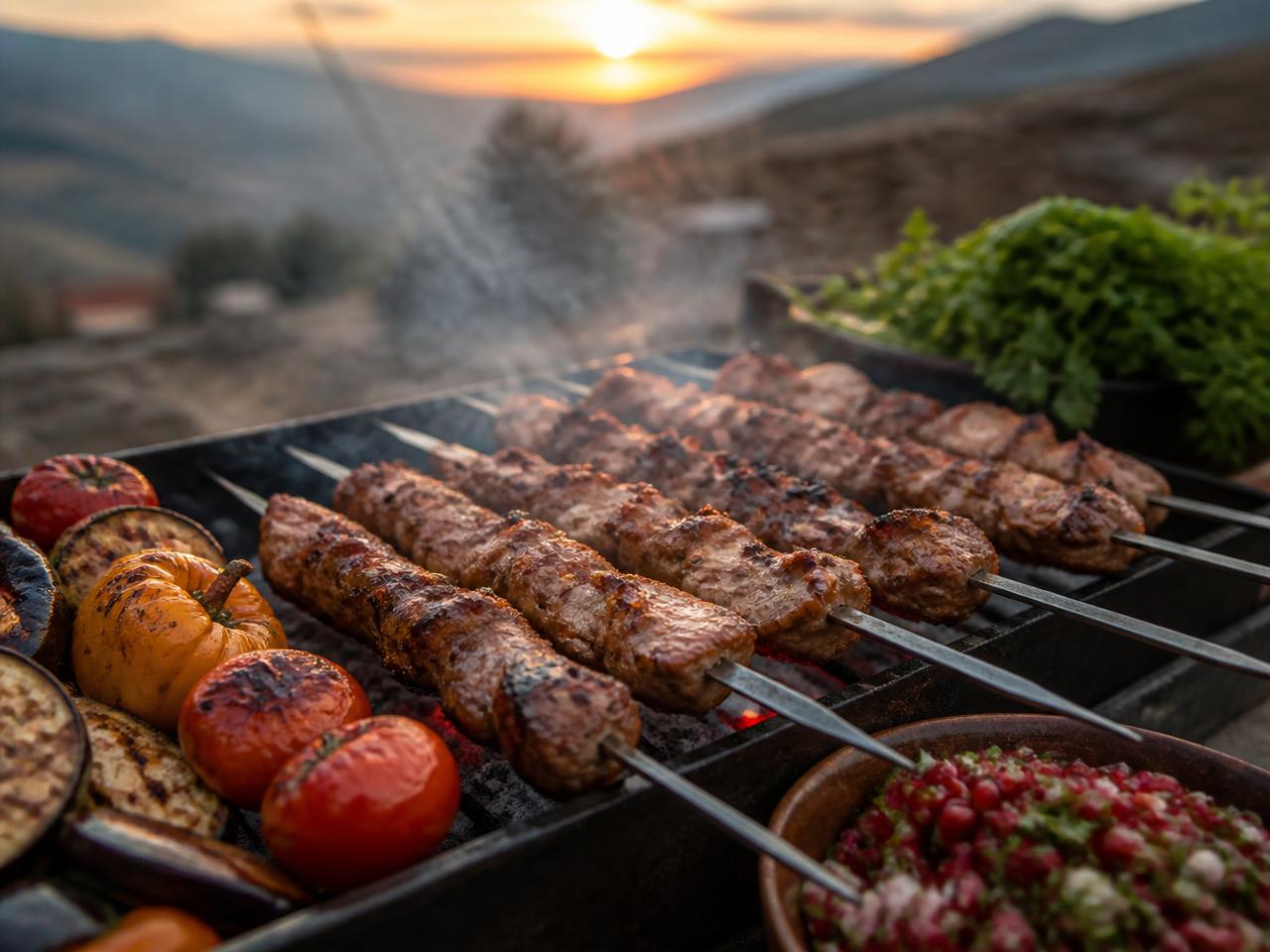
Charcoal lamb glazed in pomegranate molasses, the Sunday centerpiece of the Caucasus.
Step-by-step →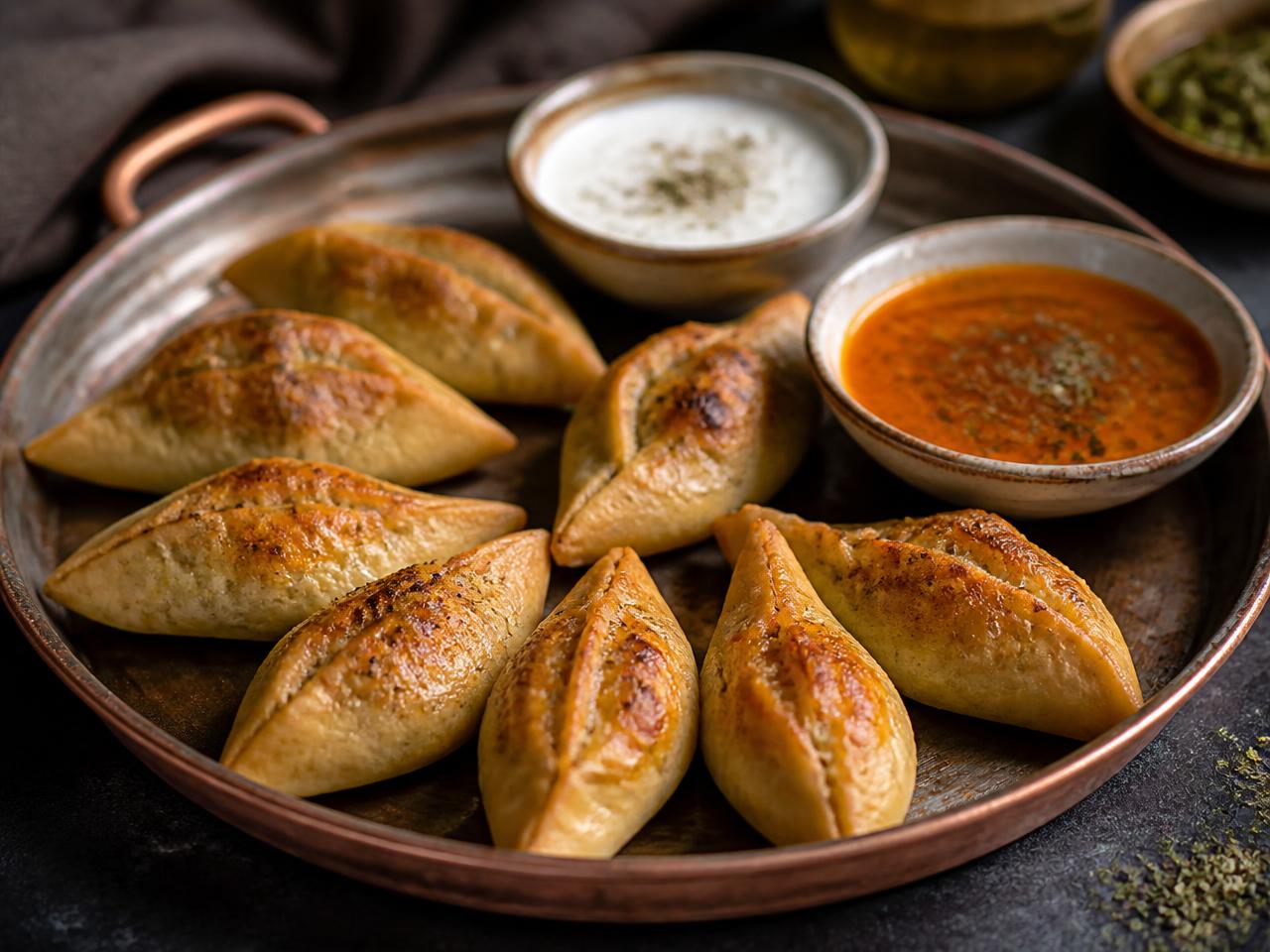
Hand-pleated beef dumplings, fried crisp and buried under a crown of black walnut.
Step-by-step →