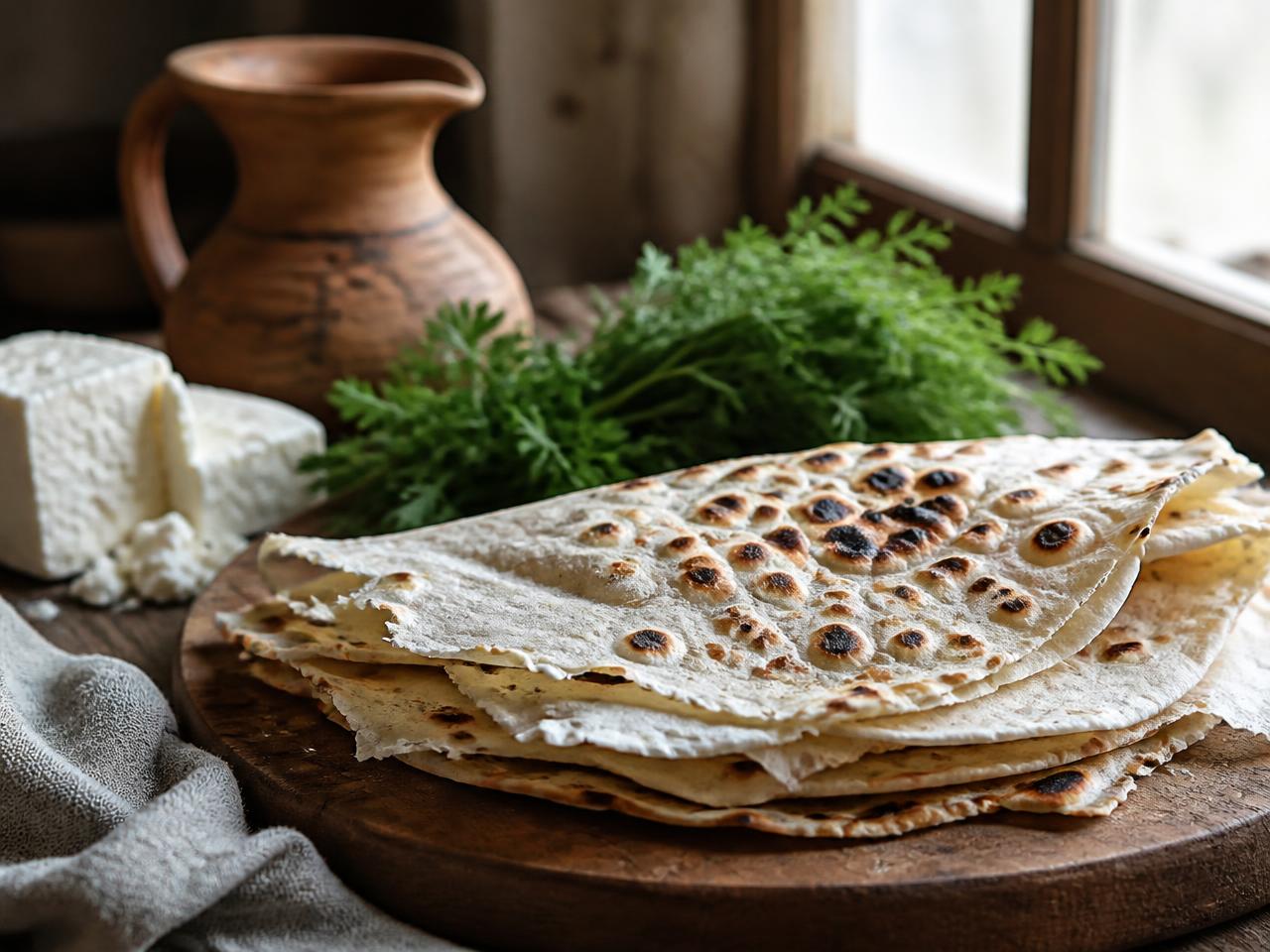
Lavash
Paper-thin unleavened flatbread, blistered and scored in the tradition of the hearth.
Step-by-step →A whole pumpkin filled with rice, dried apricot and walnut, baked until it caves in on itself.
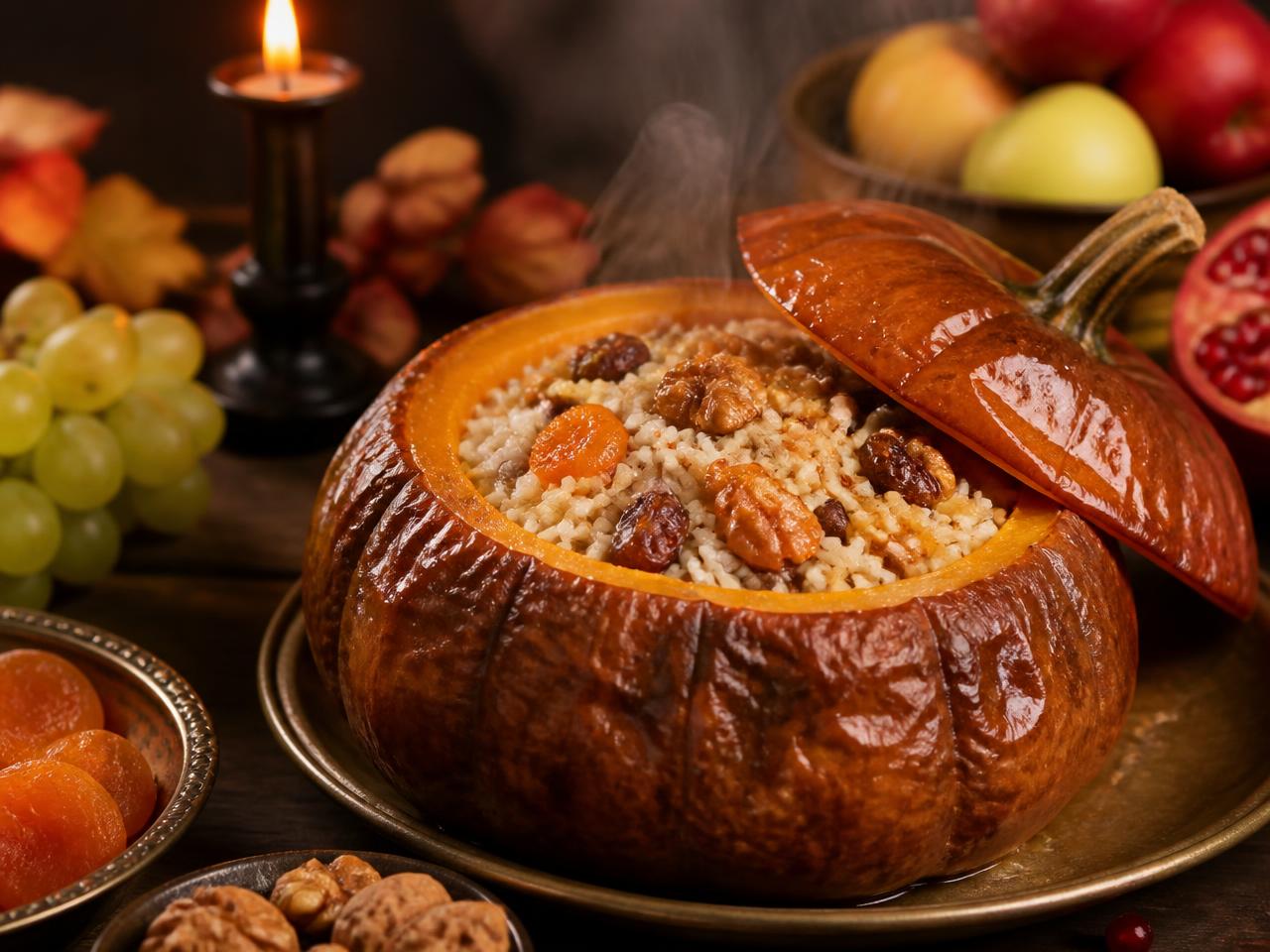
Cut a lid from the top and scrape out seeds and strings, leaving walls about two centimetres thick. Keep the lid.
Boil the rice in salted water for five minutes only, then drain. It finishes inside the pumpkin.
Fold the rice with dried fruit, walnuts, cinnamon, honey and melted butter. Spoon it in loosely, no more than three-quarters full.
Set the lid back, wrap the pumpkin loosely in foil and bake at 180°C for 90 minutes, until a knife slides through the wall without resistance.
Bring the pumpkin out intact, cut it open at the table in wedges and let everyone take flesh and filling in the same spoonful.
Filled with rice, lamb and onion instead of dried fruit — the older village form.
Individual portions in mini pumpkins, 45 minutes at 180 °C.
A dense, sweet variety such as kabocha or musquée de Provence. Watery Halloween pumpkins collapse.
The folk song "Hey Jan Ghapama" is sung as the dish is carried in — it is a celebration dish first, food second.
Ghapama belongs to winter, to Christmas and New Year tables and to weddings, where its arrival is announced with the folk song 'Hey Jan Ghapama' — a round of verses sung while the pumpkin is carried in and cut.
It reflects an old highland pantry: fruit dried on rooftops in September so that midwinter could still taste of apricots. Sweet and savoury sit in the same dish without apology, an approach older than the split between courses.
Paper-thin unleavened flatbread, blistered and scored in the tradition of the hearth.
Step-by-step →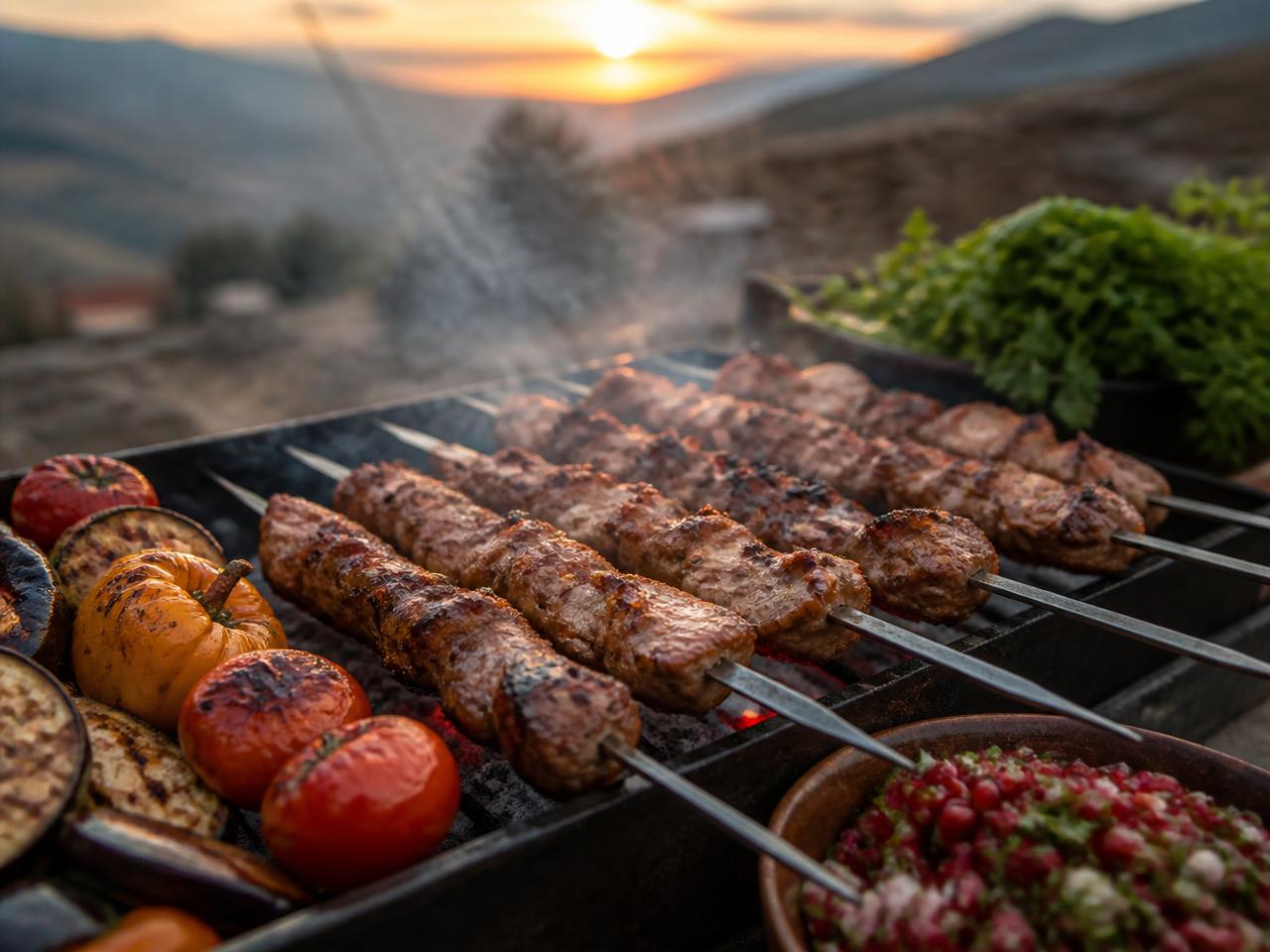
Charcoal lamb glazed in pomegranate molasses, the Sunday centerpiece of the Caucasus.
Step-by-step →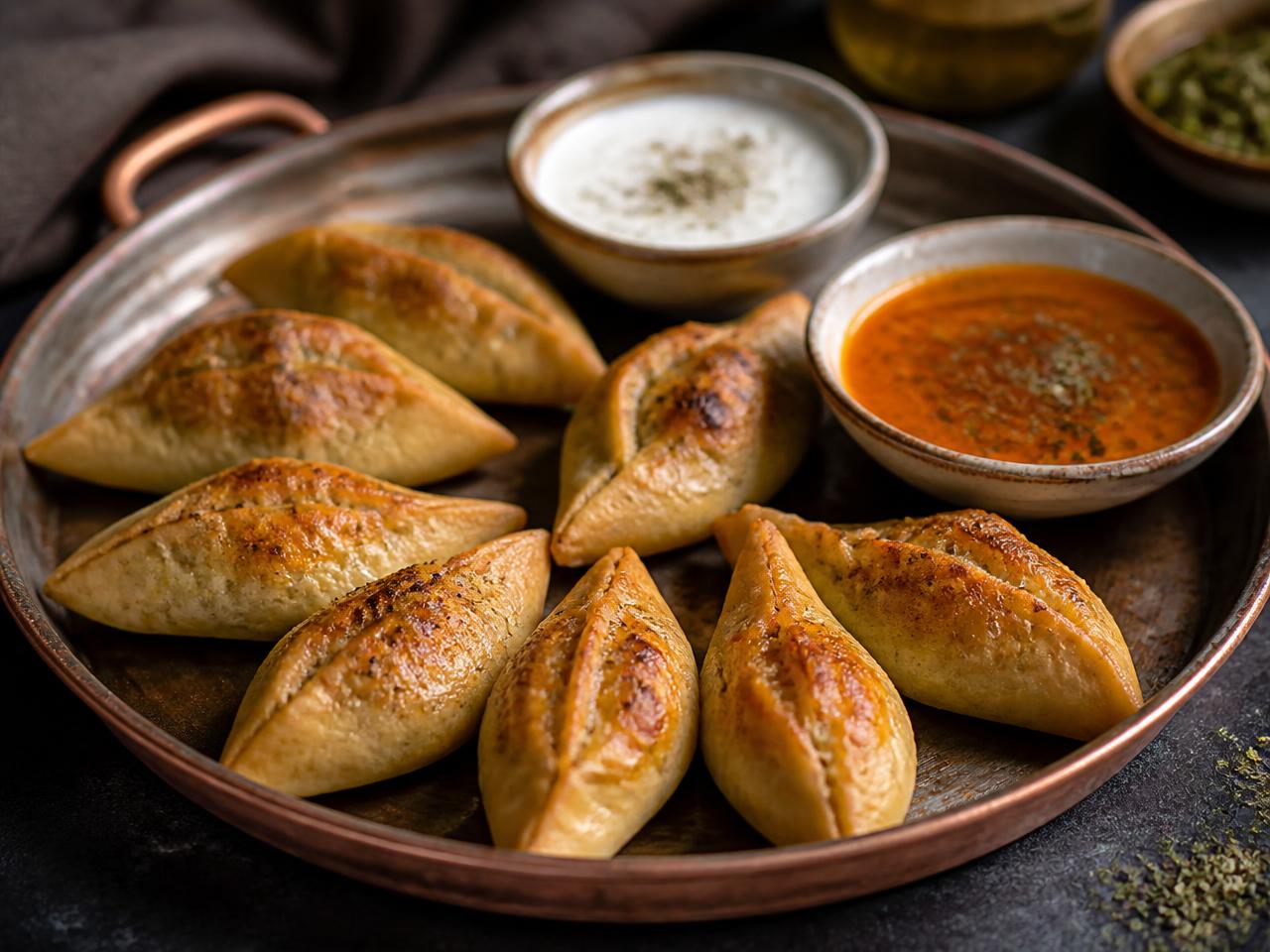
Hand-pleated beef dumplings, fried crisp and buried under a crown of black walnut.
Step-by-step →