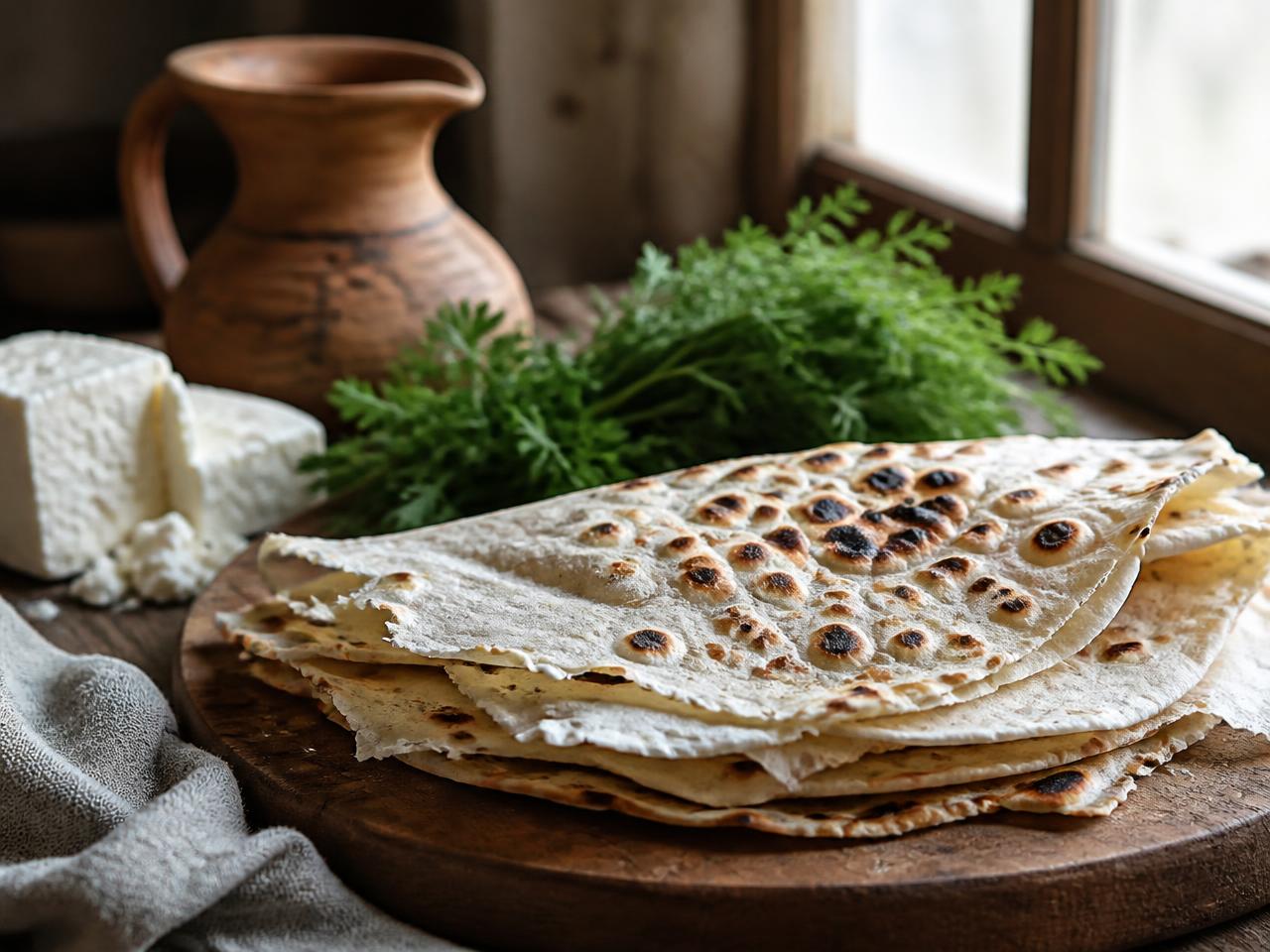
Lavash
Paper-thin unleavened flatbread, blistered and scored in the tradition of the hearth.
Step-by-step →Vine leaves rolled around rice, herbs and lamb, packed tight and weighted with a plate.
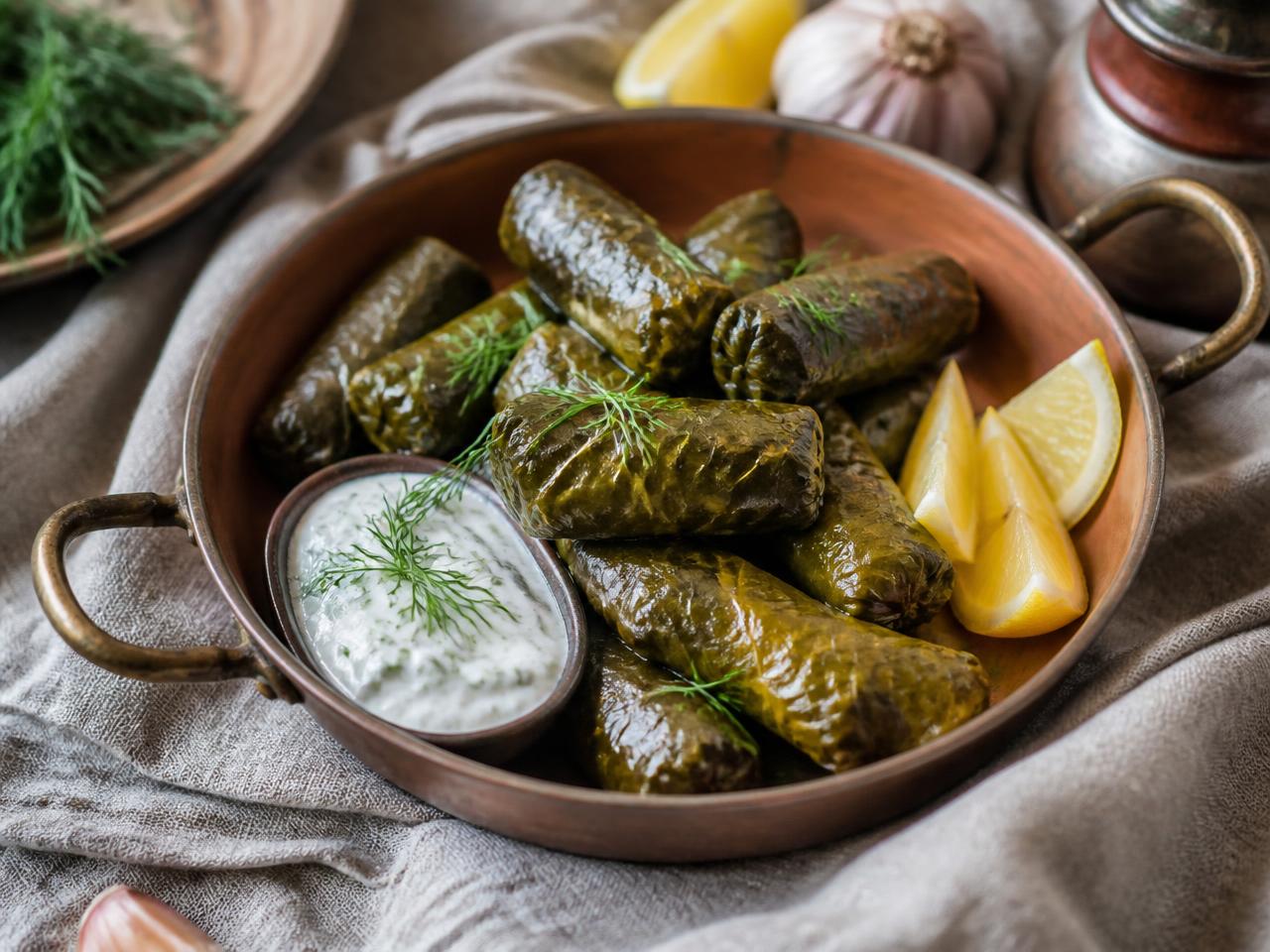
Blanch fresh leaves for a minute, or rinse brined ones well. Snip out any tough stems and set the torn leaves aside to line the pot.
Combine rice, lamb, onion, chopped herbs, tomato purée, salt and pepper. The rice goes in uncooked and swells inside the leaf.
Place a leaf shiny-side down, a finger of filling near the stem, fold the sides in and roll firmly. Leave a little slack for the rice.
Line the pot with the torn leaves, pack the rolls in tight circles, lay a plate on top and add water just to cover. Simmer covered for 45 minutes.
Let the pot stand off the heat for fifteen minutes, then serve warm with garlic yoghurt and lemon.
The Lenten version with lentils, chickpeas, bulgur and no meat, rolled in cabbage leaves.
Peppers, tomatoes and small aubergines hollowed out and stuffed with the same filling.
Vine leaves in spring and summer, cabbage in winter — the filling is the same.
Not enough liquid, or too little time. Keep the rolls just covered and add hot water as it reduces.
Armenians wrap almost anything: vine, cabbage and quince leaves in summer, hollowed apples, quinces and aubergines in autumn. The word comes from a Turkic root for 'filled', but the tradition of the region is far older than the word.
Pasuts dolma — the Lenten version with beans and grain, no meat — is made in quantity around Christmas and eaten cold for days, a reminder that fasting food in Armenia was never austere.
Paper-thin unleavened flatbread, blistered and scored in the tradition of the hearth.
Step-by-step →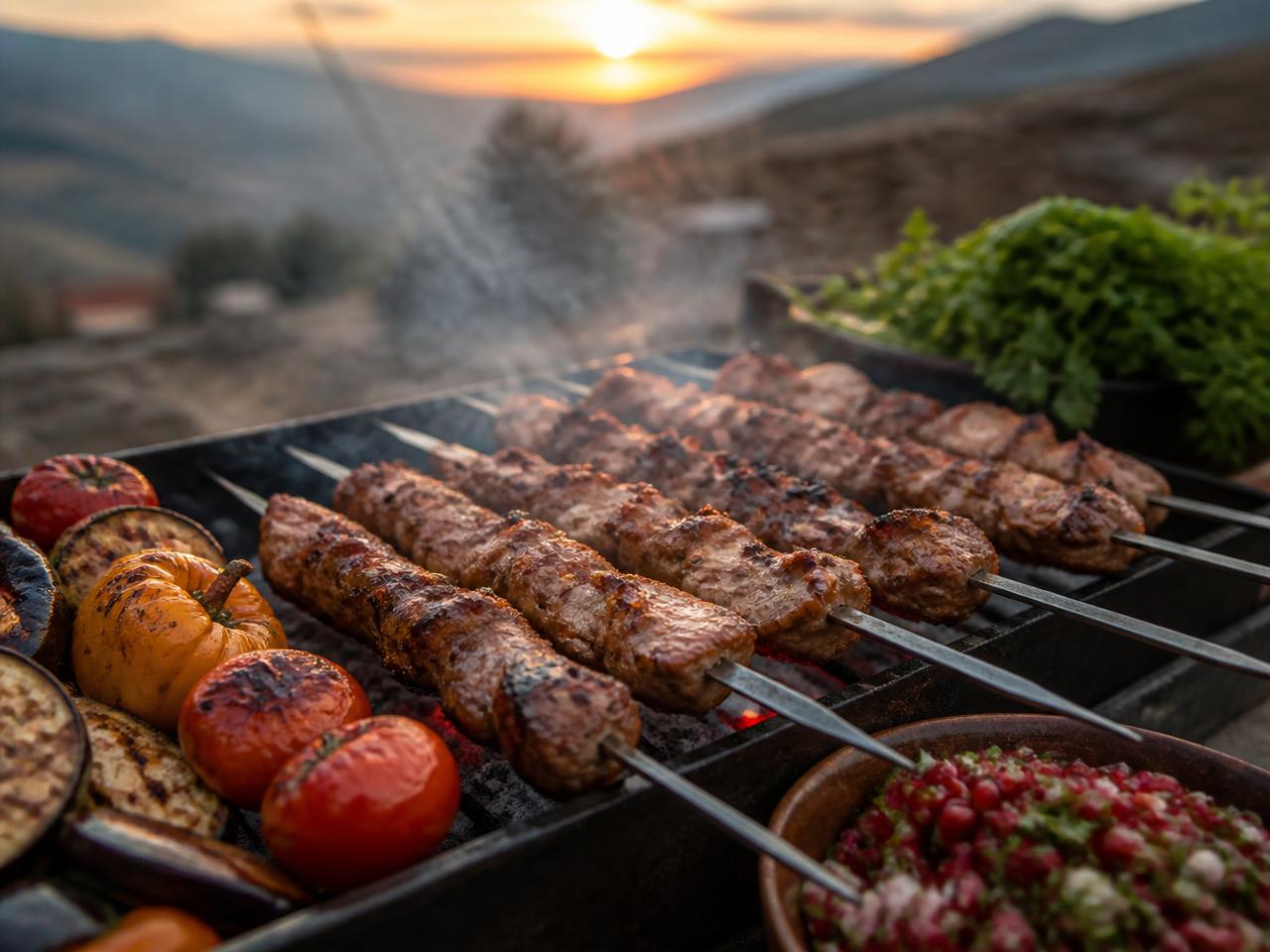
Charcoal lamb glazed in pomegranate molasses, the Sunday centerpiece of the Caucasus.
Step-by-step →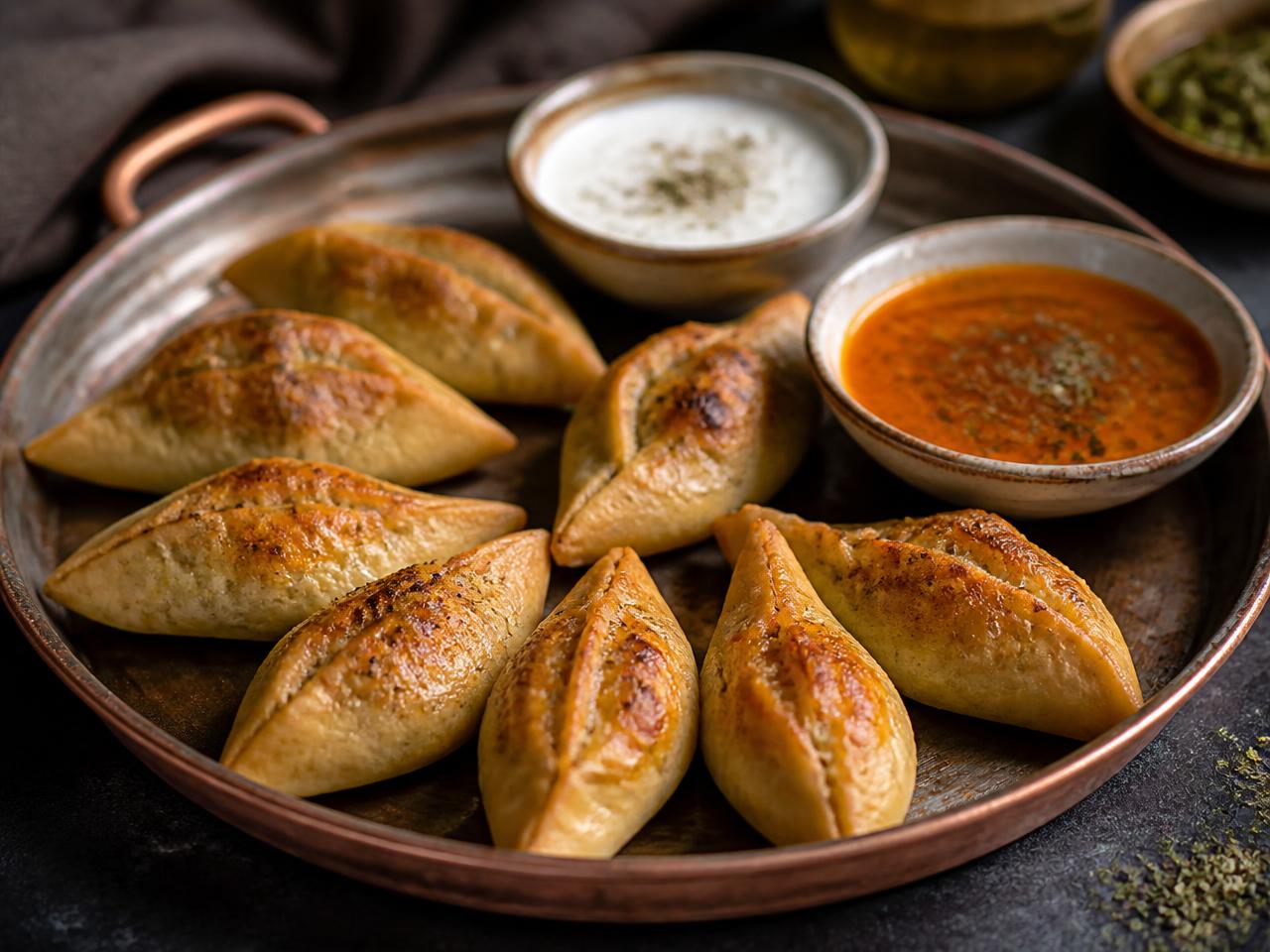
Hand-pleated beef dumplings, fried crisp and buried under a crown of black walnut.
Step-by-step →