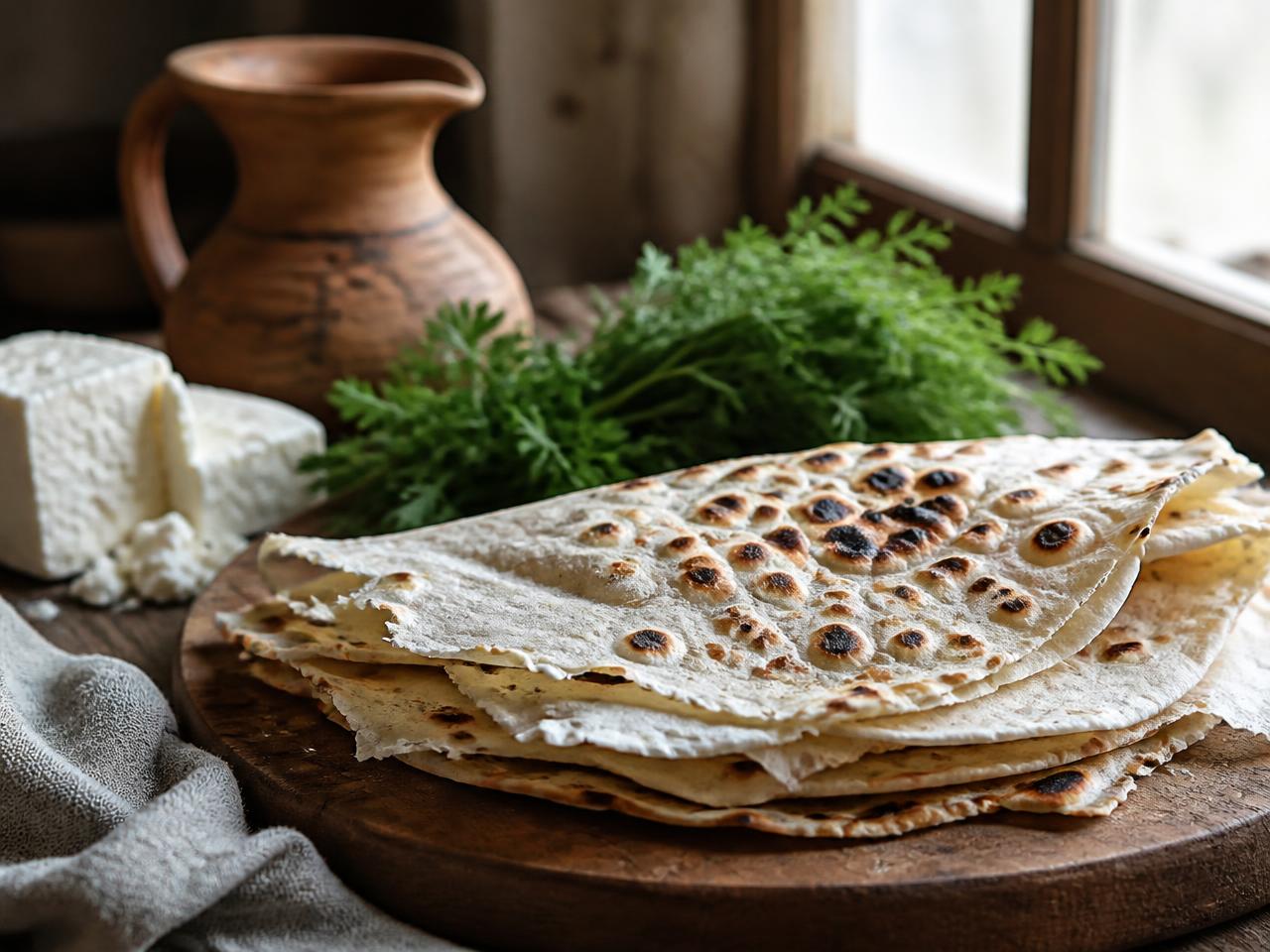
Lavash
Paper-thin unleavened flatbread, blistered and scored in the tradition of the hearth.
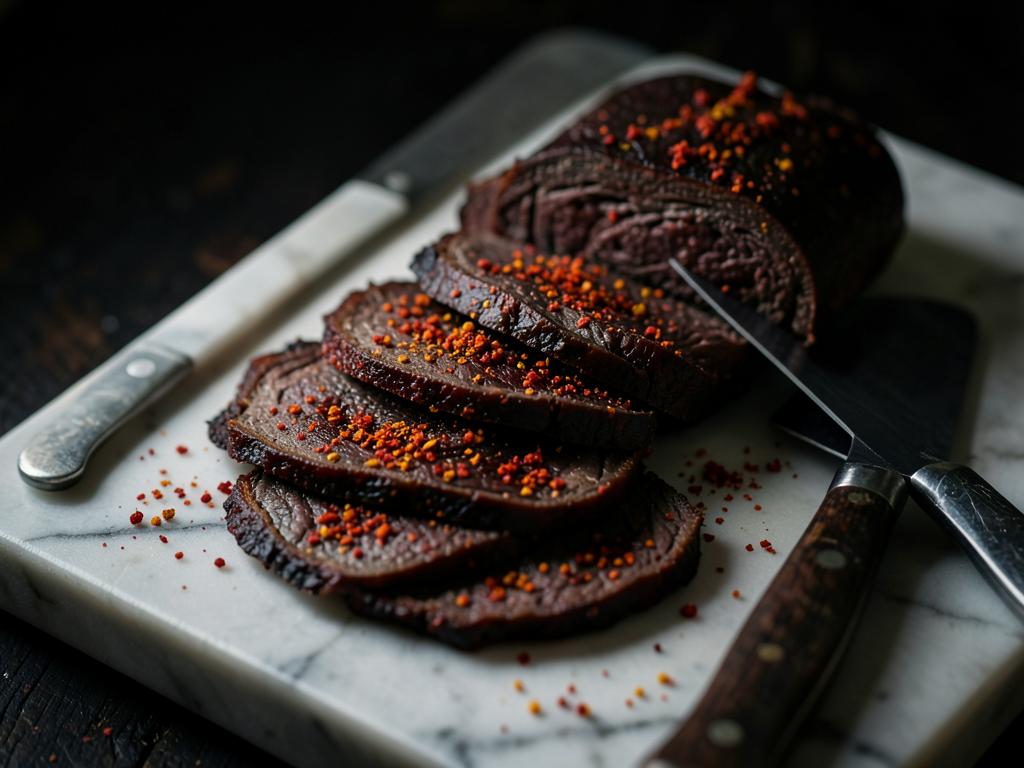
Step-by-step →Air-dried beef pressed under weight and sealed in a red paste of fenugreek, garlic and paprika.
Bury the trimmed meat in coarse salt in a tray, refrigerate three days and pour off the liquid daily.
Wash the salt off, dry the meat, wrap it in cloth and press it under a board and weights for two days until flat and firm.
Hang it in a cool, airy place for about a week, until the surface is dry to the touch.
Mix fenugreek, paprika, garlic and spices with water into a thick paste and cover the meat in a layer a few millimetres deep.
Dry another week to ten days until the paste sets hard. Slice as thinly as your knife allows — thick basturma is wasted basturma.
The older highland form, salted and dried without a chaman coating.
A lighter modern version used widely in the diaspora.
Yes with cold conditions, a lean cut and full salting time. If anything smells sour rather than nutty, discard it.
It sat in salt too long, or was not rinsed properly. Soak slices briefly in water before serving.
Basturma comes from the old Armenian cities of Anatolia, above all Kayseri and Aintab, where whole streets were given to curing and the winter air did the work. The word comes from the pressing — the flattening under weight is the defining step.
It travelled with the diaspora to Aleppo, Beirut, Istanbul and the United States, where Armenian delicatessens still hang it in windows. Eaten with lavash, tomato and egg, it is breakfast; on a plate with oghi, it is hospitality.
Paper-thin unleavened flatbread, blistered and scored in the tradition of the hearth.
Step-by-step →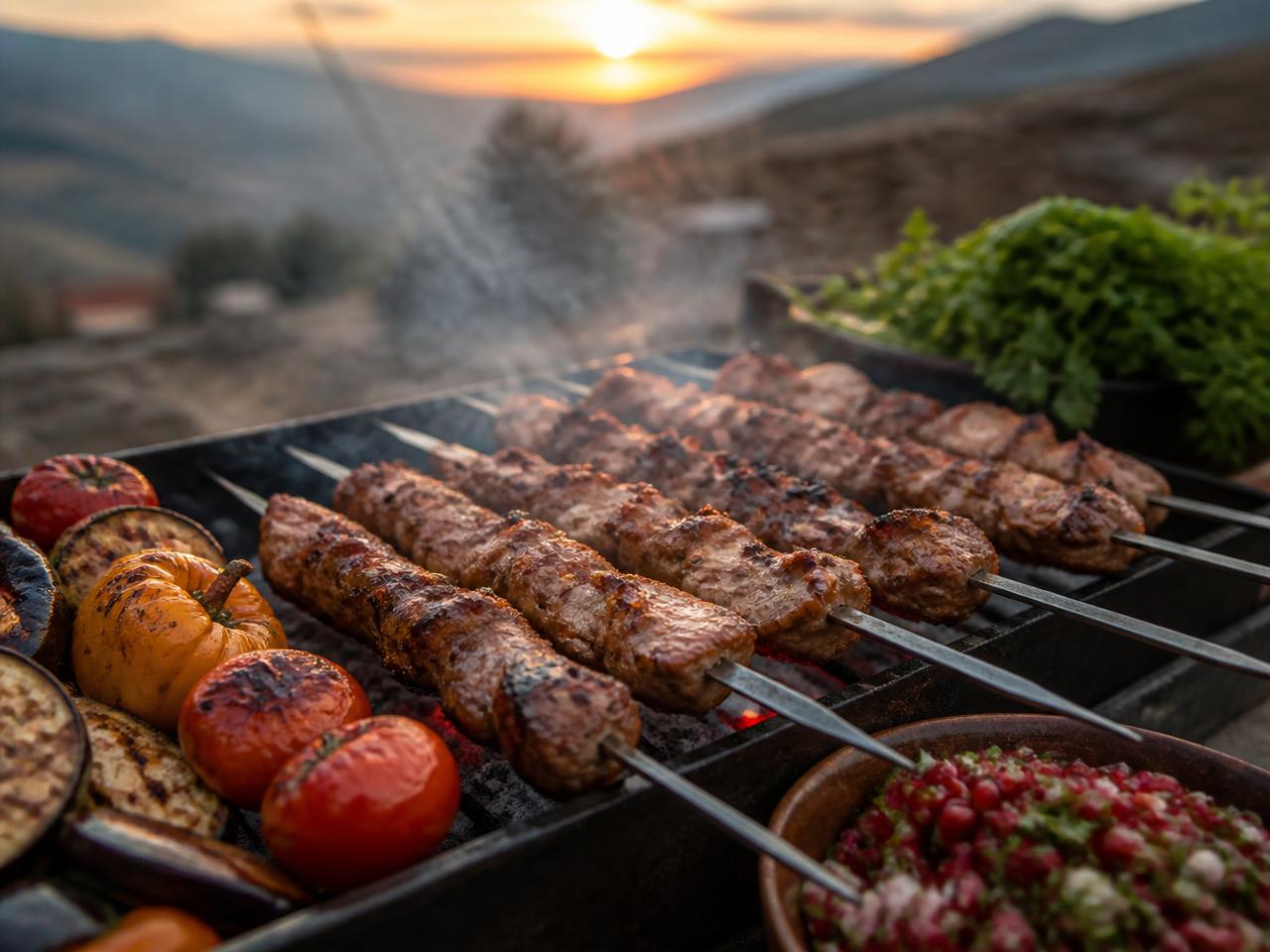
Charcoal lamb glazed in pomegranate molasses, the Sunday centerpiece of the Caucasus.
Step-by-step →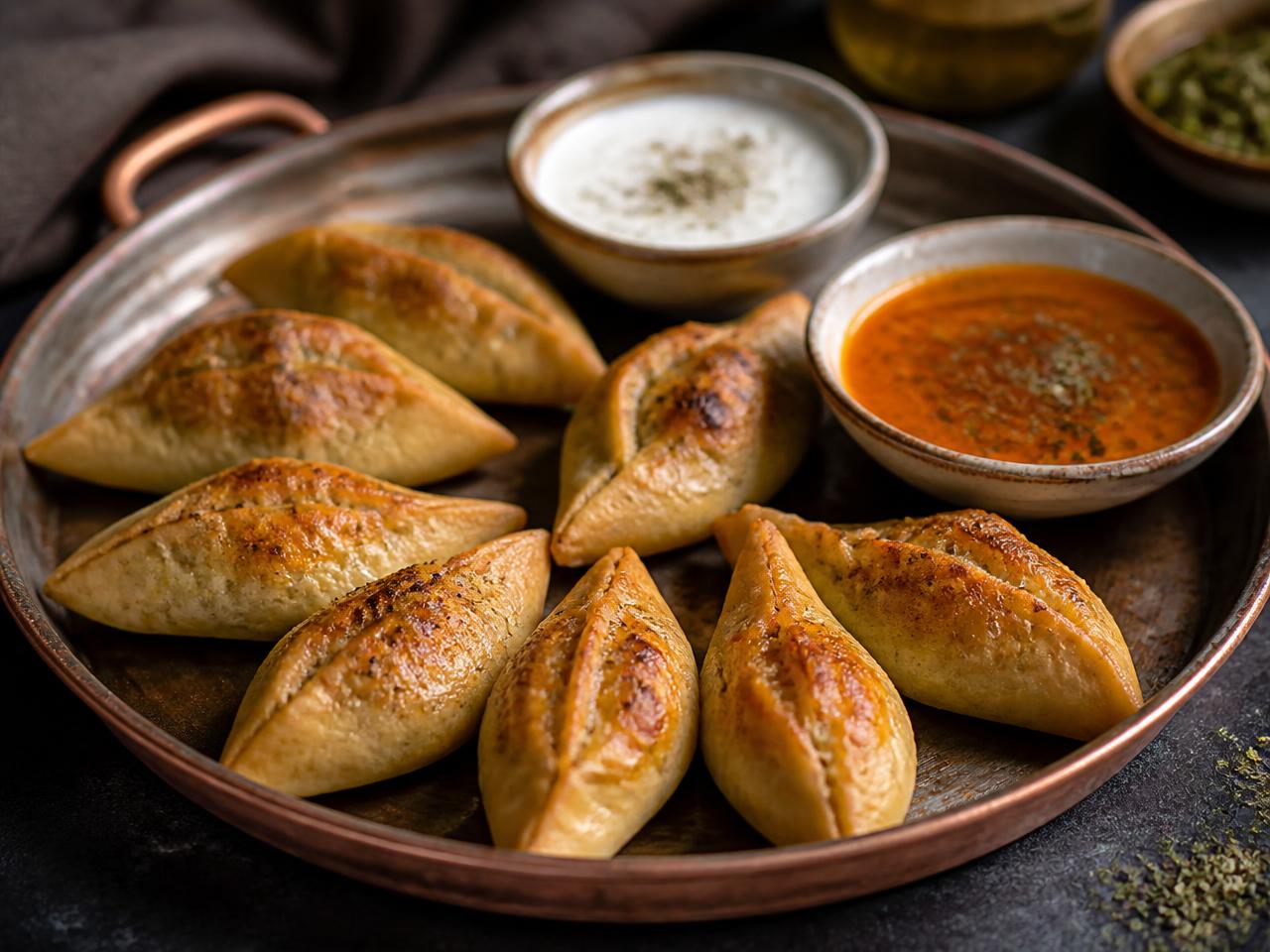
Hand-pleated beef dumplings, fried crisp and buried under a crown of black walnut.
Step-by-step →